
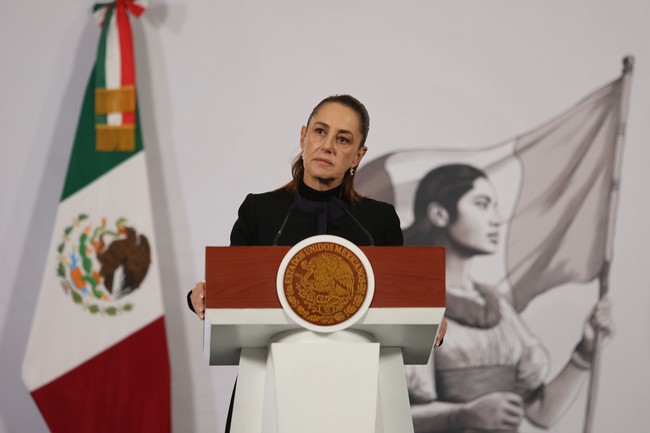
Mexican President Claudia Sheinbaum has said Mexico will explore legal action after an ICE agent in Houston shot and killed Lorenzo Salgado Araujo, a Mexican national accused of trying to run over an officer; the episode has reignited debate over border security, law enforcement authority, and diplomatic posturing between Mexico and the United States.
The incident in Houston involved an ICE officer and Lorenzo Salgado Araujo, who is reported to have driven his vehicle into an agent’s car and then attempted to strike the officer. Authorities say the move forced the officer to use deadly force, while family members insist Araujo panicked when approached by unmarked vehicles and that he had lived and worked in the U.S. for many years. That collision of accounts is exactly where politics and public perception start to fray.
Mexican President Claudia Sheinbaum publicly criticized U.S. treatment of migrants and said her government is looking into legal avenues beyond routine diplomatic notes. Her remarks framed migrants as vulnerable and insisted, “His only fault was not having papers, even though he had been hired by an American company,” and accused U.S. agencies of a pattern of oppression. That language is strong, and it signals Mexico’s willingness to press complaints on the international stage.
From a Republican perspective the response reads as political grandstanding that ignores key facts about the episode and broader security realities. If a person uses a vehicle as a weapon against a federal law enforcement officer, deadly force is a lawful and sometimes necessary response to stop an imminent threat. Those are not abstract principles; they are the operational rules that keep officers and the public safe during violent confrontations.
It matters that the event took place on American soil and involved U.S. federal law enforcement. U.S. courts and internal oversight mechanisms exist for a reason: they handle allegations of misconduct and evaluate use-of-force incidents through established procedures. International complaints or political theater from another government are unlikely to change those domestic legal processes or the fact that officers must protect themselves in life-or-death moments.
Sheinbaum’s announcement also comes amid a broader context of cartel violence and chaotic migration flows in Mexico that American conservatives point to when criticizing Mexico’s posture. Border security failures on the Mexican side have pushed many migrants into dangerous hands, and critics argue that Mexico’s government should focus more on cracking down on criminal networks and less on lodging complaints abroad. That argument is blunt: start fixing the internal problems before lecturing the United States.
The family’s claim that Araujo had deep roots in the U.S., that he worked in construction, and that he was a father humanizes the story and complicates public reactions. Americans can sympathize with a family’s loss while still recognizing that alleged violent actions against an officer change how an encounter must be handled. Sympathy and accountability are not mutually exclusive; they must coexist in any fair review of what happened.
Politically, Sheinbaum’s threat to pursue legal avenues beyond diplomatic notes is unlikely to produce practical results against U.S. federal actions. Previous efforts of this kind have run into jurisdictional limits and the reality that the United States is governed by its own legal framework, with courts and oversight bodies that must be respected. Complaints to regional human rights systems rarely alter U.S. domestic law or operational decisions by law enforcement agencies.
Public discussion of the case also highlights how polarized narratives form quickly. One side focuses on alleged abuse and systemic problems; the other stresses officer safety, the rule of law, and the dangers of illegal border crossings. Both narratives play to sympathetic audiences, but a functioning response requires sober investigation, clear evidence, and measured legal steps rather than immediate political declarations that escalate tensions.
Ultimately, because the encounter happened in the United States and involved federal officers, the appropriate forums for review are U.S. courts and the agencies’ internal review processes. That does not preclude Mexico from raising concerns through its diplomatic channels, but it does limit the practical impact of international complaints. The law on U.S. soil governs how use-of-force claims are assessed and how any potential misconduct is adjudicated.
Mexico’s threats of litigation will grab headlines and rally political supporters, but they are unlikely to change operational realities or the investigation that follows an officer-involved shooting. Meanwhile, conversations about migration, cartels, and border policy will continue across both countries. What happens next will depend largely on the findings of formal inquiries, not on the rhetoric of international pronouncements.
https://x.com/GuntherEagleman/status/2075232910563475695
“We cannot allow the mistreatment of our brothers who are in the United States,” Sheinbaum said during her morning news conference, referring to a case on Tuesday in Houston…
During her speech, Sheinbaum left out the alleged attack on authorities by Salgado.
“His only fault was not having papers, even though he had been hired by an American company,” she said, adding that the U.S. government and its agencies have a history of oppressing migrants. “They don’t have to be in detention centers or for there to be any violence.”
Sheinbaum claimed that her government was looking into legal avenues, going beyond sending diplomatic notices, which she said, while the U.S. government does respond, migrants continue to die.



Add comment