
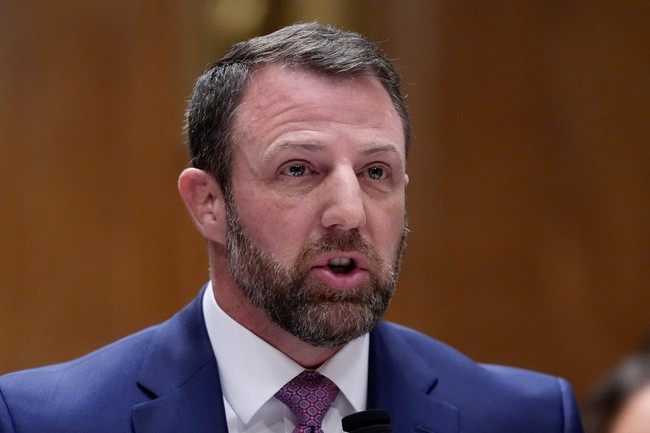
The Senate invoked cloture Sunday on Sen. Markwayne Mullin’s nomination to be Homeland Security secretary, moving him a heartbeat closer to confirmation as the chamber prepares a final vote amid an unresolved DHS funding fight.
On Sunday afternoon the Senate voted to invoke cloture on the nomination of Sen. Markwayne Mullin (R-OK) to serve as Secretary of Homeland Security. That procedural step follows a confirmation hearing and a sometimes-heated committee debate, and it sets up a final confirmation vote either Monday evening or Tuesday. The motion to cut off debate passed 54-37 at roughly 1:45 PM Eastern. With cloture invoked, a 30-hour post-cloture debate period begins unless the Senate agrees to yield that time back.
The cloture outcome reflected some unexpected cross-party movement, with Senate Democrats John Fetterman (PA) and Martin Heinrich (NM) joining Republicans to move the process forward. Their yes votes helped clear the simple-majority threshold and illustrated that, on this matter, bipartisan calculations outweighed pure party-line maneuvering. For those watching from the right, the vote signaled momentum toward installing a secretary who campaigned on tougher enforcement and a more muscular approach to border security.
Sen. Mullin’s confirmation path hasn’t been seamless. Last week’s hearing included sharp exchanges — colleagues sparred over policy and temperament — and those moments replayed in headlines and social feeds. Still, the Senate’s procedural vote is the kind of legislative hurdle Republicans welcome when it puts a conservative nominee within striking distance of confirmation. The GOP has argued this pick would bring a boots-on-the-ground attitude to DHS leadership.
There’s a practical complication: the department Mullin would lead remains without final funding. The DHS funding fight is active and consequential, with negotiators and appropriators hashing out details that affect operations across the agency. Approving a new secretary without resolving the budget leaves a leader with limited room to implement priorities immediately, which is an issue Republicans are pressing as they insist on policy changes tied to any spending deals.
ALSO SEE: ‘You Fight Republicans More Than You Work With Us’: Mullin, Rand Paul Clash in DHS Confirmation Hearing
Mullin’s Emotional Moment Underscores Urgency of DHS Funding Fight
The cloture tally — 54 in favor, 37 opposed — demonstrates a clear enough margin to expect eventual confirmation. Once cloture is invoked, the Senate’s clock starts on post-cloture debate time, but senators can agree to shorten that clock and bring the nomination to a quick final vote. Given the arithmetic and a willingness among enough members to move forward, it looks likely Mullin will be confirmed and sworn in soon.
For Republican senators pushing the nomination, the focus is both symbolic and practical. Mullin’s supporters emphasize his combative posture on immigration and border enforcement, arguing that DHS needs someone willing to take aggressive action against illegal entries and to reassert federal control over immigration policy. Opponents have raised concerns about temperament and qualifications, but the Senate’s procedural vote underlines that a majority is prepared to give him the chance to lead.
Having a confirmed secretary would offer clarity to frontline DHS officials who are juggling personnel, intelligence, and operational priorities while funding remains unsettled. Republicans contend that putting a conservative leader in charge can shift the agency’s culture and priorities immediately, even as budget talks continue. That argument resonates in GOP circles that want decisions made with a security-first mindset.
The politics of the moment are real: a confirmation vote without resolved appropriations hands the new secretary both authority and constraints. Republicans are framing the choice as pragmatic — install a leader committed to enforcing the law and restoring order at the border, then negotiate budget details with that leader in place. Critics say the sequence risks giving policy direction without adequate oversight, and that debate will continue up to the final vote.
Expect the coming floor votes to draw a lot of attention. For conservatives, Mullin represents a candidate who will prioritize enforcement and bring a direct, no-nonsense style to DHS. For Democrats and some independents, the confirmation process remains a test of norms and vetting, and they’re watching for how quickly the Senate moves from cloture to final action. Either way, the Senate’s Sunday procedural vote moved the process from uncertainty to a clear timetable.


Add comment