
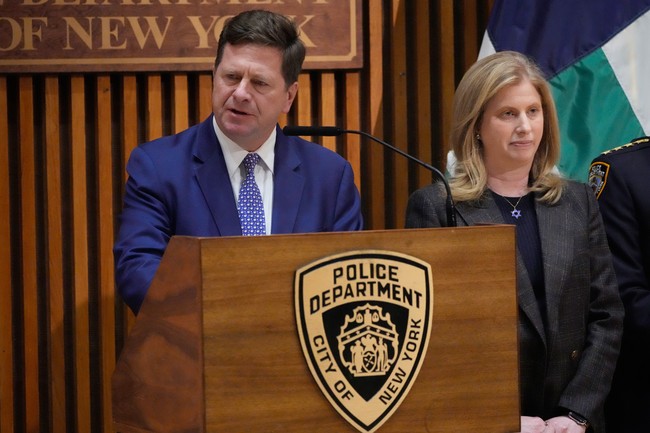
Senate Republicans pushed Jay Clayton through confirmation as the nation’s ninth director of national intelligence in a tight 51-47 vote, setting off Democratic protests and renewing fights over spy law reauthorization, personnel changes at the Office of the Director of National Intelligence, and partisan claims about national security preparedness.
The confirmation came after Tulsi Gabbard stepped down to care for her husband, and following a brief acting tenure by Bill Pulte, who enacted multiple rounds of staff reductions at the ODNI. Clayton arrives with a reputation for pursuing leaks and a promise from the White House that he will steady and reform the intelligence apparatus. Democrats immediately lined up against him, describing the pick as dangerous and unfit for the role.
The vote split on party lines, and opponents painted Clayton’s confirmation as a threat to safety and oversight. Senators like Adam Schiff reacted with alarm, producing predictable headlines and social posts warning that the nation is suddenly “less safe.” That kind of reaction fits a long pattern of partisan outrage whenever the other side takes a leadership role in national security institutions.
Supporters argued the opposite, saying confirmation restores accountability and direction to an office that had seen turmoil under recent leadership changes. Pulte’s short stint was notable for sharp cuts that reduced ODNI headcount, a fact conservatives framed as necessary to eliminate entrenched bureaucracy. The new director has signaled he will target leaks and inefficiency while protecting core capabilities.
https://x.com/EricLDaugh/status/2082243455875522820
🚨 BREAKING: Jay Clayton has just been CONFIRMED as President Trump’s Director of National Intelligence by the US Senate, 51-47
He’ll be replacing BILL PULTE who just fired nearly 30% of the DNI office’s workforce 🔥
Clayton has been targeting LEAKERS in his previous position, keep it going!
The confirmation does not end the biggest fight on Capitol Hill: the reauthorization of FISA Section 702. That authority enables certain intelligence collection against foreigners abroad using U.S. systems, and lawmakers on both sides have debated its scope and oversight. The House failed to pass a short-term extension in June amid partisan heat, and with Clayton now in place, attention turns to whether Democrats will set aside politics to restore or reform those tools.
Some Democrats have signaled they will not rush to reauthorize FISA without concessions, and critics in the minority used the confirmation as leverage to extract reforms. That posture has frustrated Republicans who view the intelligence tools as essential to counterterrorism and foreign espionage. As one statement put it: “Democrats have refused to pass a bipartisan FISA bill until a new DNI is confirmed,” and now conservatives are telling opponents to stop playing politics with national security.
…Clayton’s confirmation, for now, does not appear to be breaking through the partisan logjam. Sen. Mark Warner, D-Va., and the top Democrat on the Senate Intelligence Committee, told Fox News Digital that the pressure wasn’t on to reauthorize FISA.
“Democrats have refused to pass a bipartisan FISA bill until a new DNI is confirmed,” a spokesperson for Senate Intelligence Committee Chair Tom Cotton, R-Ark., told Fox News Digital. “Now that Jay Clayton is confirmed, it’s time for them to stop playing politics with national security and put up the votes to give our intelligence community the tools it needs to keep this country safe.”
Clayton’s confirmation hearings included moments that angered Democrats, such as his refusal to state unambiguously that Joe Biden was the rightful winner of the 2020 election, instead noting that he was “not an election denier” and that Biden had “been certified” the winner. Those careful answers were decried by opponents as evasive, while supporters called them reasonable and focused on the job at hand. Senate Minority Leader Chuck Schumer labeled Clayton’s performance “abysmal,” but that did not change the vote outcome.
The incoming DNI is expected to prioritize internal discipline, counterintelligence, and border-related threats in coordination with other agencies. With the ODNI workforce recently trimmed, Clayton will face immediate decisions about rebuilding capacity where needed and keeping the agency lean where reform has already taken place. Republicans view his approach as a chance to strengthen accountability and curb a politicized culture at the heart of the intelligence community.
Democratic resistance to the new director makes one thing clear: any bipartisan move on surveillance authorities or budget and staffing will require hard negotiation. Expect an extended period of committee fights and public posturing as both sides try to shape the future of U.S. intelligence law and oversight. For conservatives, the priority is restoring operational tools and reshaping management; for Democrats, it is extracting reforms and guarantees before they concede votes.
President Trump celebrated the confirmation as a major victory and praised Clayton’s qualifications, telling allies the new director will do a “spectacular job.” That endorsement signals support from the top of the administration for an agenda that includes aggressive leak enforcement and tighter control over how intelligence resources are deployed. The confirmation is a fresh chapter for the ODNI and a new front in partisan battles over how the country gathers foreign intelligence.
Editor’s Note: Democrats continue to put our nation’s national security at risk simply because they want to keep illegal aliens from being deported.



Add comment