
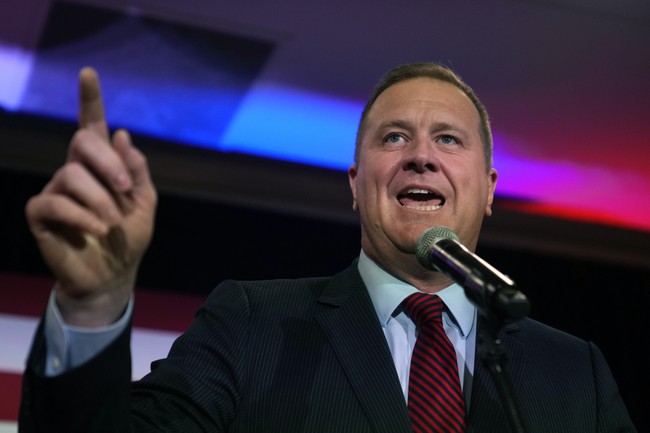
I’ll explain what happened with the tanker seizure, recap Sen. Eric Schmitt’s exchange with a reporter about drug-running “fishing boats,” compare the legal differences between the tanker and the drug boat operations, include the exact quoted background on the tanker, and preserve the two embeds where they appeared.
The U.S. seized an oil tanker linked to a Venezuela–Iran oil network, and the move sparked questions from the press about similar actions against drug-running vessels. The seizure was carried out under domestic civil forfeiture authority after the tanker was designated on a sanctions list, a point administration officials emphasized. That legal basis matters, because it separates an economic enforcement action from kinetic military responses. The contrast is central to why Sen. Schmitt pushed back so hard during a recent interview.
The tanker, known as the Skipper, has been on a U.S. sanctions list for several years for allegedly moving crude tied to a clandestine Venezuela–Iran oil network that Washington says helped generate revenue for foreign terrorist organizations.
According to officials, that designation rendered the vessel “blocked property” under U.S. law, allowing the Justice Department to seek and obtain a federal warrant to seize it under civil forfeiture statutes. That process — rooted in domestic law and executed through a U.S. court — is the basis for Thursday’s operation, administration officials said.
When a reporter asked Schmitt why the tanker could be seized without casualties but drug boats were being destroyed, she framed the question as if both were the same kind of enforcement target. That framing ignored crucial legal and operational differences, and Schmitt didn’t let it slide. He corrected the characterization of the drug runners as “fishing boats” and explained why conflating the two was misleading. The exchange became tense because the question suggested a false equivalence between civil forfeiture and actions taken against violent criminal networks on the high seas.
The reporter put it bluntly: “If you can seize an oil tanker without killing anyone, shouldn’t that have been the way that these fishing boats were also stopped?” Schmitt’s response zeroed in on the terminology and the threat those vessels posed. He asked, “Fishing boats?! What is a fishing boat? The drug runners?” and insisted, “Those aren’t fishing boats.” He stressed that the so-called fishing vessels were heavily armed and not legitimate commercial fishing crews. Any attempt to treat them like a simple seizure target would put U.S. personnel at great risk.
Schmitt laid out the law and the logic: the tanker was “blocked property” subject to civil enforcement tied to presidential sanctions delegated by Congress, enforced by civil authorities with Navy assistance. That civil process is fundamentally different from destroying vessels operated by narco-terrorists who are designated as threats. He pointed to the designation of those operators as foreign terrorists and the legal authority that allows the military or other parts of government to act when a violent threat is present. The distinction isn’t academic; it changes who has authority, what risks are acceptable, and how American forces are used.
Beyond the legalities, Schmitt spoke plainly about the human cost of the drug trade and where his sympathies lie. He said he had no sympathy for narco-terrorists and instead stood with Missouri families harmed by the flood of drugs into their communities. He reminded listeners that people have “been poisoned, who died,” and argued that a president who prioritizes stopping those flows is finally focusing on victims. That tough stance resonated with conservatives who want law and order and protection of American neighborhoods.
The senator also pushed back on a separate question about whether President Trump should be attempting to overthrow Venezuela’s Maduro. Schmitt dismissed that framing, saying U.S. actions were not about regime change but about protecting U.S. interests and confronting criminal networks that threaten Americans. He emphasized pragmatic use of force and legal tools rather than headline-grabbing regime-change talk. His answers aimed to keep the conversation rooted in law and national interest rather than political theater.
Some commentators called the exchange a classic media attempt at a gotcha that misread the operational realities. Secretary of War Pete Hegseth characterized Schmitt’s remarks as “Spot on, well said.” The back-and-forth highlighted a broader problem: when reporters collapse distinct legal regimes into a single moral judgment, they obscure how policy actually works. That confusion can lead to calls for risky or legally dubious actions that would expose American personnel to unnecessary danger.
Editor’s Note: Thanks to President Trump and his administration’s bold leadership, we are respected on the world stage, and our enemies are being put on notice.

These Fake News Political Activists BIMBO’S need to shut the hell up! They sell their asses as enormous fraud and lies perpetrators; so don’t doubt for a minute that they sell their souls to Satan for Money and Fame!
And they as so many of you out there worship the Algorithm Beast all heading to Skynet or Mark of the Beast System that plans to own your souls! Wake the Hell Up!