
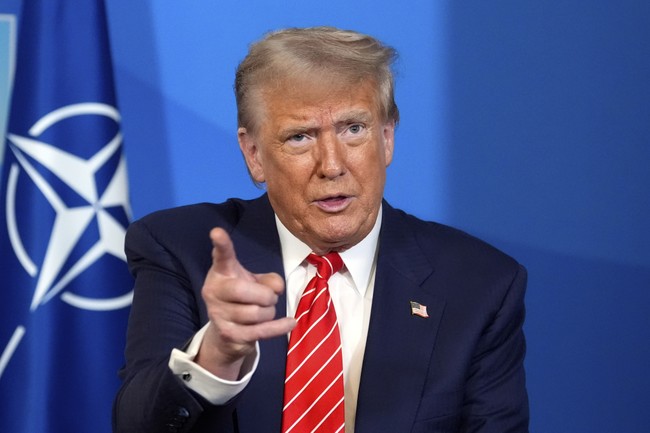
Mark Rutte, NATO secretary-general, warned that Russia might be ready to use force against NATO within five years and urged Europeans to prepare for a wartime posture, pushing higher defense spending and new operations to secure NATO’s eastern flank; this article examines those warnings, assesses Russian capabilities, highlights the larger China risk, and considers the political dynamics around U.S. leadership and European burden-sharing.
Rutte’s tone is urgent and blunt, and he wants allies to act like they mean it. Europe has enjoyed American protection for decades, and now NATO’s leadership is insisting nations move from talk to real investment. The call to raise defense-related spending to 5% of GDP by 2035 and 3.5% on core military outlays is meant to shock complacent capitals into motion.
Speaking at a security event in Berlin, the secretary general painted a stark picture of the continent’s future, saying Russia could be ready to use force against NATO “within five years” and urging Europeans to “shift to a wartime mindset.”
He said allies must prepare for conflict on the scale their “grandparents or great-grandparents endured,” including mass mobilization and widespread destruction.
Rutte argued that Moscow’s full-scale war on Ukraine, backed by Chinese technology and Iranian and North Korean arms, proves the Kremlin is rebuilding an “empire” and sees free European societies as a threat.
Those are heavy claims, and they deserve a clear-eyed Republican read. Vladimir Putin’s ambitions are undeniable; he has demonstrated a willingness to use military force to redraw borders and to back proxies and malign networks. Yet ambition is not the same as ability, and capability matters when assessing the real risk to NATO territory and citizens.
Russia has been bloodied and stretched by its campaign in Ukraine, even after pouring men and material into the fight. Western aid and Ukrainian resistance have slowed and bled the Kremlin’s forces, and while Moscow still fields dangerous systems, the idea that the Russian Army can rout NATO and sweep to the English Channel is far-fetched. Preparing to deter aggression, however, is a sensible insurance policy, not an act of panic.
Rutte hailed this year’s NATO summit in The Hague, where leaders agreed to drive total defense-related spending to 5% of GDP by 2035 — including 3.5% on core military outlays, far above the long-standing 2% benchmark.
Germany alone is planning to reach 3.5% by 2029, which Rutte called “staggering,” and he pressed other European governments to follow.
At the same time, NATO is launching new operations such as “Eastern Sentry” and “Baltic Sentry” to reinforce the alliance’s eastern flank and protect critical infrastructure after Russian drones violated Polish airspace and undersea cables were cut in the Baltic.
Spending more is not just a vanity metric; it shapes force structure, readiness, and resilience. NATO moving to beef up eastern defenses and protect undersea infrastructure responds to tactics Russia has used to push limits without crossing a full war threshold. These measures make the alliance harder to intimidate and quicker to respond if deterrence fails.
Still, context matters. The greater strategic worry for the long term is China. Its military modernization and global reach present a formidable challenge, and a tacit China-Russia alignment complicates Western planning. That said, a China-Russia partnership would likely center operations in the Indo-Pacific; European defense must be robust, but the primary theater for a potential global conflagration with China remains far from NATO’s borders.
In February, Rutte tried to reassure Washington that Europe is finally shouldering more of the burden and he gave credit to President Donald Trump.
The secretary-general noted it was the president, “when he was Trump 45 and now Trump 47,” who consistently demanded that European allies and Canada spend more on defense, and argued that the new 5% target is exactly what Trump has been asking for since his first term.
Rutte also conceded in other Berlin remarks that “President Trump wants to end the bloodshed now, and he’s the only one who can get Putin to the negotiating table,” effectively acknowledging that any serious peace push will have to run through Washington and Trump’s White House.
Politically, Rutte’s praise of President Trump points to a simple truth: strong U.S. leadership drives allied action. When Washington leans forward, resources flow, and partners pivot. Republicans have long argued that burden-sharing is not a partisan slogan but a necessity; if Europeans want security, they must pay and stand ready.
Preparing for the worst while keeping diplomacy open is the prudent path. Europe must stop treating defense as a political afterthought and instead build credible forces, logistics, and civil resilience. Russia’s threat should be met with deterrence and resolve, and American leadership should encourage, not do, the heavy lifting for European security.


Add comment