
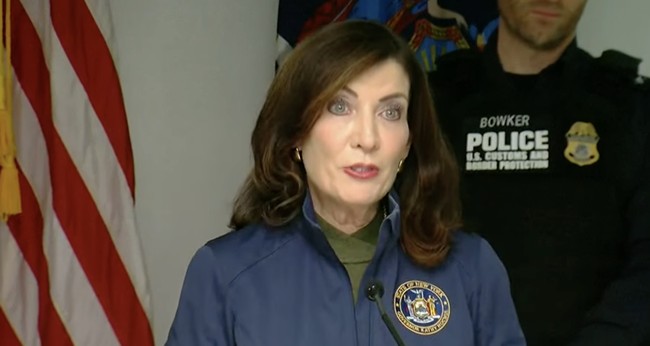
Transportation Secretary Sean Duffy has given New York Governor Kathy Hochul a hard 30-day deadline after a Federal Motor Carrier Safety Administration audit found that more than half of sampled non-domiciled commercial driver’s licenses were issued improperly, and federal funding of $73 million is now at stake. The audit sampled 200 CDL records and found 107 issued illegally, and federal officials say this is a systemic failure that endangers highway safety nationwide. This article lays out the audit findings, the federal ultimatum, reactions from Republican leaders, and the larger safety concerns tied to improperly issued licenses.
Secretary Duffy framed the audit results as a direct breach of public trust and safety, saying the scope of the problem goes beyond clerical errors. He stated plainly, “When more than half of the licenses reviewed were issued illegally, it isn’t just a mistake — it is a dereliction of duty by state leadership.” His message to Albany was clear: fix the process or face financial consequences.
Duffy told Governor Hochul she needs to revoke illegally issued licenses and align state practices with federal law. “Gov. [Kathy] Hochul must immediately revoke these illegally issued licenses,” said Duffy. He warned that the Department of Transportation would use funding as leverage, and put a dollar figure on the hold: $73 million could be withheld if New York does not comply within 30 days.
That 30-day ultimatum was underscored in a public post, where Duffy wrote, “We’re holding New York accountable for issuing non-domicile commercial driver’s licenses to truckers illegally. FULL STOP,” and he added, “We’re giving New York 30 days to comply, or we’ll withhold $73 MILLION!” He followed with a short, forceful line about priorities: “The safety of the American people comes first.”
The FMCSA audit drilled into a 200-record sample and found 107 problematic CDLs, which is just under 54 percent. Beyond the percentage, officials highlight cases where records were incomplete or drivers were listed as “No Name Given,” raising red flags about how licenses were issued and who is ultimately allowed to operate large commercial vehicles. The federal view is that this is not an isolated administrative lapse but a pattern that demands immediate correction.
Department of Transportation actions have included removing drivers from the roads when records show clear violations or safety risks, and Duffy has noted that nearly 10,000 drivers have been taken off routes as part of enforcement efforts. Those removals are presented as necessary steps to protect American motorists while states correct their licensing processes and ensure CDLs are issued only to qualified, lawful applicants.
Republican leaders seized on the audit to criticize the governor’s record on public safety and immigration enforcement. Representative Elise Stefanik, a leading GOP figure in New York politics, said bluntly, “More than half of New York’s commercial trucking licenses have been issued to illegals under Kathy Hochul’s watch.” She tied the licensing failures to real-world tragedies, insisting that rewarding criminal aliens with CDLs has produced deadly consequences on the road.
Stefanik added, “These criminal illegals whom she’s rewarded have gone on to kill people—including a National Guardsman—while behind the wheel of massive tractor-trailers.” That allegation frames the issue as one of accountability, with Republican officials demanding action to prevent further loss of life and to restore confidence in state oversight of commercial driving credentials.
Local elected officials echoed the criticism, arguing that a state that issues CDLs to non-domiciled or improperly documented individuals is endangering not just its own citizens but drivers nationwide. Rensselaer County Executive Steve McLaughlin said, “[Hochul] willingly and gladly endangers New Yorkers daily,” he , “and then spreads it throughout the country.” Those words reflect a view that state policy decisions have interstate consequences when commercial drivers travel across borders.
The audit and its fallout raise questions about verification standards, English proficiency testing, and the integrity of state licensing systems. Cases cited by federal and state officials, including drivers who reportedly failed knowledge or language assessments yet obtained CDLs elsewhere, are used to argue for stricter controls and better enforcement to protect public safety.
Those opposed to the way licenses were issued emphasize that a New York CDL is not confined to the Empire State; a holder operates on highways that crisscross the country. Duffy put it plainly: “You don’t just drive in New York if you get a New York commercial driver’s license — you drive around the country.” The federal response seeks to compel state compliance to avoid nationwide risk.
With a formal 30-day countdown and $73 million in federal highway funds hanging in the balance, New York faces a choice between rapid corrective action and losing material support for transportation projects. Republican officials say the clock should force meaningful reform and immediate removals of improperly licensed drivers from the roads to prevent further tragedies.


Add comment