
This article examines the fallout from the State of the Union moment when Democrats stayed seated, the party’s subsequent explanations, and new polling that suggests Republicans remain the more trusted party on immigration and border security as the 2026 midterms approach.
Tuesday night’s State of the Union created a vivid political moment when members of one party chose not to stand as the president asked a question about prioritizing American citizens over illegal immigrants. The sight of an entire caucus remaining seated was instantly seized on by opponents and replayed widely, making it a defining image heading into the midterms. For conservatives, that refusal reinforced long-held concerns about the other side’s priorities and messaging on enforcement and borders.
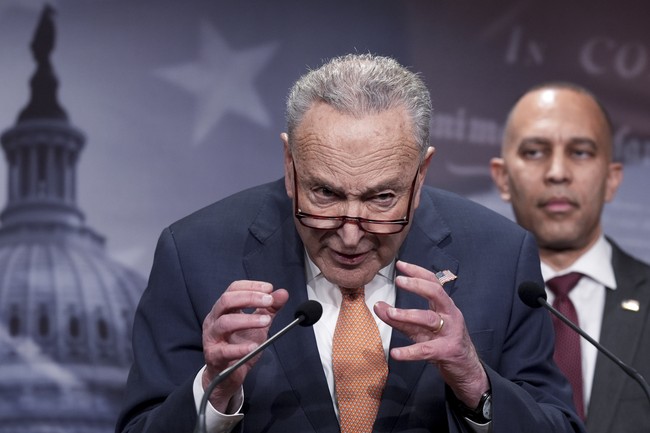
The next day, Senate Minority Leader Chuck Schumer offered an explanation that did little to smooth things over, arguing his members did not want to be used as a “prop” for the president. That line only intensified criticism because the issue being posed was simple and straightforward: who should the government prioritize? To many voters, the optics communicated a lack of solidarity with ordinary Americans who expect government to put their safety first.
Beyond the theater of the chamber, the political consequences are already being measured in polls and commentary. Fresh polling data show Republicans maintaining an edge on immigration and border security, and analysts have pointed out that Democrats are in a weaker position on this issue than they were previously. For Republicans, that’s an advantage they can exploit in campaign messaging without inventing new arguments.
CNN data analyst Harry Enten weighed in on these trends and highlighted how public opinion still skews toward Republicans on who can handle immigration. Enten emphasized that even after intense media coverage and controversy over enforcement operations, the polling does not show Democrats gaining ground on this subject. That dynamic suggests running on border security could be a comfortable play for GOP candidates in many districts.
“So this whole idea that Democrats are going to be able to take advantage of the immigration issue actually doesn’t bear itself out in the polling, despite everything that’s been going on. In fact, Democrats are in worse position than they were during Donald Trump’s first term … They think Democrats will do a worse job on immigration than Republicans,” Enten said.
Americans have also consistently trusted Republicans more on border security. The party’s lead on this issue shifted from +13 in 2018 to +15 currently, Enten said while citing a Fox News survey.
“So when you put it all together, you put immigration with border security and the idea that Democrats will be able to take the ball and run away on it,” Enten said. “The polling data suggests no, no, no. Democrats running on immigration may actually be to the Republicans advantage. This is actually an issue that Republicans should be more comfortable running on than Democrats.”
Those numbers matter because the midterms will be fought in close districts where security and rule of law resonate with swing voters. When voters believe one party will better secure the border and enforce immigration laws, that belief translates into votes in competitive areas. Campaigns on both sides already recognize how potent a clear stance on enforcement and public safety can be.
The recent uproar over operations in cities like Los Angeles and Minneapolis was expected by some to erode trust in enforcement agencies and shift opinion away from Republicans. Instead, the opposite effect appears to be happening: rhetoric and protests have not translated into durable polling gains for Democrats on immigration. For conservatives, this shows the limits of theatrical resistance when voters are focused on practical outcomes.
Political theater aside, the underlying issue remains straightforward: many Americans want laws enforced and communities kept safe. That concern is what anchors the GOP advantage on this topic and explains why the SOTU moment landed as it did for the opposition. Messaging that ties enforcement to community safety and national sovereignty continues to land with a significant share of the electorate.
As the 2026 campaign season heats up, Republicans will likely press this advantage while Democrats try to reframe the debate. The political stakes are high and the next moves from both parties will shape voter perceptions in the months ahead. Watch:



Add comment