
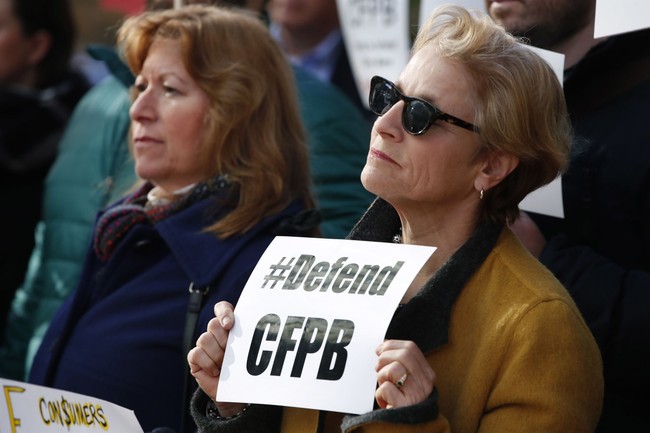
This piece examines a new White House estimate of the Consumer Financial Protection Bureau’s costs to American borrowers, highlights the bureau’s transfer payments and fiscal impact, and argues from a conservative viewpoint that the CFPB’s rules have raised borrowing costs, reduced loan originations, and diverted funds that belong to taxpayers.
The CFPB began as Senator Elizabeth Warren’s flagship idea and it has become a focal point for debate over regulation, cost, and accountability. Conservatives have long warned that well-intended rules often have unintended consequences, especially when oversight is weak and agencies expand unchecked. The new numbers add fuel to that argument, showing large aggregate costs that trickle down to everyday borrowers.
The White House analysis places the CFPB’s total cost to consumers in the hundreds of billions since 2011, a figure that demands attention. When regulators raise compliance and liability costs for lenders, those costs do not vanish; they show up in higher rates, fees, and reduced availability of products. That dynamic is straightforward: higher regulatory burdens drive up prices and shrink choices for ordinary families.
The report points to increased borrowing costs, fiscal transfers, and lost loan originations as measurable harms. These are not abstract policy debates for insiders; they affect mortgage shoppers, car buyers, and credit card users across the country. Families making big financial decisions face higher costs that chip away at household budgets and economic mobility.
- The regulatory burden imposed by the Consumer Financial Protection Bureau (CFPB) has increased the compliance and liability costs associated with consumer financial products, which financial institutions pass on to consumers in the form of higher prices and reduced product offerings. The Council of Economic Advisers (CEA) estimates that since 2011, the CFPB has cost consumers between $237-$369 billion, including fiscal costs, increased borrowing expenses, and reduced originations.
- Of the total above, CEA finds that increased borrowing costs amount to at least $222-$350 billion[1]($160-253 per borrower) from the CFPB’s inception in 2011 through 2024.
- Broken down by loan type, the CFPB’s rulemaking has cost consumers $116-$183 billion in higher mortgage costs ($1,100-$1,700 per originated loan), $32-$51 billion for auto loans ($91-$143 per loan), and $74-$116 billion for credit cards ($80-$126 per loan). These costs significantly surpass the CFPB’s reported $21 billion returned to consumers (about $15 per borrower).
- In 2024 alone, the CEA estimates the combined annual cost of credit for mortgages, autos, and credit cards is between $24-$38 billion.
- CEA also estimates that the higher borrowing costs from CFPB policies significantly reduced loan originations, resulting in an economic efficiency loss of between $1.5-$5.7 billion to consumers.
Those figures are stark: billions in aggregate and hundreds of dollars tacked onto loans that matter to working families. The agency’s claimed consumer returns look modest in comparison to the costs the CEA identifies, which raises questions about proportionality and priorities. If enforcement and rulemaking return only a fraction of what borrowers pay, it is fair to reassess the bureau’s role and methods.
Beyond the direct borrowing costs, the CFPB’s funding mechanism has fiscal implications. The bureau received nearly $9 billion in transfers from the Federal Reserve between 2011 and 2024, and those transfers meant less revenue flowing to the Treasury. The CEA frames the lost Treasury revenue and excess tax burden as part of the total fiscal cost, adding another layer to the agency’s real-world impact.
From a conservative standpoint, the combination of high compliance costs, reduced access to credit, and off-budget funding is a recipe for concern. Regulation should protect consumers, yes, but it should not quietly shift billions of dollars onto households or operate with limited congressional oversight. Agencies with significant market-shaping power need clear accountability and a closer look at cost-benefit tradeoffs.
Legal and constitutional concerns are part of the broader debate. Critics argue that the CFPB’s structure and authority raise questions about accountability and separation of powers, and some see real limits under the Constitution and the Tenth Amendment. Addressing those issues could require litigation, legislation, or administrative reform, all of which are being discussed in Republican policy circles.
Policymakers should weigh whether the CFPB’s current approach is the best way to protect consumers without imposing undue costs, and whether taxpayers and borrowers are getting a fair deal. Practical reforms that restore oversight, increase transparency, and force a rigorous cost-benefit accounting could reduce the damage while preserving legitimate consumer protections. Until then, the debate over the CFPB’s price tag will continue to be a live political issue.



Add comment