
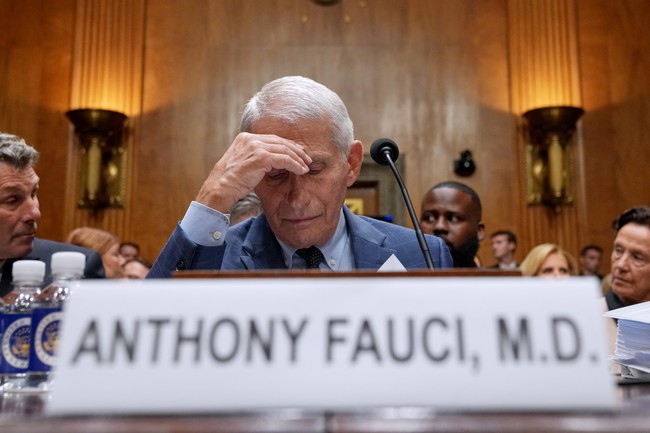
The Senate hearing over Anthony Fauci’s pandemic-era conduct turned into a memorable scene when Fauci invoked the Fifth and his attorney was removed for disrupting the proceedings, sparking applause from the gallery and pointed rebukes from Sen. Rand Paul.
<pThe morning’s hearing had high stakes and high drama as Sen. Rand Paul pressed Anthony Fauci and the public watched a figure who once set strict rules for everyone else choose silence. Fauci read a prepared statement accusing Paul of obsessing over prosecuting him, then repeatedly invoked the Fifth Amendment instead of answering questions. That refusal left Republicans and many observers frustrated, because accountability was expected and a clear record was not delivered. What followed made clear who was in control of the room and who was not.
Tempers flared when David Schertler, an attorney for Fauci, ignored directions about where he should sit and began speaking despite not being recognized. Schertler’s decision to perch at the witness table beside his client and address the panel turned a formal hearing into a chaotic scene. Sen. Paul warned him repeatedly that he was not recognized and that he needed to respect the rules of the chamber. When those warnings went unheeded, Paul called for security to remove the disruptive lawyer.
Paul’s rebuke was sharp and exact. He told Schertler, “You will respect these proceedings. You were told not to sit at the table. You insist on sitting at the table and we told you you would not be recognized. You are not invited here for testimony, sir. You are being disruptive. Would you behave this way in a courtroom? No, because the judge would put you in jail. I can’t do that today. But I can have you escorted from the premises.” Those words landed hard and were followed by the physical enforcement of courtroom decorum.
The gallery reacted the way many in the public did: with applause. That reaction reflected more than partisan satisfaction; it reflected a desire to see institutions enforce their own rules and to have hearings conducted in a way the public expects. The applause was audible proof that many viewers saw the incident as a stand for order and accountability. In a hearing where answers were in short supply, the removal of Schertler was a dramatic affirmation of process.
Fauci’s reliance on the Fifth and the public display of his counsel being escorted out raised fresh questions about leadership and responsibility. For years Fauci issued directives that shaped daily life, and now his silence and the behavior of his lawyer left a different, less flattering image. Republicans, led by Paul, framed the moment as a symbol: a man who once demanded certainty and obedience choosing to hide from scrutiny. That contrast drove much of the commentary that followed.
Sen. Paul did not stop at ejecting the disruptive attorney; he used the occasion to highlight what he sees as a broader problem. He emphasized that those who set rules should accept scrutiny and answer for decisions that affected millions. That point resonates with conservatives who favor accountability for public officials and transparency about pandemic policy choices. The hearing became less about a single exchange and more about institutional standards and public trust.
There were procedural details worth noting beyond the spectacle. Paul mentioned that Fauci had other counsel present, pointing out that the witness was not without a legal team even as one attorney caused a disturbance. The delegation of legal representation did not shield Fauci from criticism about avoiding testimony. Republicans argued that relying on the Fifth repeatedly meant missed opportunities to explain policy choices and correct the record.
Journalists in the room documented the scene, and observers later discussed how the moment will play politically. The optics of a high-profile figure pleading the Fifth while an attorney is removed for ignoring rules fits neatly into a narrative of elites insulated from consequences. That narrative has energized Republican critiques of pandemic-era decision-making and fed broader calls for oversight. The episode will be cited in debates about credibility and the proper conduct of hearings.
Beyond politics, the episode underscores a simple principle: hearings rely on rules and enforcement to function. When rules are followed, panels can get to the facts; when they are ignored, the process collapses into spectacle. On that day, the enforcement of decorum restored at least a measure of order and reminded the public that rules still matter. The gallery’s applause was less about schadenfreude and more about seeing the process work as intended.
For conservatives watching, the hearing reinforced long-standing themes about accountability for officials who exercised vast authority during the pandemic and the need for clear answers about decisions that affected millions. The confrontation and the removal of a disruptive attorney provided a vivid, enforceable example of what happens when oversight bodies insist on adherence to their rules. That moment, captured live, is likely to be replayed in discussions about both the man at the center of the hearing and the institutions charged with checking power.
https://x.com/townhallcom/status/2082460164725076123
Journalists who witnessed the hearing from the gallery described the scene in real time, noting the crowd reaction and the tense exchanges at the dais. Those firsthand accounts reinforced the visual record and gave context to how the hearing unfolded inside the room. The images and reports combined to show a moment when process and politics collided in a very public way.



Add comment