
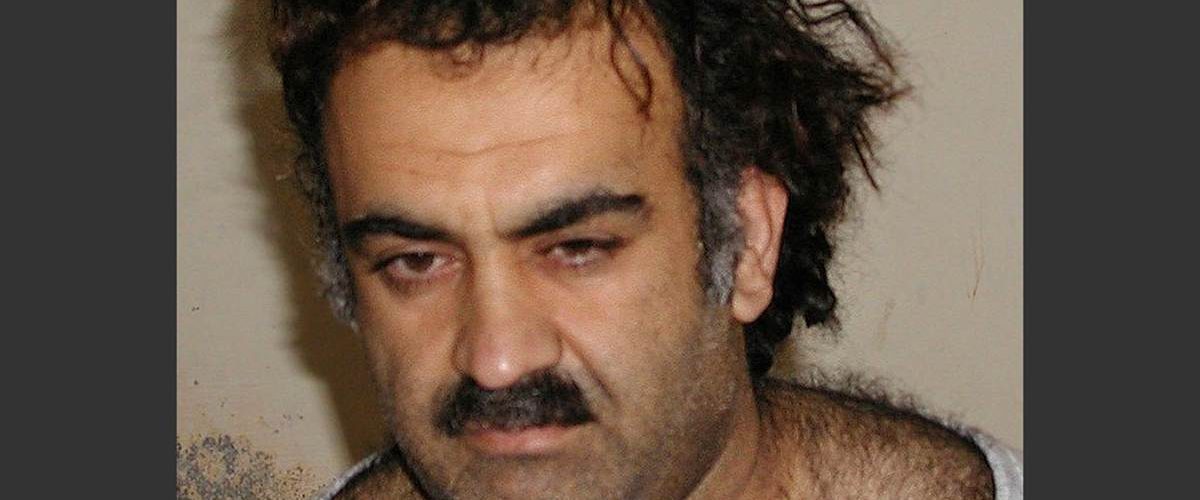
The judge overseeing the long-running military case against Khalid Sheikh Mohammed excluded his post-CIA confessions from evidence, citing concerns that prior CIA coercion and subsequent interrogation practices undermined voluntariness; that decision complicates a trial set for 2028 and raises fresh questions for victims’ families who have waited a quarter-century for resolution.
Khalid Sheikh Mohammed, accused as a principal architect of the 2001 attacks, has spent 25 years in custody as the legal fight around his prosecution has dragged on. A recent ruling by a military judge removed his statements to FBI agents from the evidence mix, a move that prosecutors say could be appealed. The ruling centers on whether earlier treatment by CIA interrogators carried forward and tainted later questioning at Guantánamo.
The judge’s decision traces back to the suspected use of harsh interrogation methods in secret CIA facilities before Mohammed arrived at Guantánamo, and then to how his later talks with FBI agents were handled. Prosecutors had long relied on his own statements as key evidence, but defense lawyers argued those statements could not be viewed as voluntary after alleged prior coercion. This legal knot now undercuts what the government has called critical proof in its death-penalty case.
In a major blow to the U.S. case against Khalid Shaikh Mohammed, the man accused of plotting the Sept. 11 attacks, a military judge ruled on Friday that the prisoner’s confessions to F.B.I. agents were not voluntary and cannot be used against him at trial.
Prosecutors have described Mr. Mohammed’s interrogations in 2007 at the U.S. Navy base in Guantánamo Bay, Cuba, as the government’s most crucial evidence in the long-running death-penalty case.
But his confessions have always been challenged because the government used torture to question him in secret C.I.A. prisons years before he was charged.
The ruling, just before the 25th anniversary of the attacks, could further delay the start of a trial if prosecutors decide to appeal to reinstate it. Aging survivors and families of victims have said they worry they may never see a final resolution to the case.
The judge’s written analysis, roughly 45 pages, concluded that the later Guantánamo interrogations could not be separated from what preceded them. He pointed to an “unbroken continuation of the C.I.A.’s psychological conditioning and severe coercion” and said that FBI agents failed to fully advise Mohammed of his rights. Those findings formed the legal basis for excluding the statements from trial use.
…[T]he trial judge, Lt. Col. Michael Schrama, went further, concluding that Mr. Mohammed’s subsequent interrogations in 2007 at Guantánamo were also inadmissible.
…
Colonel Schrama cited several factors, including an “unbroken continuation of the C.I.A.’s psychological conditioning and severe coercion” at the time of Mr. Mohammed’s questioning at Guantánamo in 2007.
He also found that F.B.I. agents intentionally failed to explicitly tell Mr. Mohammed that he had a right to be silent and to consult a lawyer, and that what he told them could be used against him at a trial.
The practical consequence is clear: without those confessions, the prosecution must rely on other evidence or risk delay through appeals. The government has limited time under the military rules to decide whether to appeal the judge’s ruling, and prosecutors have signaled they will review the order closely. Whatever they decide, the path to a conviction now looks bumpier and may drag out longer.
Families of the victims reacted with frustration and fear that a resolution could slip away entirely as the years pass. Concern is not new; many relatives have worried that defendants held at Guantánamo could die before facing final judgment. The emotional toll of yet another procedural setback landed hard for those who have waited decades for accountability.
Victims’ families have long feared that Mohammed and his alleged fellow 9/11 plotters could die behind bars at Guantánamo Bay before being found guilty in a court of law.
“We have been asking for a trial date for 20 years. Hopefully, this time it is for real,” retired NYPD officer Jim Smith, whose wife Moira Smith died responding to the attacks, told The Post earlier this week.
While confessions were stripped from consideration, prosecutors previously excluded the most graphic statements linked to CIA treatment, including waterboarding, from the trial as well. That history complicates the government’s narrative and raises persistent legal questions about what evidence can ever be deemed reliable after abusive interrogation practices. Courts now must weigh whether later statements were so influenced by prior coercion that they cannot be admitted.
The trial is currently scheduled to begin in 2028, but the judge’s ruling creates immediate uncertainty about that timeline. Prosecutors have the option to appeal and seek reinstatement of the evidence, which would likely trigger additional hearings and delays. In the meantime, the case remains in legal limbo while defense arguments and prosecutorial responses play out.
The ruling is not the end of the road for a prosecution that has already survived multiple turns of litigation and political controversy. Convictions without confessions happen, and the government may still proceed using other investigative tools and testimony. That said, after a quarter-century of custody and litigation, this development underscores how difficult it is to reach a decisive legal end in cases tied to post-9/11 interrogation programs.

Add comment