
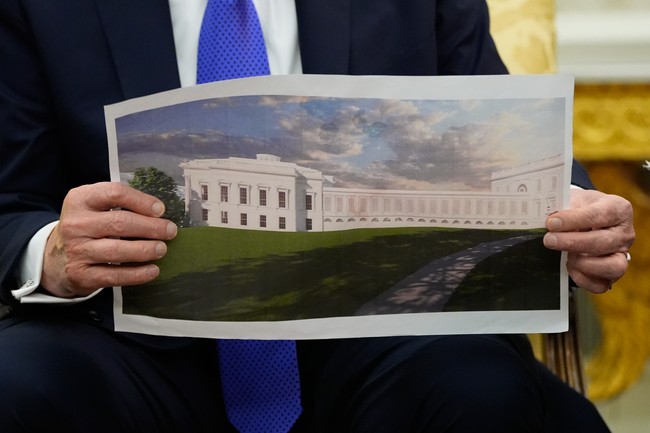
The federal judge’s temporary halt to construction on the White House ballroom has injected fresh uncertainty into a high-profile project backed by private donations and the president himself, as legal questions about executive authority, historic preservation rules, and congressional approval now steer the debate.
Construction on the controversial White House addition has been paused by a federal court order, though enforcement was delayed 14 days to give the administration time to appeal. The injunction follows a lawsuit from a preservation group that says the project oversteps federal law, and the Justice Department is expected to take the case up the ladder. This ruling shifts the fight from construction crews to court dockets and, potentially, Capitol Hill.
A federal judge on Tuesday ordered construction of the White House ballroom project halted, siding with a historic preservation group that argued the effort violated federal law.
U.S. District Judge Richard Leon said the group is likely to succeed on the merits of its case, writing that “no statute comes close to giving the President the authority he claims to have,” according to the ruling.
The injunction temporarily stops work on the project, though the judge delayed enforcement for 14 days to allow the White House time to appeal. The Department of Justice (DOJ) is expected to appeal.
At issue is whether the executive branch can accept and spend private donations for major work on the presidential residence without explicit congressional authorization. The ballroom is reportedly a privately funded effort with dozens of donors and a price tag approaching $400 million, and the administration says donors and the president himself have put real money behind the plan. For conservatives who favor decisive executive action, the legal snag is a reminder that checks and balances still matter when public property and historic preservation intersect.
The National Trust for Historic Preservation filed the suit arguing the project needed congressional sign-off before proceeding, and the judge’s opinion emphasized that Congress still controls federal property and spending. Judge Leon signaled that the project could go forward if lawmakers explicitly authorize it or appropriate money for it, which places the ball squarely with elected representatives. That route would resolve the legal knot but would require the administration to win congressional backing.
Complicating matters is the case’s procedural history. The same judge initially refused to block the project when the preservation group first sued, only for the group to amend its complaint and return with new claims. That amendment appears to have persuaded the court that the challenge deserves serious consideration, shifting the judicial posture from denial to preliminary relief. The back-and-forth underlines how litigation strategy and case details can change outcomes quickly.
The lawsuit was brought by the National Trust for Historic Preservation, which argued the project required congressional authorization before moving forward.
In his opinion, Leon said construction could resume if Congress explicitly approves the project or authorizes funding, emphasizing that lawmakers retain authority over federal property and spending.
The practical question people keep asking is blunt: if the preservation group ultimately wins, will whatever has been done be undone? There’s already demolition and groundwork under way in places, and reversing those steps would be messy, costly, and politically explosive. No clear, neat mechanism exists for restoring the site to its prior condition once physical changes begin, and that uncertainty is a real part of the dispute.
Supporters of the project argue donors should be able to fund improvements without political roadblocks, especially when the funds are private and the goal is to enhance the public residence. Opponents counter that any structural changes at the White House touch public interest and historic fabric, so Congress should weigh in before work proceeds. Both sides make a constitutional claim: supporters point to executive prerogative and donor intent, while challengers insist on statutory limits and preservation law.
The ballroom dancing won’t commence just yet at the White House, but President Trump is celebrating a decision by U.S. District Judge Richard Leon that denied an attempt by the National Trust for Historic Preservation to stop construction of the president’s $400 million proposed addition.
Leon did write, however, that the matter could very well be revisited:
U.S. District Judge Richard Leon ruled that the National Trust for Historic Preservation is unlikely to prevail on its request for a temporary halt to President Donald Trump’s construction plan. He said the group may have a stronger case if it amends its lawsuit.
As expected, the Department of Justice will appeal, and the case will likely travel through the courts before any final answer emerges. Meanwhile, the administration could pursue a political fix by seeking Congress’s explicit authorization or funding for the ballroom to remove the legal question. That path would turn this legal fight into a political one and give lawmakers a clear say in whether the project continues.
The fight over the ballroom is about more than an event space; it’s a clash over executive authority, donor influence, and how preservation rules apply to the nation’s most symbolic residence. The next moves will shape not only the building plans but also how future administrations handle private funding for public properties.
Editor’s Note: Unelected federal judges are hijacking President Trump’s agenda and insulting the will of the people.



Add comment