
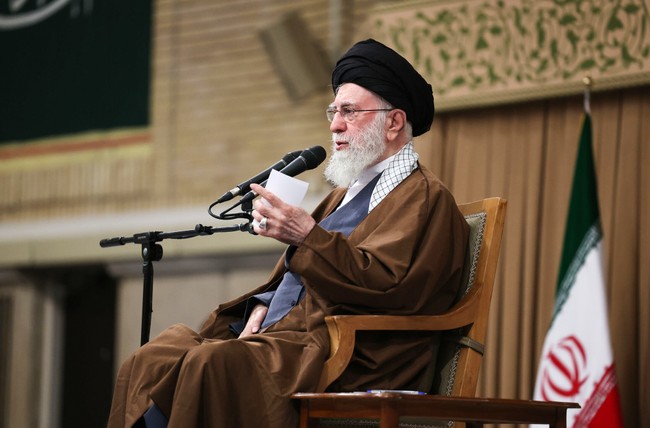
The street protests in Iran have widened fast, drawing in shopkeepers, students, and everyday people fed up with runaway inflation, harsh social controls, and a regime that spends scarce resources abroad while citizens suffer at home. What began as economic anger over a collapsing rial now carries political overtones, with defiance aimed at the supreme leader and security forces alike. These events show a rare cross-class alliance and a surge of public boldness rarely seen in recent Iranian unrest. This piece reports on that expansion, the notable actors involved, and the signals the movement is sending to the regime and the world.
What makes this uprising significant is who has joined it. Shopkeepers in Tehran reportedly shuttered their businesses, and that action spread to other cities, turning an economic protest into a broader political confrontation. When small business owners stop work, the state feels it quickly; paired with over 50 percent inflation, ordinary survival has become a political spark. The mood on the ground mixes anger about daily hardship with resentment toward the regime’s social restrictions.
Demonstrations over the country’s economic crisis erupted in Tehran, the capital, on Sunday after the Iranian rial plunged to a record low against the dollar, forcing the head of the central bank to resign.
The protests soon morphed into wider outbursts against Ali Khamenei, the supreme leader, and his draconian restrictions on women, with students and shopkeepers demonstrating in a rare alliance against the government.
Students have also been a major force in these clashes. At Tehran University and other campuses, reports say students confronted plainclothes Revolutionary Guard units, chanting “freedom” and “death to the dictator,” then forcing security personnel back from university gates. University activists announced they would skip classes and march until power changes hands, reflecting a generation that sees no future under current priorities. Their slogans make clear a core grievance: money and attention flow outward while Iranians face scarcity at home.
On Tuesday, Revolutionary Guards (IRGC) in plain clothes trapped students who were chanting “freedom” and “death to the dictator” inside Tehran University and attacked them. It is not known how many were injured. [….]
Nafas, a student at Tehran University, told The Telegraph: “Students have been chanting since last night. They [security forces] surrounded the campus last night and rode their motorcycles around it – they returned today with batons, stun guns, and tear gas.
“Students clashed with them and forced them out, but the gates are now closed. Students at many universities have said they will not attend classes and will continue protesting. What’s the point of studying when there is no future, and the regime gives our money to Gaza and Lebanon?”
Women have been at the forefront, performing daring acts of defiance against enforced dress codes and state control. In some universities female students reportedly removed mandatory headscarves, waving them and yelling bold insults at the regime. These gestures carry symbolic weight, but they are also tactical: they shift the narrative from isolated economic complaints to direct challenges to theocratic legitimacy. Public scenes of women denouncing the state are galvanizing more protesters and attracting global attention.
Female students in at least one university removed their mandatory headscarves, waved them in the air, and called for Khamenei’s death, while others compared the Islamic Revolutionary Guard Corps to Islamic State.
On major thoroughfares like Jomhouri Street in Tehran, eyewitnesses and videos show crowds pushing back against security forces—kicking out vehicles and driving off plainclothes officers. In smaller cities and on islands like Qeshm, demonstrations were reported, signaling that unrest is not confined to the capital. Protesters have pulled down gates to government buildings in places like Fasa, and there are alarming reports of police firing at crowds in several towns. Such escalation raises the risk of harsher crackdowns and more fatalities.
Authorities have tried to suppress coverage and make arrests, but that has not stopped the spread. Videos and firsthand accounts suggest the unrest reached Kermanshah, Shiraz, Yazd, Isfahan, Zanjan, Hamedan, and beyond within days. Each new city to join shows the movement tapping into local grievances and linking them to national anger over mismanagement and ideological priorities. The geographic reach complicates the regime’s response and stretches its security apparatus thin.
That mix of economic pain and social resistance creates a dangerous dilemma for the ruling elite. Concession on prices alone won’t erase demands for political and cultural freedom, and violent repression risks widening the revolt. From a conservative viewpoint, supporting the Iranian people’s push for liberty and accountability aligns with American values and strategic interests. A freer Iran would reduce a hostile regime’s ability to export instability and act as a regional spoiler.
Despite arrests and violent responses, protesters keep returning to the streets, and solidarity gestures—shop closures, student strikes, and women’s actions—are amplifying the movement. State control over the flow of information remains a factor, but the courage on display is reshaping the conversation inside Iran. For observers watching the struggle, the critical question is whether disparate acts of defiance can cohere into sustained pressure that forces real change.
Where this goes next depends on whether protesters can maintain momentum and whether the regime opts for reform, concessions, or harsher repression. For now, the country looks restive, and the hope among many on the streets is for a future where daily life is livable and personal freedoms are restored.

Add comment