
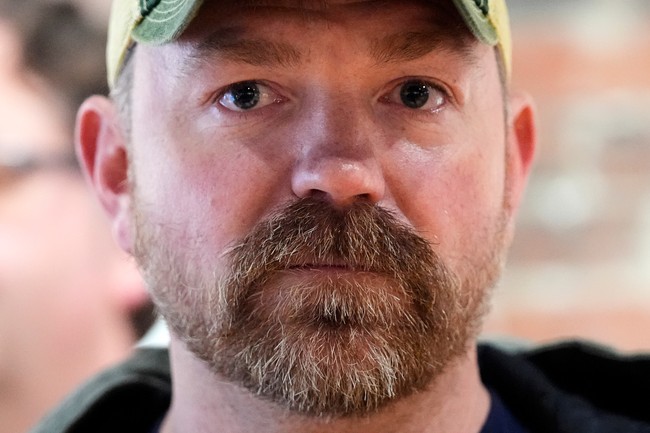
The Maine Senate candidate who joined Bernie Sanders at a recent Portland rally fumbled his way through the event, revealed a hard-left agenda, and drew sharp rebukes from fellow Democrats; the scene exposed tensions within the party and raised questions about judgment, policy, and political instincts. Below I walk through the gaffe, the rhetoric, the reaction from inside the party, and what this episode signals about Democrats’ direction and electability.
Platner Embarrasses Himself at Bernie Rally, Gets Blasted by Fellow Democrat
The event in Portland featured Graham Platner standing beside Sen. Bernie Sanders at a “Fighting Oligarchy” rally, but it was Platner’s slips and rhetoric that dominated headlines. Early in his remarks he mangled Sanders’ name, referring to him as “Senator Standers,” and the flub repeated later as he wrapped his speech. Small mistakes matter at rallies, but it was the tone and substance of his comments that drew the harshest scrutiny from conservatives and some Democrats alike.
Platner leaned into class-war language, telling supporters they’d “take back the wealth that belongs to us” and promising to “target the wealth where it has been hoarded.” That kind of rhetoric plays well to a certain crowd, but it also signals policies that would punish success and deter investment in Maine. When candidates promise to seize assets or redistribute income, voters who want growth and opportunity should worry.
He followed up with a list of social spending priorities, saying, “There’s absolutely no question that if we target the wealth where it has been hoarded for decades and put it into social programs like healthcare, childcare, paying teachers what they are worth,” and so on. That sentence, offered without nuance, reads like a pledge to expand entitlement-style programs financed by aggressive taxation. Conservatives see that as a blueprint for economic stagnation and a warning to families and businesses that investment will be taxed to fund permanent government programs.
The rally also amplified questions about Platner’s judgment unrelated to policy. Reports and controversy about a tattoo surfaced and became part of the narrative around his candidacy, prompting even some on the left to distance themselves. Those concerns aren’t merely about personal image; they matter because voters expect candidates to show character and discretion, qualities that can be decisive in tight races.
Not every Democrat offered him cover. Representative Jake Auchincloss of Massachusetts said on CNN that he found both the tattoo and Platner’s comments “personally disqualifying,” and he warned that that brand of Democratic politics would not build durable majorities. His blunt rebuke illustrates a widening split: some Democrats are eager to embrace the most radical impulses of their base, while others recognize the political costs of chasing that agenda.
The reaction from within the party matters because it shows Democrats are divided on strategy. Leaders like Bernie and Elizabeth Warren have shown willingness to back bold, redistributive plans, but that approach risks alienating moderate voters and independents in places like Maine. Republicans argue this internal tug-of-war explains why Democrats struggle to present a unified, electable message to the broader public.
From a Republican perspective, the Platner episode is textbook: nominate a candidate who doubles down on punitive economic ideas and you hand moderates a reason to look elsewhere. The rhetoric of taking back wealth and targeting hoarded assets sounds more like a threat than a plan to lift people up, and voters who work hard for a living will see themselves in the crosshairs. The danger is not just policy failure; it is political self-sabotage.
There are two lessons here for voters who value opportunity and common-sense governance. First, the substance of policy matters more than slogans; promising to “take back” wealth without practical reforms and incentives will discourage growth. Second, character and judgment matter in a candidate—when questions about personal choices and public rhetoric pile up, they become campaign liabilities that can cost elections.
The Portland rally illuminated how quickly a campaign can be defined by tone and optics rather than a constructive vision for the future. Platner’s missteps, his confrontational language on economic issues, and the eyebrow-raising controversies around him gave critics plenty to attack. For voters who want policies that promote jobs, investment, and opportunity, this episode raises real doubts about the direction some Democrats are pushing their party.

Add comment