
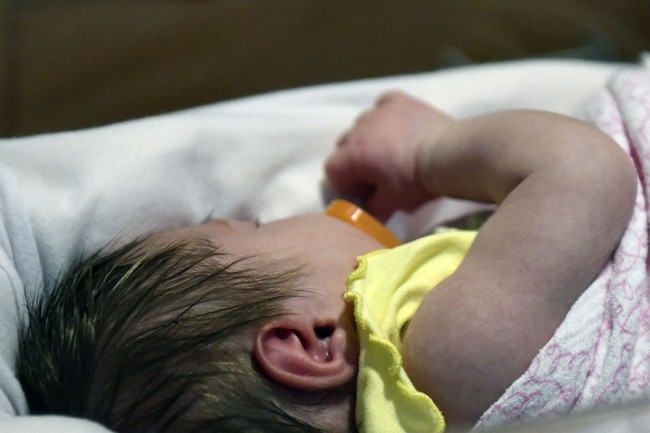
Every Saturday for more than 15 years, a man named Larry has quietly spent hours holding and comforting premature and sick babies in the neonatal intensive care unit at Eastern Idaho Regional Medical Center, offering skin-to-skin contact that research links to better breathing, improved sleep, weight gain, and stronger early bonds.
It’s easy to feel disconnected as technology zooms ahead, but Larry’s weekend ritual shows how simple human touch still makes a measurable difference. For newborns in the NICU, especially premature infants, a gentle hand and steady presence can change medical trajectories and emotional outcomes.
Volunteers like Larry step in where staff and families sometimes can’t, whether because of staffing shortages, long distances, or family hardship. Many neonatal units can’t provide constant one-on-one skin-to-skin time, and when parents are unavailable, trained volunteers fill a vital gap.
Scientific work on early touch underscores why this matters. “Touch is our first connection to the world, and long before we can interpret voices or facial expressions, our skin speaks the language of comfort, fear, hunger, calm. It is through touch that we first learn whether the world is warm or cold, safe or threatening, loving or absent. […] Touch calms the brain, not as a metaphor, but as a measurable, observable fact. And in a world that is growing more digital, more isolated, and more skin-starved by the day, this truth matters more than ever.”
For preemies, kangaroo care—skin-to-skin contact between infant and caregiver—has clear clinical benefits. It helps regulate body temperature, stabilizes breathing and heart rate, and often leads to better oxygenation and weight gain. The oxytocin release that comes from close contact also encourages bonding and reduces stress for both infant and caregiver.
In Idaho Falls, Larry has made that contact a weekly commitment. He told a local reporter plainly: “I cuddle babies. And the NICU babies are just the best babies in the whole world.” He said he’s spent over 15 years doing this work, possibly as many as 17, and explained that he never married or had children of his own, choosing instead to pour affection into these infants.
Larry traces his practice back to childhood, saying he began cuddling nieces and nephews at age 11 and kept those bonds into adulthood. He framed the volunteer work as a simple service: “We all need to be cuddled, every one of us! It’s really a great opportunity to serve. If you have some love to give, why not give it?”
He also described what the cuddling accomplishes for babies in the program: “I just come and cuddle them. When the program first started, if you look at the cuddling procedure… the cuddling process, babies who are cuddled will eat better, they’ll grow faster, they’ll breathe better, they’ll adjust to life better than people.. than babies who are not cuddled.”
Hospitals that welcome volunteers usually offer a simple application and training process for anyone interested in providing kangaroo care under supervision. Many units require background checks and training on NICU protocols, but the basic act—holding a fragile infant skin-to-skin, speaking softly, and offering calm warmth—remains straightforward and powerful.
The personal payoff can be as meaningful as the medical one. Volunteers often describe a sense of purpose and connection from regular visits, and NICU staff report that consistent, caring touch from volunteers can ease their workload and improve patient outcomes. Small, steady acts of kindness add up in an intensive-care environment.
Larry’s story also highlights a broader point about community responsibility: when families struggle, a neighbor’s time and tenderness can fill gaps that money or technology cannot. In rural areas especially, long distances and limited family resources make volunteer programs essential for infants whose parents cannot be there around the clock.
Beyond hospitals, the lesson is simple and human. Physical affection is not a luxury; for newborns it can be a lifeline. Giving time and warmth to a tiny person in need has immediate health benefits and echoes throughout a life, which is why weekly rituals like Larry’s matter so much.
Thanks to the community and local reporting for bringing attention to this kind of quiet service, and to the many volunteers who offer their presence when babies and families need it most.

Add comment