
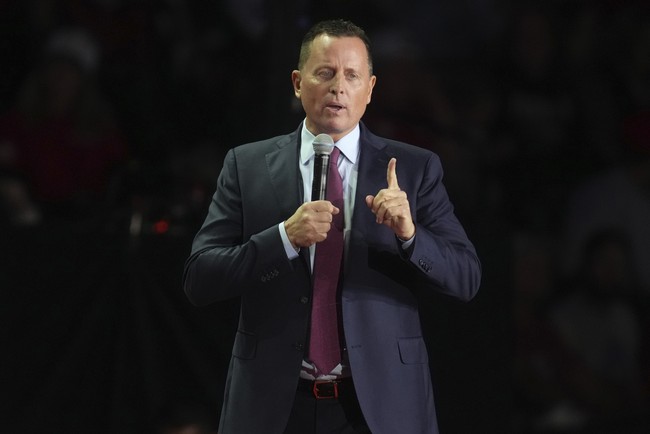
Ric Grenell’s departure from the Kennedy Center sparked a sharp exchange with Sen. Sheldon Whitehouse, centering on claims about the center’s condition and the actions taken during the transition. This piece lays out the timeline, the claims about financial and physical neglect, Grenell’s blunt rebuttal, and the broader partisan angle shaping the debate.
President Donald Trump announced that Ric Grenell would step away from his role overseeing the Kennedy Center during its transition, and he praised Grenell’s efforts. The administration presented the change as part of a focused plan to address long-standing problems at the institution. Critics immediately framed the move as political, while supporters called it necessary accountability.
Grenell described the situation he inherited in blunt terms, arguing the center’s finances and operations had been mismanaged. He said, “The books were a mess when I walked in. We were paying staff with debt reserves, we didn’t have money in the bank,” during an interview on Fox News in November. Those words became central to the conservative defense of the shutdown for renovations.
The Trump team and Grenell pointed to physical decay as proof that action was overdue, listing issues from broken elevators to infrastructure problems in the parking garage. They argued these conditions justified an immediate, comprehensive renovation that would temporarily close the venue. Opponents said the claims were exaggerated and politically motivated.
Sen. Sheldon Whitehouse fired back with a public criticism that used vivid language, accusing Trump allies of turning the Kennedy Center into a casualty of partisan looting. His message framed the closure as a cover-up, portraying the center as a victim of political opportunism rather than a site of overdue repairs.
The response from Ric Grenell was unforgiving and direct, aimed at undermining Whitehouse’s moral authority on the issue. He wrote lines that accused Democrats of years of neglect and blasted the senator for remaining silent while problems accumulated. The tone left little room for compromise and made the argument personal.
Grenell’s rebuttal included pointed claims about financial mismanagement, noting staff were paid from reserves meant to cover a looming $30 million loan in 2030. He accused leadership of letting corporate partners walk away because programming had become ideologically skewed. His argument tied fiscal stewardship to programming choices, portraying the decline as the predictable result of political priorities.
Those who back the Trump administration see the renovation plan as a corrective measure, a chance to rebuild an institution they say was allowed to rot. They emphasize immediate safety and operational concerns as nonpartisan reasons to act quickly. To them, the criticisms from Democrats ring hollow given the history of oversight and funding decisions.
Opponents argue the rush to rebrand the Kennedy Center under a presidential administration politicizes a cultural institution that should stand above partisan fights. They warn that closing the center and reworking its leadership can erase long-term programming and partnerships built over decades. For many cultural advocates, the dispute is less about maintenance and more about who controls the narrative.
At the center of the clash is a broader debate about responsibility and accountability in public institutions. Grenell framed the solution as decisive action: close, repair, and move forward under new management aligned with the administration’s priorities. Critics counter that this approach risks turning necessary maintenance into a political spectacle.
The exchange also highlights how partisan instincts shape reactions: Democrats are quick to label the move as political theater, while Republicans present it as overdue discipline and repair. Each side interprets the same facts through very different lenses, and that gap in framing fuels the intensity of the argument. This is as much about messaging as mechanics.
Public discourse around cultural institutions often becomes a proxy for battles over spending, ideology, and influence. The Kennedy Center fight follows a familiar pattern: allegations of neglect, rapid corrective promises, and sharp public rebukes traded across party lines. Whether the renovations solve structural problems or deepen divisions will depend on how transparently the work is managed and communicated.
In the meantime, the Kennedy Center will stand closed while plans for renovation proceed under the current transition team’s oversight. The controversy will not end with a construction timeline; it will likely linger as both a policy issue and a political story. The clash between Grenell and Whitehouse has already become a case study in how cultural stewardship and partisan politics collide in Washington.


Add comment