
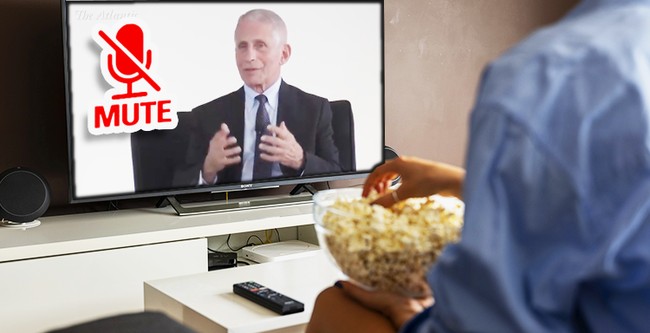
The recently released diary of Dr. Anthony Fauci exposes cozy relationships between the former chief medical advisor and major legacy media figures, revealing private praise and friendly exchanges that raise questions about journalistic independence and public accountability.
The diary entries, released ahead of Fauci’s Senate testimony, show repeated private messages and supportive comments from prominent network hosts that suggest more than casual professional contact. These interactions include texts and calls that read more like fan mail than objective reporting. For conservatives and anyone who values a free press, the records feel like a breach of trust.
Sen. Rand Paul’s push for transparency around Fauci’s role during the pandemic framed these diary excerpts as evidence the media leaned into protection rather than scrutiny. The entries depict a pattern of praise and deference from anchors and hosts who should have been asking tougher questions. That dynamic matters because the media’s role is to hold power to account, not to prop it up.
CNN figures crop up repeatedly in the diary, showing affection and admiration that undercut claims of strict neutrality. One notable exchange involved Dana Bash and a reference to another network colleague. The passage reads: “Dana Bash sent me a text: ‘I just watched the whole [Judiciary Committee Chair Jim] Jordan [OH-4] thing. Again, you’re a better man than I …. As our friend Wolf Blitzer said to me yesterday — no one would have blamed you if you said simply ‘Mr. Jordan, go f— yourself,’” Fauci wrote.
Jake Tapper is named as part of that same circle, despite his attempts to present himself as a straight journalist. The diary suggests Tapper’s relationship with Fauci went beyond normal source interactions, which undermines public confidence in how events were covered during critical pandemic moments. It matters when anchors who shape public understanding may be too close to those they report on.
The NBC relationship is on display as well, with Chuck Todd portrayed as offering counsel and friendly feedback to Fauci after interviews. The diary quotes the exchange directly: “I had a really nice conversation with Chuck Todd this morning. He had texted me to ask what I thought of the interview yesterday. I told him that I thought it was absolutely terrific, but I wanted some advice from him. I asked him whether he thought that I should pull back from publicly defending myself against the slanderous attacks since that might call more attention to them,” Fauci wrote.
ABC’s interactions are included, too, painting a picture of a network figure impressed by Fauci’s composure under criticism. The diary records George Stephanopoulos texting: “Thank you, Tony. So impressive,” after a segment on Good Morning America. That kind of praise from a prominent host reads like encouragement rather than impartial analysis.
Other veteran journalists appear in similar light, with entries showing apologies, explanations, and behind-the-scenes coordination that suggest relationship maintenance. Andrea Mitchell is recorded offering a mea culpa for scheduling conflicts that prevented Fauci’s appearance, implying concern over access and exposure. These small gestures add up to a broader pattern of friendliness.
Taken together, the diary entries portray a media ecosystem that was comfortable with Fauci and sometimes deferential to him during a period of enormous public consequence. For Republicans and skeptical observers, the tone and content of these private notes confirm long-held worries about media bias. Public trust depends on a clear separation between reporters and powerful sources, especially during crises.
Beyond the personalities, the records highlight a bigger question about how narratives were shaped early in the pandemic and who had the authority to set that agenda. When top journalists share friendly exchanges with officials who then influence policy, the line between reporting and advocacy gets blurry. That blur can cost lives and erode democratic oversight when mistakes or misconduct need aggressive scrutiny.
Fauci’s diaries do not exist in a vacuum; they arrived at a moment when many Americans already doubt media motives and expect partisan tilts. These entries feed into that skepticism by documenting behavior that looks more like mutual backslapping than adversarial journalism. Accountability starts with acknowledging those relationships and asking whether they affected coverage.
The upcoming hearings will test whether policymakers will demand clearer standards for interaction between journalists and sources during emergencies. Republicans pushing for answers argue that the public deserves to know whether the information environment during the pandemic was shaped by independent reporting or by insiders protecting insiders. The diary is a tangible piece of that puzzle.
https://x.com/DrewHolden360/status/2081861523413098699
Regardless of one’s view on the broader pandemic response, the diary excerpts make one thing plain: the bonds between elite media figures and powerful public servants were tighter than many expected. That reality deserves scrutiny, and voters should be able to judge both the media and officials on what these records reveal about transparency, independence, and influence.
CNN’s Dana Bash sent Fauci a text message in April 2021 after a contentious House Select Subcommittee hearing over COVID-19, according to the diary. The CNN star complimented Fauci and informed the doctor that her CNN colleague also picked a side.
“Dana Bash sent me a text: ‘I just watched the whole [Judiciary Committee Chair Jim] Jordan [OH-4] thing. Again, you’re a better man than I …. As our friend Wolf Blitzer said to me yesterday — no one would have blamed you if you said simply ‘Mr. Jordan, go f— yourself,’” Fauci wrote.
Tapper and Bash went on to moderate the CNN Republican Presidential Primary Debate between then-President Biden and President Trump in 2024.
Fauci also had a texting relationship with then-NBC News host Chuck Todd.
“I had a really nice conversation with Chuck Todd this morning. He had texted me to ask what I thought of the interview yesterday. I told him that I thought it was absolutely terrific, but I wanted some advice from him. I asked him whether he thought that I should pull back from publicly defending myself against the slanderous attacks since that might call more attention to them,” Fauci wrote.
Fauci also revealed that ABC’s George Stephanopoulos texted him following an interview on “Good Morning America” in July 2020. Apparently, Stephanopoulos was impressed that Fauci dismissed a mean tweet from Trump.
“Thank you, Tony. So impressive,” Stephanopoulos wrote, according to the diary.
Add comment