

The DSA co-chair’s on-air admission that no Democrat has asked her to scale back calls to abolish core American institutions exposes a party willing to tolerate, if not quietly embrace, radical change; this piece lays out what was said, who weighed in, how senior Democrats responded, and why voters should care about a party that won’t defend the basic framework of our republic.
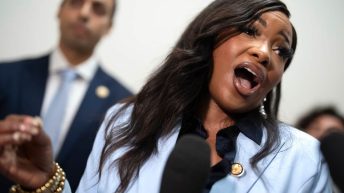
When the NewsNation interview aired, most viewers expected the usual pushback from party operatives trying to tamp down extremes. Instead, Megan Romer said something startling: not a single Democratic operative had reached out to ask the DSA to moderate its rhetoric. That single fact raises real questions about the party’s internal discipline and its appetite for sweeping institutional overhaul.
Romer’s platform, as she described it elsewhere, includes abolishing the Senate, the Supreme Court, borders, and even the presidency. Those are not fringe tweaks; they are the foundations of our constitutional system. To hear a leader of a major left-leaning organization propose dismantling these institutions without any private calls to temper the message is alarming to anyone who values stable government.
Chris Cuomo framed the obvious concern bluntly on air, saying, “Democrats have to be calling you, right, and saying, ‘Listen, love the energy, love that you’re getting these new voters, love that you’re getting us back in the blue-collar business. It’s great, it’s great,’ ‘But just, you gotta relax a little bit with the abolish this and get rid of that.'” He followed with, “It sounds radical, it sounds like you want to destroy our Constitutional Republic.” Those lines captured the unease many voters feel when mainstream party leaders fail to push back.
Romer’s answer — that not one call came — is an admission that changes everything about how we read the party’s public posture. If elected officials and operatives only offer public disavowals while tolerating extreme proposals behind closed doors, voters are left to decide whether the party can be trusted to defend the structures that protect liberty. That trust erodes fast when the people running the show won’t even nudge radicals toward moderation.
The silence from Democratic operatives is not happening in a vacuum. Representative Ro Khanna acknowledged that socialist-leaning forces are gaining ground by tapping into genuine economic frustration. He said, “I’ll tell you why they’re winning. People are upset at an unfair political and economic system.” That kind of honesty about root causes does not excuse calls to gut the constitutional order, but it does explain why activists find traction.
Khanna went on to argue that the Democratic Party needs reform and that it “hasn’t delivered enough for working-class Americans.” Fine — reforms can be sensible and targeted without blowing up the system that secures political rights and personal freedoms. The danger is substituting constitutional reform with wholesale abolition, which hands chaos to those who would exploit it.
The pattern is clear: public distancing plus private tolerance. Headlines and opinion pieces may spin stories suggesting Democrats fear their own radicals, but the reality seems to be a wink and nod. Party leaders publicly voice concern while allowing the activists to keep stoking the base with revolutionary rhetoric that scares swing voters and independents.
https://x.com/RNCResearch/status/2084447190504935633
That approach carries electoral risk. If voters perceive a party as cavalier about abolishing core institutions, turnout and support will slip among those who prioritize stability and rule of law. Campaigns that promise bread and butter help are undermined when the same party appears indifferent to the permanence of the very institutions that make policy durable and predictable.
The implications extend beyond elections. A party content to let radicals call for removing the Senate or the presidency is signaling it prefers ideological victories to practical governance. That is not how you build coalitions in a diverse nation. It is how you fracture them, leaving moderates and independent-minded citizens out in the cold.
Americans deserve clarity. Voters need to know whether the party they might support stands for strengthening institutions and delivering results, or whether it tolerates proposals that would rewrite the constitutional map overnight. The Romer interview offered that clarity: either the Democratic establishment is too weak to push back, or it is quietly complicit. Neither option reassures those who value a stable, functioning republic.


Add comment