
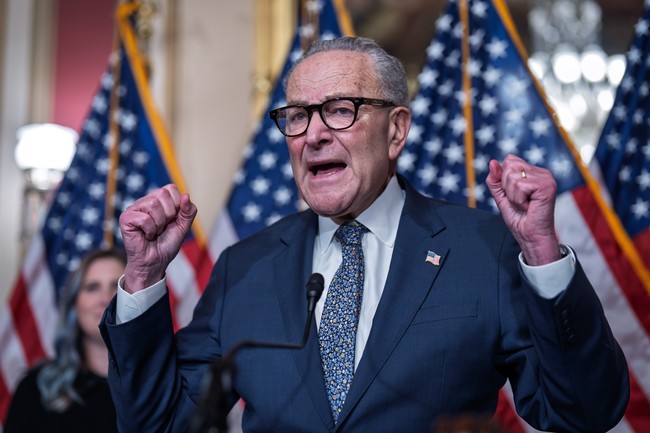
The Harvard-Harris poll and commentary from CNN analyst Harry Enten show the Democratic Party facing serious voter dissatisfaction, with generic ballot numbers tight and troubling approval ratings even among Democrats themselves.
Midterm history typically favors the party not in the White House, and that pattern can work against the sitting president’s party. With the current administration in power, Democrats would normally expect a midterm boost, yet today’s numbers complicate that expectation. Operation Epic Fury and international tensions add uncertainty, but underlying polling still points to internal problems for Democrats.
The Harvard-Harris poll found the generic ballot almost dead even among registered voters, 51 to 49 in favor of Democrats, a razor-thin margin that should worry any party counting on broad support. Narrow leads like that evaporate fast when voter enthusiasm or turnout shifts even slightly, and the small gap suggests vulnerability. Close ballots also magnify the impact of negative perceptions about party leadership and priorities.
CNN senior data analyst Harry Enten said the public viewed Democrats as “atrociously awful.” He highlighted how voters answered whether Congressional Democrats had the right priorities: 74 percent said no, just 25 percent said yes. That gap is dramatic and points to a mismatch between what the party is doing and what voters want from their representatives in Washington.
Worse for Democrats, their own voters aren’t impressed. Only 45 percent of Democrats and Democratic-leaning independents thought their party had the right priorities, while 55 percent said they did not. That internal dissatisfaction opens the door to primary fights, leadership challenges, and defections in close races where every vote matters. Enten captured the shock of it: “They don’t like their own party either…my goodness gracious!”
Enten compared current attitudes to past years when the other party held the White House and found a dramatic decline in approval for Democratic congressional leaders. Where leaders once enjoyed strong positive ratings, current figures sit in the negative, with one noted metric at -4 compared with much higher positives in prior cycles. Enten also noted that predictions for Sen. Chuck Schumer’s return to leadership were slipping, with market signals showing only about a 50 percent chance in some measures.
The discomfort goes beyond leadership and into policy. Many Americans remember the economic and policy turmoil they associate with the current administration, and they see Democrats pushing agendas that feel out of step with mainstream voters. Positions on immigration, approaches to border enforcement, and the recent DHS funding standoff have left a lot of voters, including Democrats, feeling that representatives are not delivering practical solutions.
Voter anger isn’t limited to ideological opponents; it’s a reaction to perceived incompetence and misplaced priorities. The polling suggests people want tangible improvements to day-to-day life—safer streets, steady energy prices, and secure borders—rather than symbolic fights and endless investigations. That pragmatic focus is something Republican leaders and candidates can emphasize as they lay out alternatives for governance and security.
On the left, the immediate reaction from some quarters was to double down on progressive positions in hopes of energizing the base. That strategy risks narrowing appeal at a time when swing voters and moderate Democrats are already leaning away. Pushing further left could hand the GOP clear messages to run against and persuade independents uncomfortable with radical shifts.
If the Trump administration can resolve international tensions like Operation Epic Fury, stabilize energy prices, and maintain signs of economic improvement, Republicans could tap into the public’s desire for competence and security. Those outcomes would change the political calculus, especially when Democratic approval remains weak even among their own voters. Effective governance and improved metrics give voters a concrete reason to shift their support.
The broader trend is unmistakable: the Democratic brand is fraying in the eyes of many Americans, and internal polling weakness translates into vulnerability across competitive districts. When party members and leaners express more dissatisfaction than support, the path to a successful midterm for that party becomes steeper. Republicans who focus on performance, border security, and economic stability have an opening to make that vulnerability count at the ballot box.
Editor’s Note: The Democrat Party has never been less popular as voters reject its globalist agenda.

Add comment