
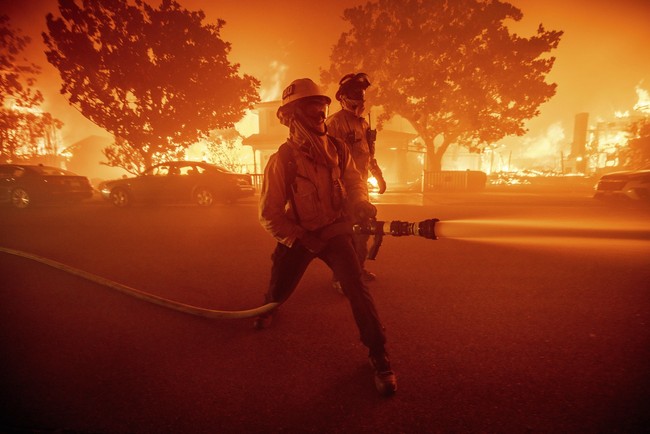
The retrial of Jonathan Rinderknecht, accused in the deadly Pacific Palisades blaze, returns to federal court after a mistrial, with new indictments focusing on a January 2025 fire that prosecutors say sparked the catastrophe that killed 12 people and destroyed thousands of buildings.
The earlier trial ended in a 10-2 mistrial in June, leaving many questions unanswered and the community still searching for accountability. Rinderknecht, 30, pleaded not guilty again at his recent arraignment, and federal prosecutors have retooled their case with fresh counts filed on Aug. 13. The new charges narrow one count to the Lachman fire while maintaining broader arson allegations related to the larger Palisades conflagration.
Federal prosecutors from the U.S. Attorney’s Office for the Central District of California brought the new indictment, increasing the scope of the case and sharpening their focus on the events that began on New Year’s. Investigators say the Lachman fire smoldered for days before it erupted into the massive blaze that took lives and leveled whole neighborhoods. The arraignment before Judge Anne Hwang lasted roughly 15 minutes and set a trial date of November 2.
Prosecutors laid out their structure in court filings, moving from three arson-related felonies down to two that more precisely target alleged conduct tied to the Lachman origin point. They now charge Rinderknecht with one count of destruction of property using fire specifically for the Lachman incident and one count of arson affecting property used in interstate commerce that ties to both fires. Those adjustments signal prosecutors are concentrating on what they believe is the clearest path to conviction.
Prosecutors filed a new indictment on Aug. 13, bringing the number of arson-related felony charges against Mr. Rinderknecht from three to two. One now focuses solely on the Lachman fire, which began on New Year’s and which investigators say smoldered for a week before exploding into the Palisades blaze.
Mr. Rinderknecht now faces felony charges of one count of destruction of property using fire — specifically the Lachman fire — and one of arson affecting property used in interstate commerce, which relates to both the Lachman and Palisades fires.
The arraignment was held Wednesday in a downtown Los Angeles federal courtroom before Judge Anne Hwang of the U.S. District Court for the Central District of California during a hearing that lasted about 15 minutes.
Much of the prosecution’s case previously leaned on cellphone data, witness testimony, and assertions about motive, with prosecutors arguing the defendant harbored resentment toward affluent communities. Defense lawyers countered that the evidence was circumstantial and floated the possibility that New Year’s Eve fireworks started the initial blaze. Those conflicting narratives contributed to the jury split that produced the mistrial.
In filings from November 2025, prosecutors urged that Rinderknecht be held pending trial, portraying him as a present danger based on alleged threats and volatile behavior. The filing described incidents that included threats to shoot a relative, threats to burn a family member’s home, and unsafe storage of a firearm in a location accessible to children. Federal judges reviewed that record and kept him in custody while the legal process continues.
As the case moves forward, expect the same battleground issues to return: the strength of circumstantial evidence, forensic timelines for how the fire began and spread, and competing interpretations of motive. Prosecutors will press the Lachman connection as central, while the defense will emphasize gaps and alternative explanations that stopped a conviction the first time. November’s trial now carries the weight of the community’s need for clarity and for justice.
https://x.com/ImMeme0/status/2051319012374479350
Reporting has also highlighted troubling background details about Rinderknecht’s behavior and interests in the months before the disaster, including an alleged fixation on a violent figure and statements attributed to him that prosecutors say revealed resentment. Those elements have been used to sketch possible motive and mindset, though the defense maintains much remains unproven. The atmosphere around the case has been tense, reflecting the scale of the loss and the political pressure to hold accountable anyone responsible for such devastation.
One notable excerpt circulated from earlier material reads in part, “It has been reported that Palisades arson suspect Jonathan Rinderknecht, who is accused of starting a fire that led to the deaths of 12 people, burned 7,000 homes, and damaged over 1,000 buildings, had become “fixated” on Luigi Mangione in the lead-up to the deadly blaze and allegedly started the fire out of “resentment of the rich.” Leftists are the deadly cancer of society!” That passage combines reporting claims with an explicitly partisan line of commentary that reflects strong political sentiment in parts of the public debate.
Legal teams are preparing motions and evidence strategies now, and the court will have to resolve pretrial disputes before jurors are selected. Both sides are likely to revisit witness lists and forensic timelines as new discovery and motions shape what jurors will see. The coming months will be decisive for whether prosecutors can close gaps that produced the earlier mistrial.
Community members and victims’ families continue to watch closely as federal prosecutors aim to present a tighter, more focused case about the origins of the Palisades blaze. The stakes are high: this retrial is about accountability, safety, and whether the justice system can produce a clear outcome after one of California’s deadliest recent disasters.
Add comment