
This piece examines how many Democratic officials have reacted to recent drug-smuggling encounters at sea, highlighting statements from members of Congress that defend or sympathize with the smugglers and arguing that those reactions reveal a troubling political and moral stance that Republicans should use as a clear contrast heading into the 2026 midterms.
This is a story about who and what we’re dealing with as a country, and why voters should pay attention. Democrats continue to display a pattern of prioritizing the perpetrators in criminal situations over the victims who suffer the consequences. That pattern shows up again in recent comments by elected officials reacting to a double tap strike that targeted a narco-trafficking vessel.
We have long seen Democrats argue for compassion toward criminal illegal immigrants and violent offenders, arguing mercy while often sidelining the needs of victims who deserve protection and justice. Now, that same framing is surfacing in the debate over how to deal with narco-traffickers at sea. Those statements are significant because they come from people in power whose words shape public policy and public perception.
There are many examples, but two recent exchanges crystallize the problem. Representative Adam Smith of Washington, a co-sponsor of detainee rights legislation, told an interviewer that “the people on a boat in the middle of the Caribbean carrying cocaine are not a direct threat to the lives of our service members or Americans.” That line of thinking downplays the real, deadly consequences of the international drug trade and the violent enterprises that run it.
Watch:
Local reality in Smith’s district undermines that claim. Public health data show hundreds of overdose deaths linked to drugs smuggled into the country, and those fatalities are not abstract numbers. The reality is that the narcotics flowing through those smuggling routes kill people, and minimizing that link ignores the victims and the communities left to cope with the aftermath.
Seattle radio host Jason Rantz called Smith’s comment “astonishing” given the overdose death toll in his own county. Public health officials and community responders see the human cost daily, and those consequences extend beyond any single encounter at sea. When elected officials turn away from the damage caused by organized smuggling, it’s the citizens who pay the price.
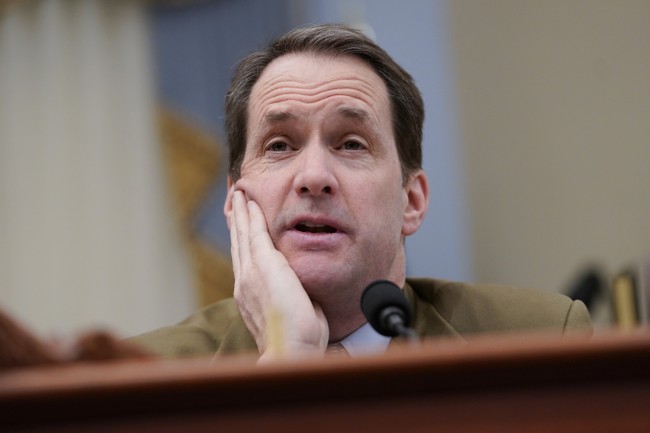
Another troubling exchange came during a segment where Representative Jim Himes of Connecticut discussed the same incident with former White House press secretary Jen Psaki. Himes suggested the men killed in the strike might have been driven by a lack of “economic opportunities” and that they were not “Pablo Escobar out there on a boat,” framing them as poor victims of circumstance rather than participants in violent criminal networks.
“I live in a political world, and a lot of folks, if you just tell them, you know, ‘the president is killing narco-terrorists in the Caribbean,’ reasonably enough, they’ll say a lot of Americans die because of overdoses and, you know, they might say ‘okay, I’m supportive of that.'”
“But what you need to do is you need to see two terrified men clinging to the wreckage of the ship, and this is not Pablo Escobar out there on a boat. These are guys that probably didn’t have a lot of economic opportunity, made a terrible decision to participate in the drug trade.”
Watch:
That framing — portraying traffickers as victims of circumstance — absolves responsibility for a criminal industry that fuels addiction, violence, and social decay across American communities. Sympathy is understandable for individuals trapped in poverty, but it becomes dangerous and irresponsible when it excuses participation in transnational criminal enterprises that endanger others.
Statements like these are not isolated missteps. They reflect a broader Democratic tendency to emphasize empathy for offenders in ways that downplay the suffering of victims, including children and the elderly. When policymakers habitually center the perpetrators, they risk undermining law enforcement, border security, and community safety.
For Republican candidates and conservative voters, these public remarks represent a clear messaging opportunity. The words spoken by Democrats about narco-trafficking, when repeated back to the public, make an effective case that the party is out of touch with the safety concerns of ordinary Americans. Those quotes need no embellishment to highlight a stark contrast on law and order.
This is who and what we’re dealing with, and the issue will be central in political debates as the next midterms approach. Voters should evaluate whether public officials prioritize the protection of citizens and communities or whether they consistently side with people who profit from harmful criminal activity.


Approximately 200 Americans die from drug overdoses EACH DAY. That’s 73,000 per year–each and every year. That’s 15,000 more deaths each year from drug overdoses than the total of Americans who died in the 10-year Vietnam War-And the democrats are worried about 100 narco-terrorists AND THEIR CARGOS getting whacked with ZERO loss of life on our side. Why would anyone vote for a democrat? BTW: I’m a registered independent.