
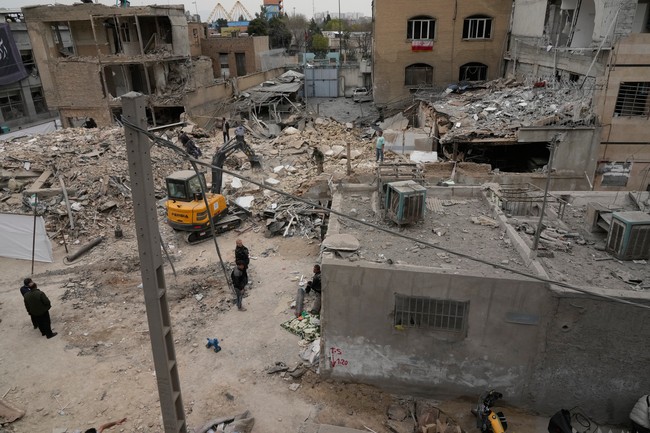
This piece argues that impatience from Democrats and a vocal online faction dubbed the “Woke Reich” weakens American resolve against Iran, frames the current response as necessary defense rather than aggression, and calls for Republicans to stand firm in finishing the job decades of presidents left undone.
Nearly three weeks into active operations against an aggressive theocracy, much of the political and media conversation centers on impatience: “When will it be over?” That demand for quick closure mistakes tactical setbacks and the time required for strategic success as signs of failure. Political opponents use impatience as a cudgel to sabotage sustained effort, not to improve outcomes. That predictable obstructionism has long been part of the Democratic playbook when American firmness is needed.
This impatience and sabre-rattling of criticism is no accident; it reflects a broader opposition to decisive action called Operation Epic Fury. Opponents will spotlight every misstep—operational, rhetorical, or accidental—to portray the mission as illegitimate. The goal is not oversight but to create a political narrative that forces retreat, emboldening adversaries. In that light, calls for immediate resolution are often a form of political mischief, not sober foreign policy debate.
There is also a faction on the right and among online influencers that has given this opposition cover. This self-styled “Woke Reich” includes isolationists, so-called nationalists, “no-forever-war” activists, and others who argue American interests should be peripheral. They claim that foreign entanglements are always our fault, invoking decades-old grievances to excuse modern aggression. That posture ignores the continuous pattern of attacks and hostile intent coming from the theocratic regime in Tehran.
The argument that the United States created Iran’s modern problems by intervening in 1953 reduces a complex history to a talking point and avoids the core issue: Tehran’s sustained campaign against the free world. Whatever one thinks of past CIA actions, those interventions were aims at countering Soviet expansion, not building an enduring threat that now targets America and its allies. Equating Cold War containment with an excuse for current hostility lets Iran off the hook for its own ideology and actions.
The regimes of the Soviet era and of theocratic Iran share one grim feature: each embraced a revolutionary, almost religious fervor that denied pluralism and sought global influence. Both ideologies operated with uncompromising goals: one promised earthly paradise through global communism, the other promised heavenly reward for its brand of militant Islam. As Alfred said in The Dark Knight, this kind of fanaticism “can’t be bought, bullied, reasoned, or negotiated with.” Their aim is to “see the [Western] world” burn.
Containment and defeat of such threats is messy, protracted, and sometimes costly. Expect missteps; expect operations that take time. But the alternative—caving to pressure to stop before objectives are met—leaves Americans less safe. The choice here is between a bold policy that degrades a clear and present danger, and appeasement that invites fresh attacks and emboldens other hostile actors.
Republicans must stop treating online influencers and the Woke Reich as if they are unavoidable vote-winners whose endorsement determines policy. Too many elected conservatives shrink from confronting those voices because of perceived short-term electoral risk. That is political cowardice. Standing for national security and the defense of allies is not just principled; it is what the party should be about.
Donald Trump ran on reducing endless wars, but that record does not mean abandoning the fight when a direct threat emerges. Critics who brand current action as betrayal ignore that multiple administrations let the Iran problem fester for decades. The country has faced an active, hostile Iranian foreign policy since the embassy seizure and hostage crisis in 1979, with support for proxy warfare and terrorism across the region ever since. Confronting that reality now is not warmongering; it is finally addressing a five-decade threat.
Those who cheer for retreat or point to past mistakes as an all-purpose excuse are playing into the hands of Tehran’s strategists. The free world cannot tolerate regimes that deny the right of others to exist and actively work to dismantle international order. Political expediency that prioritizes short-term popularity over strategic clarity risks larger wars later, and it punishes the nation for the sake of online applause or ideological purity.
There will be debates about tactics, accountability, and reconstruction after the shooting stops. Those are valid and necessary conversations for a republic that values oversight and debate. But they should not be allowed to derail the primary work of defending American lives and interests against a theocratic machine that has made clear its intentions. Republicans should lead with conviction, not cave to loud distractions that undermine national security.



Add comment