
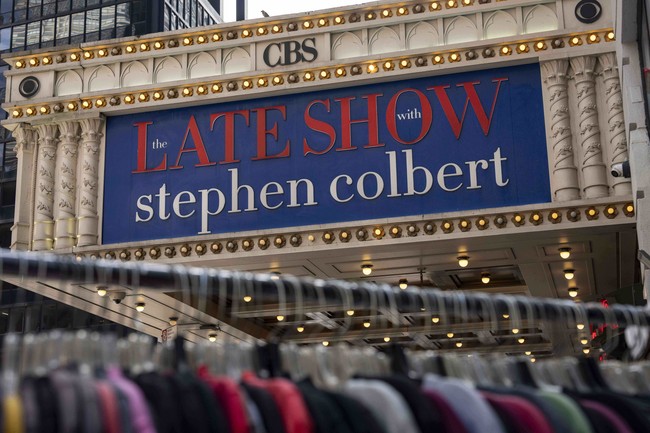
The end of The Late Show With Stephen Colbert has left CBS with a tidy business win and a little poetic justice for critics who said the network axed him for political reasons; switching to a time-buy model has turned a $40 million annual loss into profit and shifted the late-night landscape in ways Colbert’s fans won’t like.
A Satisfying Coda to the CBS-Paramount-Colbert ‘Late Show’ Tale, and Leftists Will Despise It
Stephen Colbert signed off from CBS, but the story didn’t stop with his final episode on Thursday, May 21. Networks make hard financial calls, and CBS and parent Paramount decided the math no longer worked for a politically charged late-night hour. That decision has now produced an outcome that undercuts the narrative that Colbert was canned for political reasons.
CBS moved to a “time buy” arrangement, where Byron Allen’s Comics Unleashed pays for the slot, covers production costs, and controls the ad inventory. That model means the network no longer shoulders the production bill, which is what turned a money-losing hour into a profitable one. For a company that reports to shareholders, that kind of turnaround speaks louder than ideological hand-wringing.
Colbert’s defenders liked to cast his cancellation as some martyrdom for free speech or anti-Trump bias, but the bottom line is plainly financial: the program was reportedly losing about $40 million a year. Networks aren’t charities. When a daypart becomes cost prohibitive, executives try new models, and CBS did exactly that by converting a drain into revenue.
Byron Allen’s Comics Unleashed officially took over CBS’s 11:35 p.m. late-night slot on Friday, May 22, under a new “time buy” deal with the network. Under the arrangement, Allen Media Group pays CBS for the time period, handles all production costs itself, and controls the advertising inventory. This means that CBS doesn’t have to spend a dime.
That’s a pretty sharp contrast from what Colbert cost it.
CBS announced the cancellation of The Late Show back in July 2025, citing financial reasons. The network said the program was hemorrhaging roughly $40 million a year. At the time, some on the left insisted that the move was political. In their minds, CBS, an anti-Trump network, was doing President Donald Trump a favor by getting rid of one of his critics.
But CBS (again) demolished that narrative.
“With this ‘time buy’ model, we have shifted an hour that was losing roughly $40 million annually to $15 million in profit — a $55 million swing,” the spokesperson said, calling it “a new business and programming model for late night that proactively addresses a network daypart that was cost prohibitive to continue.”
Think about that $55 million swing. For viewers who equate television programming with cultural warfare, it stings to see the corporate decision framed purely as smart business. The network tried an experiment in a risk-averse industry and found a way to stop losing money, which should satisfy anyone who believes networks should answer to profitability.
Replacing an expensive, politically charged late-night show with a syndicated comedy block isn’t glamorous, but it’s effective. Byron Allen’s Comics Unleashed is a simple, low-cost concept: a town-hall style set with four stand-up comics and one host. The format has been around for years and costs a fraction of what a star-driven late-night production demands.
That show has been following Colbert on CBS since September 2025, and viewers can see the format clearly in the trailer that accompanied the change.
Comics Unleashed started in 2006 and has lived most of its life in syndication and late-night windows. It is built to be cheap, portable, and dependable, which is exactly what a network needs when the more expensive alternative is bleeding cash. The content depends on talent, of course, but the financial model is robust by design.
For those who miss the days when late-night talk paid off, this is an uncomfortable reminder that television economics evolve. Greg Gutfeld and other competitors shifted audience habits back in 2021, accelerating the pressure on legacy broadcast shows. When audiences move and costs stay high, networks either cut or adapt.
Paramount’s broader shake-ups, including changes at the news division, have already stirred controversy with vocal left-leaning critics. Turning the late-night slot into a profit center is the kind of outcome corporate boards notice. Whether you cheer or groan, the network secured a practical win that undercuts the “political purge” narrative some pushed after the cancellation.
The Colbert era offered memorable interviews and sharp moments, but it also became a high-cost, niche property. CBS made a choice that prioritized the company’s financial health, and Byron Allen’s buy-in provided an exit that benefits the network’s bottom line. That kind of pragmatic outcome will leave partisans on the left unhappy, and that’s exactly what some will call poetic justice.



Add comment