
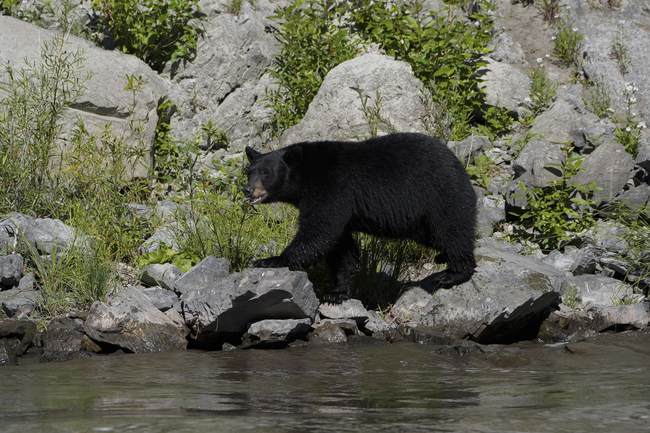
Paws and Effect: Bear Suit Insurance Fraudsters Sent to the Slammer
This piece walks through a bizarre insurance-fraud scheme out of Los Angeles where three people used a bear costume to fake attacks on luxury cars, the investigation that exposed them, the legal outcome, and why the plan was so obviously doomed from the start.
Three Los Angeles residents were convicted for staging fake wildlife attacks to collect insurance payouts, a scheme that reads like a bad comedy sketch but led to real criminal penalties. Authorities say the defendants dressed in a bear suit and submitted video and claims alleging damage to high-end vehicles at Lake Arrowhead. The case drew attention because it combined audacity with amateurish execution, and investigators were able to trace the fraud back to staged footage and matching claims on the same date.
Three Los Angeles-area residents were recently convicted in an unusual insurance fraud scheme using a person in a bear costume to fake attacks on high-end vehicles to collect insurance payouts.
As part of the California Department of Insurance’s Operation Bear Claw, Alfiya Zuckerman, 39, of Valley Village; Ruben Tamrazian, 26, of Glendale; and Vahe Muradkhanyan, 32, of Glendale, pleaded no contest to felony insurance fraud and were sentenced to 180 days in jail and two years of supervised probation and were ordered to pay restitution.
A fourth suspect, Ararat Chirkinian, 39, of Glendale, is scheduled to return to court in September for a preliminary hearing.
The scheme began when an insurer flagged a suspicious claim tied to a January 28, 2024 incident in Lake Arrowhead. The claim said a bear entered a 2010 Rolls-Royce Ghost and damaged the interior, and the policyholder supplied video footage as proof. Detectives reviewed the footage and, along with other evidence, identified the figures in the tape as human, not ursine.
The investigation began after an insurance company flagged a suspicious claim tied to a Jan. 28, 2024, incident in Lake Arrowhead.
The suspects claimed a bear entered their 2010 Rolls-Royce Ghost and caused interior damage, submitting video footage as evidence.
Detectives later determined the “bear” in the video was a person wearing a bear costume and uncovered two additional fraudulent claims submitted to separate insurance companies involving the same date and location but tied to a 2015 Mercedes G63 AMG and a 2022 Mercedes E350.
A biologist from the California Department of Fish and Wildlife reviewed the video and concluded the animal shown was “clearly a human in a bear suit,” according to authorities.
Crucially, experts were able to identify telltale signs that the footage was staged. A biologist with the California Department of Fish and Wildlife reviewed the material and concluded it showed “clearly a human in a bear suit,” a blunt assessment that undercut the claim almost immediately. The investigators then matched other claims with the same location and date, showing a pattern rather than an isolated complaint.
The defendants pleaded no contest to felony insurance fraud and received sentences that include jail time, probation, and restitution. That outcome reflects how seriously prosecutors view coordinated attempts to exploit the insurance system, even when the method is bizarre. Sentencing also sends a message to would-be fraudsters that novelty does not equal immunity from consequences.
From a practical standpoint, the scheme was remarkably sloppy. Beyond the obvious mismatch between human and bear anatomy, aspects like limb proportion, gait, and head movement made the costume easy to discredit on close review. Even without a formal expert, a quick look at the video would show how off the staging was; bringing in a biologist only made the conclusion more authoritative for court purposes.
Insurance companies increasingly use pattern analysis and video review to catch suspicious claims, and this case is a textbook example of how those systems can succeed. Screenshots, metadata, and cross-checking of reported incidents on the same date and location all help investigators build a fraud case. What began as an attempt to turn a photo op into a payout ultimately turned into criminal charges and public embarrassment.
At the end of the day, the defendants face the legal fallout for a stunt that seemed designed for shock value, not success. Their choice to dress as a bear and stage damage to luxury vehicles reads like a risky improvisation that failed at multiple levels. Justice in this instance meant jail time, fines, and supervised probation, plus a clear public record of the scheme and its exposure.
Add comment