
Checklist: note the UAE leaving OPEC and OPEC+; explain how that weakens the cartel and can boost global supply; relay President Trump’s reaction and include his exact quotes; describe how this shift affects Iran and regional dynamics; outline UAE ambitions for higher output and long-term strategy.
The United Arab Emirates made a decisive move this week by formally leaving OPEC and OPEC+. This is more than a diplomatic shift; it removes the country from coordinated production quotas and lets Abu Dhabi set its own pace. For markets that dread artificial limits on supply, this is a welcome step toward more competitive pricing and greater producer independence.
Under the old arrangement, the UAE was tied to a production ceiling that limited output to roughly 3.5 million barrels per day. Now the country is signaling plans to aim for up to 5 million barrels a day, freeing itself to expand crude, petrochemicals and natural gas commitments. Those numbers matter because an increase in supply from a major Gulf producer can help bring down the price of energy for consumers and industries alike.
UAE officials framed the decision as a long-term economic and strategic move tied to global demand projections and national priorities. Their ministers described the choice as a sovereign policy change made after a careful review of national energy strategy. The practical result is straightforward: Abu Dhabi can respond faster to market needs and pursue projects without group constraints.
The departure frees the UAE from group production quotas, giving it greater flexibility to increase output and expand its role across crude, petrochemicals and natural gas markets. Officials signaled the shift is aimed at positioning the country for long-term global energy demand growth.
UAE Energy Minister Suhail al-Mazrouei told Reuters the decision followed a “careful look” at national energy strategy and was a “sovereign national decision” grounded in long-term economic priorities. He said operating outside the group will allow the UAE to better meet future global demand.
“Being a country with no obligation under the group will give us flexibility,” al-Mazrouei said, adding the move comes at a time when global consumers require stable supply and strategic reserves are being drawn down.
The move also restores a measure of unilateral decision-making to the UAE, allowing it to balance domestic industrial growth and export responsibilities on its own terms. Gulf politics was a factor as well; frustration at repeated strikes and political snubs left Abu Dhabi wanting more control over its security and economic choices. Exiting the cartel untethers the UAE from collective politics that can sometimes slow sensible, country-specific responses.
From a U.S. perspective, particularly one that values market freedom and stable energy costs, this is an important development. Past U.S. administrations have asked Gulf producers to increase output to relieve consumer pain at the pump. With the UAE no longer bound by group quotas, it becomes easier politically and technically for it to boost supply when global markets need relief.
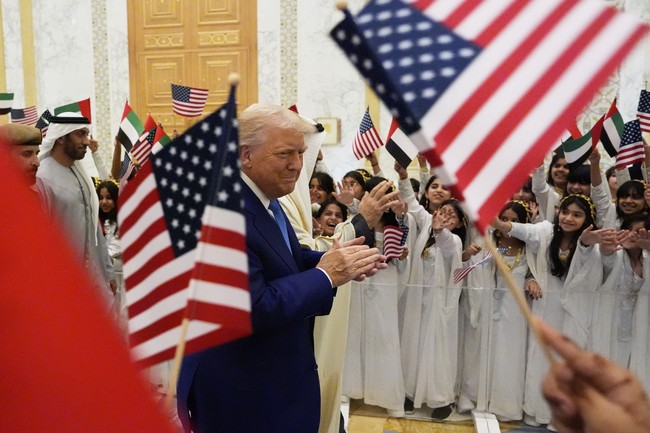
President Donald Trump publicly praised the decision when asked at the White House, calling it a positive development for price relief and commending Emirati leadership.
“I think it’s great,” Trump told reporters at the White House after meeting with Artemis II astronauts.
UAE President Sheikh Mohamed bin Zayed Al Nahyan is “very smart,” said Trump, “and he probably maybe wants to go his own way. That’s a good thing.”
“I think ultimately it’s a good thing for getting the price of gas down, getting oil down, getting everything down,” Trump said, adding, “they’re having some problems in OPEC.”
That praise reflects a broader Republican view favoring energy independence, market-driven pricing and strong responses to hostile actors. From that stance, a Gulf partner choosing sovereignty over cartel constraints strengthens options for Washington and for consumers facing high energy bills. The practical takeaway is more supply flexibility and a chance to blunt price spikes caused by political manipulation.
The decision also carries direct geopolitical implications for Iran, which remains inside OPEC. Tehran loses leverage when a significant regional player steps away from coordinated pricing decisions. As Iran faces economic pressure and regional isolation, any blow to coordinated OPEC influence tightens the strategic vise around its ability to manipulate markets for political ends.
Short-term market reactions will vary, but the structural effect is clear: removing a member reduces the cartel’s clout. More oil from the UAE can stabilize global supplies and limit the ability of any single bloc to artificially inflate prices. That is good for consumers, good for industry, and aligns with a conservative preference for open markets over cartel controls.
Abu Dhabi’s stated aim is to secure a larger role in the decades ahead, positioning itself to meet rising global demand and to build out domestic industries around hydrocarbons and downstream production. Whether motivated by economics, security, or a desire for greater autonomy, the UAE’s move changes the rules of engagement in the oil world and reshapes how Washington and its partners pursue energy and regional strategy.



Add comment