
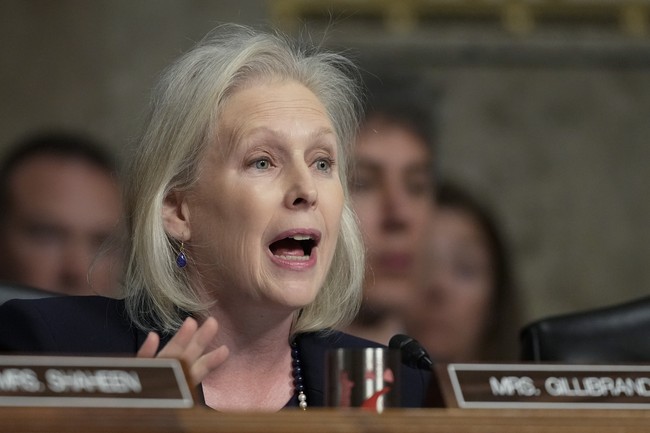
Sen. Kirsten Gillibrand confronted HUD Secretary Scott Turner about homelessness, delivering an emotional account of a homeless child and demanding proof that he understood the problem; Turner answered with five simple words: “It’s happened in my family. Yes, ma’am,” revealing a personal connection that shifted the exchange from lecture to accountability and reframed the policy debate as one about outcomes, not feelings.
Democrats often lean on personal stories to score moral points during hearings, and Gillibrand used that tactic Thursday when she painted a picture of a homeless little girl whose only steady group was a Girl Scout troop made up of other homeless girls. Her aim was clear: to suggest that anyone who opposes the standard approach to homelessness must lack empathy or firsthand knowledge. The scene was meant to close the room; instead it opened one.
Turner cut in immediately with, “It’s happened in my family. Yes, ma’am.” Those five words landed like a rebuttal and a reminder that lived experience doesn’t belong to one political side. He spoke from a place beyond talking points, not to reject compassion but to question whether current policies deliver results. That distinction is where the hearing actually turned political.
Gillibrand assumed the exchange would go the usual way: an emotional appeal followed by a gentle rebuke of dissenting policy positions. Instead she encountered someone who had faced homelessness within his own family. Turner previously told a congressional committee about an uncle who was “a homeless, broken veteran with a debilitating disease,” and his family took him in, got him treatment, and pursued practical support services. Those facts matter because they point to alternatives to permanent public housing as the only answer.
The core disagreement wasn’t whether anyone cared about homeless people. It was whether the Housing First approach, funded for years with little measurable success, is the policy Americans should keep doubling down on. Turner argued that dependency without a clear path to independence amounts to spending that fails taxpayers and fails people who need durable solutions. That argument is blunt and uncomfortable, but it’s also focused on outcomes over virtue signaling.
In the hearing’s back-and-forth, Turner pushed the fiscal point: if you ran a household or a business with the same record of spending and no results, you would not keep doing it. He said, “The housing first model, failed record funding and record homelessness. I don’t care what administration it is. You would not run your own household budget this way.” That line gets to the heart of a conservative critique: compassion requires accountability and measurable progress.
Moments later he added, “You would not run your business way you would not have a business. So why is this okay for the American taxpayer? It’s not okay.” Those words cut through the theater of the hearing to demand a conversation about effectiveness. It’s a reminder that empathy must be paired with policies that produce better outcomes for people living on the streets and for the taxpayers who fund those programs.
Gillibrand’s passion is real and her anecdote was meant to highlight human suffering, and it did. But Turner’s answer reframed the debate, insisting that personal experience can inform a push for different strategies rather than disqualify someone from moral standing. He didn’t deny the suffering; he described what his family did to get help for their relative and contrasted that with a system he sees as perpetuating dependency without clear remedies.
The wider point here is political: opposing the prevailing approach to homelessness doesn’t equate to indifference. It can signal a different judgment about which policies actually help people. The exchange on the record showed how quickly soft power and emotion can steer hearings away from technical assessment and into moral theater, unless someone with direct experience forces the conversation back to results and accountability.
That moment, when Turner revealed a family history of homelessness, changed the dynamic. It stripped the conversation of a one-sided moral claim and replaced it with a policy debate about what works. For those focused on outcomes, the question remains blunt: are current strategies reducing homelessness or just funding the status quo? The hearing made clear that this is the dispute at the center of the policy fight.



Sen. Kirsten Gillibrand has always been a Leftist Liberal Loony Tune; and you can’t erase a tigers stripes! Need I say more!