
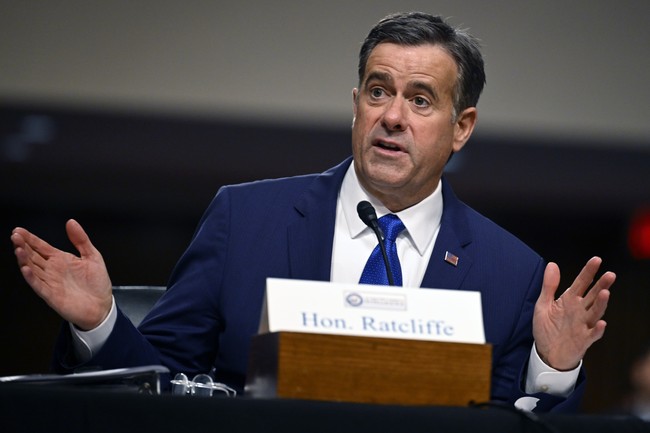
The CIA director’s recent visit to Cuba raised eyebrows and questions about U.S. strategy toward the island, the role of intelligence in diplomacy, and the pressure campaign being applied to the Castro regime; this piece examines what was visible, what was reported, and why a high-level intelligence official showing up in Havana matters from a Republican perspective.
I was surprised scrolling X to find a terse post from the CIA with photos but no context. The images show CIA Director John Ratcliffe alongside people whose faces are blurred, which likely signals the presence of active assets or sensitive partners.
Those photos include a shot outside the U.S. Embassy in Havana, where Ratcliffe appears to be standing with Chief of Mission Mike Hammer. The optics are unusual: CIA directors are rarely the face of these interactions, so choosing Ratcliffe suggests Washington wanted to send a pointed message.
Reporting indicates Ratcliffe met with Raúl Guillermo Rodríguez Castro, a colonel in the Ministry of Interior and the grandson of former leader Raúl Castro, who has acted as an intermediary to his grandfather. A direct, high-level exchange like that shows the Trump administration is willing to use every instrument of national power to press its case, including intelligence ties when diplomacy alone might not do the job.
Ratcliffe met with Raúl Guillermo Rodríguez Castro, Interior Minister Lázaro Álvarez Casas and the head of Cuban intelligence services, and discussed intelligence cooperation, economic stability and security issues. A CIA official confirmed the meetings to the AP.
Ratcliffe was there “to personally deliver President Donald Trump’s message that the United States is prepared to seriously engage on economic and security issues, but only if Cuba makes fundamental changes,’’ the CIA official said.
An official statement from Cuba’s government noted that Thursday’s meeting “took place … against a backdrop of complex bilateral relations.”
That quote matters because it lays out a clear bargain: serious engagement for fundamental change. From a Republican standpoint, firmness plus clear conditions is the right posture. It avoids naive appeasement and keeps leverage on the table while offering an off-ramp if Cuba alters its behavior.
Cuba is in dire economic straits and losing its oil lifeline from Venezuela, so Washington’s pressure is arriving at a moment of real vulnerability. The administration’s moves—economic measures and heightened scrutiny—are designed to force choices on the island’s leadership, and a meeting like this makes those choices explicit at a personal, elite level.
The potential indictment — which would need to be approved by a grand jury — is expected to focus on Cuba’s deadly 1996 shootdown of planes operated by humanitarian group Brothers to the Rescue.
The plan comes as the U.S. heaps pressure on the Cuban government. The Trump administration has threatened heavy tariffs on any country that exports oil to Cuba, leading to energy shortages as oil shipments are largely cut off.
Threats of accountability for past actions, including the 1996 shootdown, underscore that consequences are on the table for regimes that cross red lines. Republicans favor standing up for victims and holding bad actors responsible, and pursuing legal avenues is part of that strategy when diplomacy and sanctions alone won’t change behavior.
Some will question why the CIA director would play a role that looks diplomatic, but intelligence chiefs often handle sensitive, deniable, or technical aspects of foreign relations that regular diplomacy cannot. Showing up personally can be intended to convey both capability and seriousness: an unmistakable hint that the U.S. understands the situation and can act if pushed.
Meanwhile, the broader pattern is consistent: the administration is coupling pressure with outreach to offer a pathway forward if Cuba alters course. That kind of dual track—toughness paired with conditional engagement—aligns with a conservative approach to national security that emphasizes strength and results over hollow gestures.
Pictures with blurred faces, public statements framed as firm options, and the prospect of legal moves against senior Cuban figures together create a narrative of sustained pressure. This is not random posturing; it is signal discipline aimed at reshaping incentives in Havana and protecting U.S. interests in the hemisphere.
Whether you like the method or not, the message is clear: the United States, under this administration, is prepared to use all available levers to defend its position and press for change. The visit is another step in that ongoing strategy, and it leaves little doubt the U.S. intends to remain an active player in Cuba’s future trajectory.


Add comment