
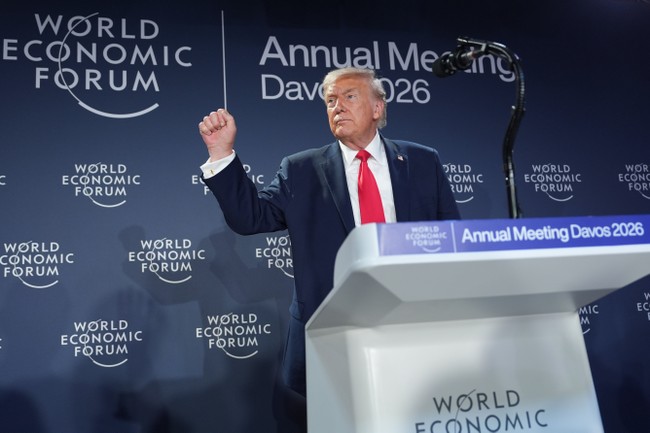
At Davos 2026 the global conversation looked different: what started as the WEF’s Great Reset talk in 2016 met a reality shaped by politics, trade, and a resurgent America First agenda, and the forum reflected that shift in tone and outcomes.
Back in 2016 the World Economic Forum offered a bold blueprint for the next decade, complete with sweeping claims about ownership, power, and the future of food and climate. That eight-point vision circulated widely and became a shorthand for the kind of globalist thinking many Americans resisted. Over the last ten years, real-world pressures like affordability, national interest, and political pushback reshaped priorities. By 2026 the Davos crowd had to contend with policy moves and diplomatic actions that reasserted U.S. influence and questioned the old assumptions.
Here’s the 2016 script in full, the one that sparked so much debate:
1. You will own nothing. And you’ll be happy. Whatever you want you’ll rent and it’ll be delivered drone
2. The US Won’t be the world’s leading superpower. A handful of countries will dominate.
3. You won’t die waiting for an organ donor. We won’t transplant organs. We’ll print new ones.
4. You’ll eat much less meat. An occasional treat, not a staple. For the good of the environment and our health.
5. A billion people will be displaced by climate change. We’ll have to do a better job at welcoming and integrating refugees.
6. Polluters will have to pay to emit carbon dioxide. There will be a global price on carbon. This will help make fossil fuels history.
7. You could be preparing to go to Mars. Scientists will have worked out how to keep you healthy in space.
8. Western values will have been tested to the breaking point. Checks and balances that underpin our democracies must not be forgotten.
The pushback against that vision came from many directions, and politics played a decisive role. When Donald Trump won in 2016 it signaled to skeptics that an alternate path was possible, one that prioritized national sovereignty and economic security over supranational plans. Over the years the U.S. political pendulum swung, but by 2026 those who favored national-first policies had built momentum. At Davos this meant a different set of priorities on stage and in the meeting rooms.
That shift showed up in healthcare and trade debates as well. New players and policies disrupted corporate healthcare dynamics, and trade deals negotiated under an America First rubric changed the landscape for exporters and partners. Food policy and consumer trends also moved toward traditional diets as practical concerns overtook ideological fads. Nongovernmental groups that had once dominated certain conversations lost influence as states and voters reasserted their preferences.
There were dramatic claims about the WEF agenda being thwarted, and some observers framed the 2026 forum as a kind of political reckoning. Speeches at the event emphasized national interests over global blueprints, and several world leaders used the platform to underline sovereignty, security, and prosperity. Those moments shifted the tone of Davos from big-picture technocratic planning to concrete policy priorities that reflected how voters actually live.
One of the more notable dynamics was how speeches and diplomatic wins were reported back home. Leaders highlighted negotiated outcomes: strategic defense agreements, new trade arrangements, and diplomatic initiatives framed as alternatives to costly military interventions. Those items were presented as proof that robust national policy can deliver stability and advantage without surrendering control to distant institutions.
Public figures at the forum delivered forceful lines that reinforced the change in emphasis. A key excerpt from an earlier address remains on many people’s minds: “I am here today to represent the interests of the American people and affirm America’s friendship and partnership in building a better world. Like all nations represented at this great forum, America hopes for a future in which everyone can prosper and every child can grow up free from violence, poverty, and fear.” That language underpinned a pamphlet of priorities that many delegates heard as a call to center national citizens first.
Voices at Davos also reflected a reaction to elite predictions that never fully materialized. Whether on energy, migration, or economic dominance, many of the 2016 forecasts have not played out as originally billed. The forum’s 2026 agenda showed a recalibration toward economic resilience and away from aspirational narratives that lacked public buy-in. For attendees, the game was no longer just about ideas; it was about deliverables.
Certain globalists continued to advocate for broader agendas, but their influence looked diminished compared with a decade earlier, and several long-standing alliances have frayed. Meanwhile, proponents of national renewal celebrated wins like diplomatic accords and trade actions as evidence that alternative strategies can succeed. The Davos of 2026 was less a platform for unilateral predictions and more a marketplace of competing models, where national interest and voter priorities had reclaimed center stage.
Observers who follow international forums will watch how these debates evolve, because the tension between global planning and national accountability is unlikely to fade. For now, the 2026 meeting revealed a world wrestling with what role institutions, markets, and elected leaders should each play in shaping the future.

I just came across this amazing way to earn $6,000-$8,000 a m0nth 0nline! No selling, no struggle—just a simple system that anyone can follow. Kelly Richards did it, and so can you! Don’t miss out on this life-changing 0pportunity. check it out by Limited time only – grab it before it’s gone!” .
Here is I started_______ PayAtHome1.Com