
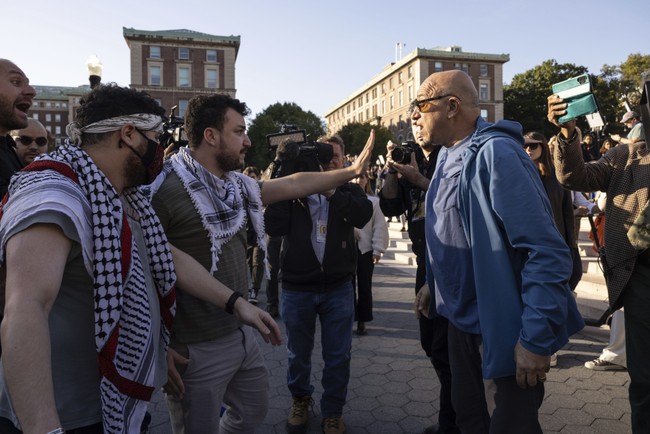
The Department of Homeland Security says Mahmoud Khalil, a pro-Palestinian activist and former Columbia University graduate student accused by the administration of pro-Hamas sympathies, will be removed from the United States and is expected to be sent to Algeria after an appellate court cleared the way for his deportation.
Mahmoud Khalil rose to prominence during the wave of campus protests after the October 7, 2023 Hamas attack on Israel, serving as a visible student negotiator at Columbia and elsewhere. Authorities and critics argue his public activism and statements crossed from campus protest into behavior inconsistent with the privileges of being in the United States. The DHS announced this planned removal after legal appeals were resolved, and officials say Algeria is the likely destination for his deportation.
Supporters framed Khalil as a defender of Palestinian rights and a voice for students frustrated with university responses, while opponents called his rhetoric and organizing evidence that he posed a problem for public safety and national interests. The debate became a flashpoint for larger arguments about free speech, campus conduct, and how institutions respond to violent events overseas. Khalil’s defenders said he was exercising political expression; his critics insisted that some of his public-facing language and the context of the protests made continued U.S. residency untenable.
Public rhetoric around the protests grew heated, with many commentators condemning the violence of October 7 and arguing that some protesters had given sympathetic cover to the perpetrators. Coverage emphasized the horrific nature of the Hamas attacks and the human toll, and opponents of the campus demonstrations tied that outrage to their calls for accountability for leading activists. This case has been treated by many as a test of how far activism can go before it crosses legal and immigration lines.
I hope he enjoys EVERY LAST MOMENT of his BRAND NEW LIFE!
At a rally in June, Khalil denied that he supported the terrorists, using a repeated, personal framing to describe himself. Critics noted that his self-descriptions were strikingly repetitive and questioned his motives because he frequently spoke in the third person. The exact words he used were: “Who is Mahmoud Khalil? … Mahmoud Khalil is a human rights defender. Mahmoud Khalil is a freedom fighter. Mahmoud Khalil is a refugee. Mahmoud Khalil is a father and husband, and above all, Mahmoud Khalil is Palestinian.”
The Department of Homeland Security publicly discussed the next steps for Khalil’s removal and the likely destination country. Tricia McLaughlin, DHS assistant secretary for public affairs, was quoted on the expected outcome: “It looks like he’ll go to Algeria. That’s what the thought is right now.” Her comments also included a broader warning to noncitizens about expectations while in the United States: “It’s a reminder for those who are in this country on a visa or on a green card. You are a guest in this country — act like it,” she added. “It is a privilege, not a right, to be in this country to live or to study.”
The protests that swept campuses such as Columbia, UCLA, Harvard, and others remain a sore point in public discussion, and many people view those events as a stain on higher education institutions that failed to properly condemn violence. Opponents of the demonstrations have used graphic descriptions of the Hamas attack to underscore their point, arguing that the brutality of the assault and the atrocities committed should have closed off any sympathy for the perpetrators. That visceral reaction fueled pressure on universities and officials to take stronger actions against students perceived to be endorsing extremist positions.
For critics of Khalil, his repeated public presence and role in campus organizing made clear that he was not contributing positively to campus life or public safety. They say his removal is a demonstration that the country will enforce immigration consequences when activism crosses into endorsement of extremism or undermining public order. Supporters counter that deportation for political activity sets worrying precedents, but at this moment the DHS has signaled it will move forward with the removal process.
Observers note this case will likely be referenced in future debates about campus protest management, immigration policy, and the line between protected speech and actions with immigration consequences. The legal and public-policy contours of such disputes are complex, but this case stands as a recent example of authorities choosing deportation as the remedy. Khalil’s expected relocation to Algeria closes this chapter of his U.S. activism and shifts the conversation back toward how campuses and federal agencies should handle similar episodes in the future.



I just came across this amazing way to earn $6,000-$8,000 a m0nth 0nline! No selling, no struggle—just a simple system that anyone can follow. Kelly Richards did it, and so can you! Don’t miss out on this life-changing 0pportunity. check it out by Limited time only – grab it before it’s gone!” .
Here is I started_______ PayAtHome1.Com