
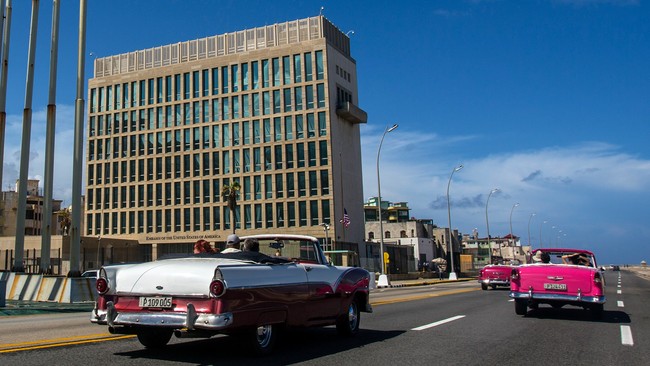
This article examines the fallout from recent U.S. actions in Venezuela, how those moves could choke off a lifeline to Cuba, and why cutting Venezuela’s oil and financial support could topple an already fragile Cuban economy while sparing direct U.S. military intervention.
Trump Speaks Out: Could Cuba Be Next to Fall?
Cuba has the natural advantages any country would want: beaches, climate, and tourist appeal, yet it remains trapped under a communist system that has long prevented broad prosperity. The ruling class enjoys privileges while ordinary Cubans contend with shortages and state control. That mismatch is the key reason why changes to Cuba’s external supports can have outsized domestic effects.
For years Cuba relied heavily on Venezuela for energy and hard currency, a relationship that insulated Havana from some of the worst economic effects of its policies. Even so, those transfers were never a permanent fix; they were a lifeline that kept hospitals running, buses moving, and basic services afloat. When that lifeline is cut or threatened, the economic equation in Havana shifts quickly and painfully.
Recent developments abroad have altered that calculus dramatically. On Sunday, President Trump fired one of his .
The president’s post continues:
Most of those Cubans are DEAD from last weeks U.S.A. attack, and Venezuela doesn’t need protection anymore from the thugs and extortionists who held them hostage for so many years.
Venezuela now has the United States of America, the most powerful military in the World (by far!), to protect them, and protect them we will. THERE WILL BE NO MORE OIL OR MONEY GOING TO CUBA – ZERO! I strongly suggest they make a deal, BEFORE IT IS TOO LATE.
That public statement signals a willingness to deprive Havana of a key resource without deploying U.S. troops, sending a strong economic message instead of a military one. The leverage here is clear: deprive a bankrupt system of its preferred imports and financial flows, and the regime’s capacity to govern erodes. In practice that looks like fewer flights, less fuel for agriculture and transport, and tighter access to basic goods.
Remittances and international trade provide some buffers for Cubans, but they are limited and uneven. Money sent from expatriates helps families directly, but targeting those channels risks hurting regular people far more than functionaries. Meanwhile, Cuba continues to export things like cigars and medical services, but those sales rarely compensate for the volume and cheap energy Venezuela supplied.
Cuba’s previous dependence on Venezuelan oil was significant: roughly 30,000 to 35,000 barrels per day filled much of its energy gap, making up an estimated 60 percent of its oil needs. Losing that amount of fuel affects transportation, electricity generation, and critical services. When fuel is scarce, food distribution falters, hospitals face shortages, and industry sputters — a chain reaction with social and political consequences.
Economic pressure does not automatically translate into regime change, but it often creates conditions that make the status quo unsustainable. Shortages and rising prices push ordinary citizens into protest or passive resistance, while elites face hard choices about whether to cling to power at increasing cost. The Cuban government has shown resilience in the past, but resilience can break if the supply lines that props it up are severed.
Washington has tools short of invasion to wage pressure campaigns: sanctions, diplomatic isolation, and enforcement actions that choke off critical imports. Those moves are blunt instruments and must be executed with an eye toward minimizing humanitarian harm. The aim from a policy perspective is to accelerate political and economic recalibration in Havana without directly punishing the vulnerable populations whom conservatives often argue deserve a chance at self-determination and prosperity.
Turning Cuba into a competitive tourism and trade hub again would require dramatic institutional change, not merely the removal of external supports. Property rights, rule of law, and open markets attract investment and visitors. Yet the immediate tactical picture is straightforward: cutting Venezuelan oil and financial aid puts Havana on the defensive and could force negotiations or splits within the ruling class.
History shows that when client states lose patrons, internal pressures increase unpredictably. The domino theory in modern terms is less about automatic fall and more about forcing shaky regimes into costly decisions. If Caracas no longer props up Havana, Cuba faces the stark choice of reform under duress or deeper isolation and decline.
Policy debates will continue about the best way to balance pressure and humanitarian concerns, but strategically, using economic levers to strip a hostile regime of its external crutches remains a plausible path. For now, Cuba’s future hinges on whether its supporters keep supplying what the state needs to survive and whether those supplies are sustainable in a shifting geopolitical landscape.

GO FOR BROKE; as in MAKE IT BANKRUPT! FINITO!!!