
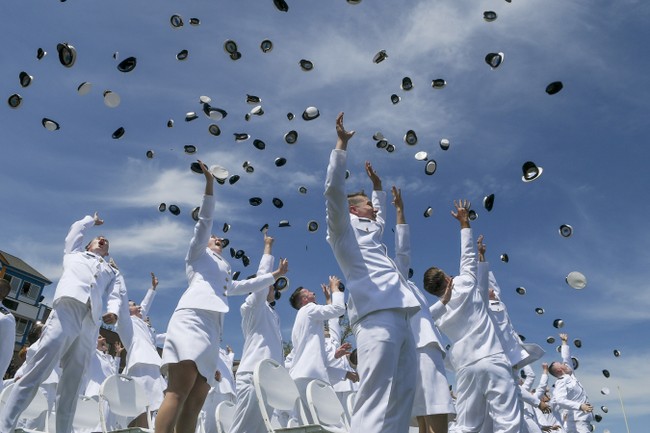
The president spoke at the Coast Guard Academy commencement in New London, Connecticut, delivering a forceful, unapologetic message about American strength, pride, and the role military academies play in shaping leaders and improving recruitment.
The speech stood out because it offered a clear contrast to the narratives often heard at many college commencements, emphasizing confidence, service, and national renewal. The tone was direct and celebratory, aimed at cadets who will soon serve in uniform and the families who supported them. This piece recounts key moments from that address and reflects on what it means for military culture and higher education.
The president framed the moment as a national comeback, arguing that morale and strength have returned to the country. That message resonates particularly well with service academies, which rely on clear purpose and esprit de corps to recruit and retain talent. Graduates and families heard a version of America that expects excellence and does not apologize for achievement.
President Trump to the graduating cadets at the @USCGAcademy:
“The Class of 2026 is graduating at an incredible, exciting time for our nation […]
Our national strength is back, our morale is back […] confidence is back, and, above all, American is back, BIGGER and BETTER and STRONGER than ever before.
We have a STRONG, GREAT, RESPECTED country again”
That paragraph of the speech got applause because it put policy and pride together: strength at home, respect abroad, and a confident national identity. Many campuses now choose speakers who reflect different priorities, but the Coast Guard Academy moment showed why service schools value resolute rhetoric. When leaders speak plainly about American power, cadets hear orders and encouragement at once.
There’s been a steady tilt in commencement speaker selection at major universities, and that reality matters because graduates take the values they hear into careers and public life. At service academies, however, the emphasis remains on readiness and commitment rather than on ideological signaling. The contrast is striking when you think about the different audiences and missions each institution serves.
The president also made the speech personal, recognizing student-athletes and highlighting changes that affect cadets’ futures. He pointed out policy moves that impacted opportunities for graduates, arguing those changes improved recruitment and morale at the academies. That practical side of leadership—making rules that allow talented young people to thrive—was a recurring theme.
During his remarks, Trump noted that the graduating class was “blessed with many tremendous athletes,” and he asked two of them to join him on stage:
First, Trump introduced Broock Desta, the academy’s all-time leader in receptions, yards and touchdowns.
“Do we have a little NFL future here? Maybe? I don’t know, usually that could happen when you’re leading by that much,” Trump said of Desta.
Desta also played for the academy’s basketball team his senior season, but he was a true star on the gridiron. In 36 career games, Desta caught 29 touchdowns while also rushing for one and throwing another. He racked up 3,487 receiving yards on 234 catches.
Next to the stage was women’s lacrosse star Abby McAllister, the women’s lacrosse program’s all-time leader in assists and points.
“Are you that good?” Trump asked jokingly before adding, “That’s a big record.”
The president cited a 2019 executive order that allowed military academy graduates to pursue professional sports opportunities without immediately fulfilling a traditional active-duty requirement. He credited that policy with improving recruiting and making academy teams stronger, which is a pragmatic argument about incentives. For cadets considering pro careers, the policy change removed a barrier while still preserving the call to service.
Light-hearted moments in the speech broke up the seriousness and connected the president with the audience. He joked about cadets who might have overindulged at a local bar, then offered a symbolic gesture to start their careers with a clean slate. That kind of interaction underscores the informal rapport leaders can build with young service members while still reinforcing discipline and mission.
.@POTUS jokes with graduating cadets at the @USCGAcademy who “may have spent a little bit too much time” at the local bar:
“We want you all to have a clean slate as you begin your careers—so therefore, Mr. Superintendent, I hereby absolve all cadets who are on restriction for minor conduct infractions—and even somewhat major infractions—effective immediately!” 🤣
The tone of the event reinforced a broader point: military academies still celebrate achievement and character in ways many other campuses no longer prioritize. For Republicans who value a strong national defense and a confident American identity, that message feels overdue at universities and welcome at service schools. The speech reminded cadets that their service is honored and strategically important.
Editor’s Note: Thanks to President Trump and War Secretary Pete Hegseth’s leadership, the warrior ethos is coming back to America’s military.

Add comment