
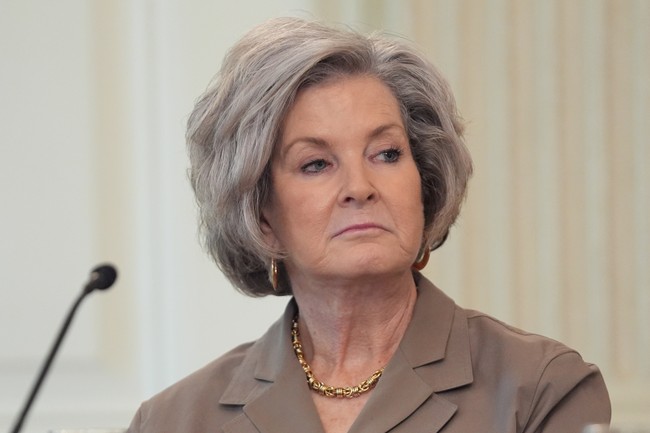
President Donald Trump and his Cabinet forcefully pushed back after Vanity Fair published a critical profile of White House Chief of Staff Susie Wiles, calling the piece a distorted hit job and defending the team’s record and competence.
President Trump and several Cabinet members publicly rejected the Vanity Fair narrative about Susie Wiles, arguing the article left out key context and painted a misleading picture of the West Wing. The Vanity Fair author spent months inside the White House and produced a long profile that many allies say focused on drama rather than accomplishments. Wiles and her defenders say the reporting selectively quoted moments and omitted clarifying remarks that show a functioning and effective White House operation.
The profile included sharp descriptions of multiple aides, including Karoline Leavitt, Stephen Miller, Dan Scavino, James Blair, and Vice President JD Vance, with some labeled as aggressive or as “pit bulls.” That tone set off a swift rebuttal from people who work alongside Wiles and who point to policy wins as evidence of discipline and results. Critics of the piece say the author leaned on sensational lines and unflattering photos to craft a narrative that does not match day-to-day reality in the administration.
The story quoted Wiles discussing JD Vance, calling his trajectory “sort of political” and labeling him as “a conspiracy theorist for a decade.” The coverage of that exchange prompted Vance to respond publicly and, in a speech, to turn the remark into evidence that some long-held suspicions have been vindicated. The exchange became a flashpoint because allies believe the report mischaracterized both Vance and Wiles rather than presenting the fuller context of their working relationship.
Wiles herself answered directly on X, calling the article a “disingenuously framed hit piece on me and the finest President, White House staff, and Cabinet in history.” She emphasized that “Significant context was disregarded and much of what I, and others, said about the team and the President was left out of the story.” Her post argued the omissions were deliberate, designed to create an overwhelmingly negative narrative about the President and his team.
She went on to highlight results, saying, “The truth is the Trump White House has already accomplished more in eleven months than any other President has accomplished in eight years, and that is due to the unmatched leadership and vision of President Trump, for whom I have been honored to work for the better part of a decade.” Wiles framed the criticism as an attempt to undermine a highly effective administration.
The White House press office echoed that defense, noting Susie Wiles’s role in driving the agenda and maintaining unity across the Cabinet. Press Secretary Karoline Leavitt called Wiles essential to the President’s success and praised her leadership, saying she has helped produce “the most successful first 11 months in office of any President in American history.” That public backing underscored how quickly the administration coalesced to rebut the profile’s implications.
Other Cabinet members piled on with praise and outrage, framing the Vanity Fair piece as an example of the Left’s reflex to attack effective conservatives. Secretary of War Pete Hegseth described it as the Left’s tactic to “trash & smear our best & most effective people,” calling Wiles “the most trusted most professional, and most effective Chief of Staff of my lifetime.” Supporters argued the profile’s tone betrayed an intent to harm, not inform.
Secretary of Health and Human Services Robert F. Kennedy Jr. offered a longer character defense, calling Susie Wiles “arguably the most perfect presidential chief of staff in modern American history” and praising her judgment, compassion, and ability to translate the President’s vision into policy. He wrote that her leadership makes the Cabinet function like “an unusually efficient family” rather than a collection of competing rivals, framing the White House as united and purposeful.
Secretary of Homeland Security Kristi Noem highlighted the historic nature of Wiles’s appointment and her role in rapid policy delivery, calling her “an absolute force in delivering, at neck-breaking speed, on the President’s agenda and the mandate to deliver results to Americans.” Noem’s remarks stressed results and competence, pushing back against portrayals that focus on personality over performance.
The Vanity Fair piece also quoted Wiles saying Trump has “an alcoholic’s personality,” a line that sparked debate about meaning and intent. The profile quoted: “Some clinical psychologist that knows one million times more than I do will dispute what I’m going to say. But high-functioning alcoholics or alcoholics in general, their personalities are exaggerated when they drink. And so I’m a little bit of an expert in big personalities.” The piece went on: Wiles said Trump has “an alcoholic’s personality.” He “operates [with] a view that there’s nothing he can’t do. Nothing, zero, nothing.”
Trump dismissed the framing of that quote and clarified his own view in public remarks, saying he does not drink and describing himself as having a “possessive and addictive type personality” if he did. He reiterated his confidence in Wiles, calling her “fantastic” and reaffirming that she has his full support amid the controversy. The administration continues to treat the episode as a challenge to be answered with more visible results and continued public defense rather than concession.

Add comment