
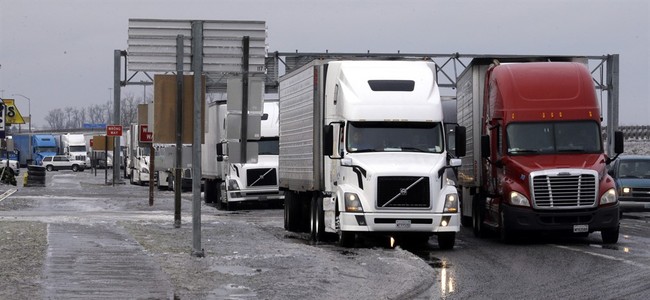
This article compares how two states are handling the discovery of non-English-proficient long-haul truck drivers, contrasts Missouri’s enforcement with California’s policy choices, and explains recent federal action to revoke licenses issued to drivers who failed to meet English language requirements. It examines why enforcing English proficiency matters for safety on highways, how different state approaches affect interstate travel, and notes federal steps taken to address the situation.
A Tale of Two States: The Contrast of Red vs. Blue in the Saga of Illegal Immigrant Truck Drivers
Concern over safety on America’s highways is growing as enforcement practices diverge between states. In Missouri, state troopers have been actively removing commercial drivers who cannot meet English language proficiency standards from the road. Officials there treat clear communication as a baseline safety requirement for anyone operating a large commercial vehicle.
Capt. Scott White of the Missouri Highway Patrol explained the standard plainly: “How we define sufficient English proficiency for the drivers is, can our officers effectively communicate with them? What that means is that can they understand and reply to official inquiries? Can they read and comprehend highway signs and signals, and can they complete those necessary logs and records?” That practical definition emphasizes officer safety, driver accountability, and the ability to respond during emergencies. When drivers fail those basic checks, Missouri places them out of service and notifies their employers so the situation is resolved before another mile is driven.
White also stressed the testing framework that supports enforcement, noting that Missouri conducts both written and practical portions of commercial driver’s licensing in English only. He said, “…[T]he public needs to understand that all CDL testing in Missouri, both written and practical testing, is completed in English. The applicant cannot utilize assistance from a translator or other services during those exams.” That rule is meant to ensure every trucker can interpret road signage and follow directions without ambiguity.
“If they’re not in compliance with the ELP then they are put out of service. So, the company is contacted. Sometimes the drivers provide another driver to come get that, but that driver is prohibited from going any further down the road. And they also can be cited with a citation for that violation.”
Across the country, the policy picture looks different. California has issued a very large number of commercial driver’s licenses to individuals who regulators now say were not proficient in English. That gap has drawn attention at the federal level because a person who cannot read road signs or converse with enforcement personnel presents a heightened risk on busy interstate corridors. The federal response was framed as a public safety imperative rather than a partisan swipe.
Transportation Secretary Sean Duffy moved to revoke tens of thousands of questionable CDLs after determining the state had failed to ensure English proficiency in testing and that federal guidance was being ignored. The decision to strip those licenses reflects the federal government’s authority to withhold or rescind privileges tied to national safety standards. That action is a message that states must meet basic testing standards, or face federal consequences.
The broader pattern is clear: some states are enforcing language and testing standards firmly, while others appear more permissive in how they issue commercial credentials. Oklahoma and other states have run sting operations and caught drivers who were improperly licensed or lacked any license at all, underscoring that the problem is not limited to one region. When enforcement is inconsistent, the risk migrates to roads and communities that expect consistent standards from anyone behind the wheel of a multi-ton vehicle.
Practical enforcement is about preventing avoidable crashes and ensuring first responders can communicate during incidents. Requiring that CDL applicants demonstrate basic English reading and speaking skills is not about culture or politics; it is about making sure drivers can follow directions, read warning signs, and complete official logs. Motor carriers also bear responsibility to confirm their drivers meet the qualifications necessary to operate safely.
Federal intervention aims to restore a uniform baseline across state lines, since interstate commerce depends on predictable regulation. When one state permits lower standards, adjacent states face spillover risk from trucks traveling through with drivers who may not understand instructions or signage. The goal of revoking improperly issued credentials is to reset expectations and push states toward standardized testing and enforcement.



Add comment