
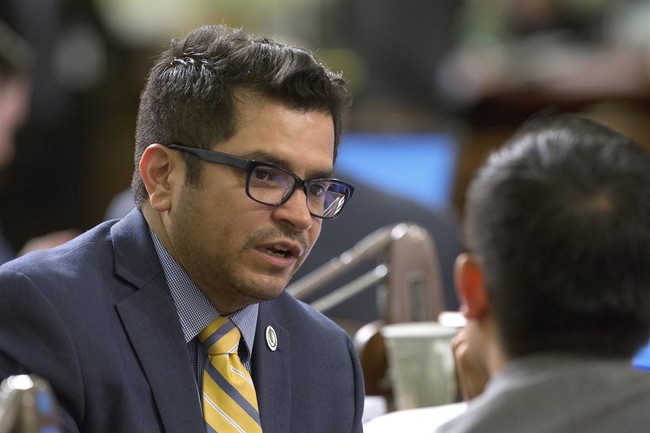
I’ll walk through the new allegations against Rep. Jimmy Gomez, the witness statement and lawyers’ claims, how this mirrors other high-profile scandals, Gomez’s prior calls for accountability, and the political stakes as the Ethics Committee probe continues.
Rep. Jimmy Gomez (CA-34) has moved from insisting his actions were “personal mistakes” to facing a witness who told the House Committee on Ethics she experienced sexual harassment and assault. Her lawyers, Lisa Banks and Sarah Nesbitt, put the claim bluntly: “We represent one of the women who was interviewed by the House Committee on Ethics about her experience of sexual harassment and assault by Representative Jimmy Gomez.” That allegation raises the prospect of legal as well as ethical consequences.
The lawyers’ statement continues with a direct rebuttal of Gomez’s earlier characterization of the interaction. “Contrary to Representative Gomez’s assertion in his statement, his actions were not ‘consensual in nature’ with respect to our client,” they wrote, and they stated they expect the Ethics Committee to reach the same conclusion. That framing undercuts the simple denials Gomez offered initially and turns this into a dispute over facts that could carry criminal as well as congressional implications.
This development follows a pattern seen in several recent political scandals where early defensive statements gave way to more severe allegations. In previous cases, figures tried to contain the damage with denials or partial admissions only to see accusations intensify. Those historical parallels increase pressure on investigators and raise questions about whether early messaging by the accused was realistic or simply damage control.
Gomez previously demanded tough standards for others, making his current predicament politically awkward. He called for “full accountability without doubt, distraction, or delay” when criticizing a colleague, and he resigned a role in a campaign under public pressure in the past. Now he is the one under scrutiny, and that contrast will be central to how political actors and commentators respond.
Beyond politics, the legal dimension is now in play because the witness’s representation explicitly uses the word assault. That escalates the situation from an internal congressional ethics matter to potential criminal exposure depending on what investigators find and whether prosecutors decide to act. The presence of attorneys and a formal statement signals a readiness to pursue consequences outside the Ethics Committee if warranted.
The House Committee on Ethics has already conducted interviews, and the new claim says the committee heard directly from the woman involved. That matters because a committee finding carries weight in Congress and can lead to formal sanctions, public discipline, or referrals. If the committee concludes misconduct occurred, the pressure on Gomez to step aside or face censure will only grow.
Republican critics and others who have watched earlier scandals unfold will point to consistency and standards when pressing for accountability. The political angle is straightforward: calls for strict enforcement of rules by public figures are harder to accept when those figures face similar charges. Expect that line of argument to be prominent as the committee advances its inquiry and as commentators compare this case to prior controversies.
Gomez’s alignment with certain caucus agendas further complicates the optics. As a founder of initiatives that promote family responsibilities and public service, the allegations cut against the image he cultivated. That contrast will shape narratives on both sides of the aisle and influence whether his party rallies in defense or distances itself pending the investigation.
Practically, the next steps are investigation and response. The Ethics Committee has the authority to review the facts and recommend actions, and the involvement of legal counsel for the witness means outside legal channels are possible too. How quickly the committee moves, and what it finds, will determine whether this stays an ethics matter or becomes a larger legal and political crisis.
https://x.com/CNNPolitics/status/2090106700648890861
Past cases show how public pressure and new evidence can change political careers fast. Some officials who initially resisted calls to leave office ended up resigning or abandoning campaigns once more serious allegations emerged. Those precedents provide a roadmap for how this matter might unfold in the coming weeks as investigators piece together testimony, communications, and other relevant evidence.
Gomez’s situation is now less about spin and more about substance. With a witness represented by experienced attorneys and a direct challenge to his “consensual” claim, the focus shifts to what the committee uncovers and whether additional corroboration appears. That will guide the political consequences and determine whether calls for accountability are met with cooperation or further dispute.
The broader lesson for lawmakers is clear: public demands for accountability create expectations that apply across the board. When officials loudly call for consequences in other cases, the public and political opponents expect a similar standard to be met in their own ranks. That dynamic is likely to influence how party leaders and colleagues respond to the committee’s findings as they become public.


Add comment