
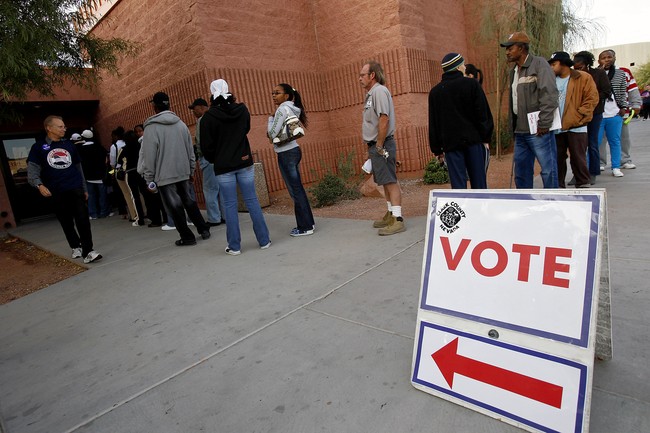
The piece looks at a new analysis by Republican pollster Patrick Ruffini that examined more than 3,000 Senate polls across recent election cycles and found a consistent tendency for polls to overstate Democratic support, especially during the summer months, and it explores examples, industry fallout, and what this pattern means for voters and campaigns.
Americans are deep into the 2026 midterm primary season, and many voters assume polls don’t matter until the fall. A Republican pollster decided to test that assumption and ran the numbers on thousands of polls to see whether summer polling patterns were real or just noise. The findings are striking and raise questions about how polls are produced and used by media and campaigns. If polls consistently overstate Democrats, that affects strategy and voter perception.
https://x.com/TPSIOfficial/status/2090106160833540228
Patrick Ruffini, co-founder of Eshelon Insights, analyzed over 3,000 polls spanning the last four election cycles and concluded that a large share of those polls overstated Democratic support. Ruffini’s work indicates the average polling error across all polls was D+3.7, and three out of four polls he checked leaned more Democratic than the final results. That kind of systematic skew is not something you can chalk up to random fluctuation.
Ruffini also observed a seasonal pattern: the disparity grows during the summer, with an almost six-point Democratic edge in late July that shrinks by late August. That timing matters because summer polling often sets the narrative and shapes donor behavior and media coverage. When a candidate is portrayed as competitive in July, resources move and headlines change, even if that perceived edge evaporates by election day.
In the last few election cycles, we’ve seen a pattern of Democrats looking competitive in red state Senate contests during the summer only to fade by election day. I wanted to test if this was a consistent pattern, not just the selective memory of a Republican. The average polling error across all polls was D+3.7, and 73% of polls released overstated the Democrat relative to the election result. Again, that’s across more than 3,000 polls, so that’s hardly just statistical noise.
Ruffini’s review highlights specific races that follow the pattern. In 2020, polls in the South Carolina Senate contest showed a tight race while the Republican incumbent built a double-digit advantage by election day. In 2022, summer polling favored the Democrat in Ohio, but the Republican ultimately won. In 2024, summer numbers showed former Senator Sherrod Brown ahead in Ohio polling, yet the Republican challenger finished roughly four points ahead. These examples fit the broader trend Ruffini documented.
Beyond methodology concerns, the polling industry has had public hiccups. One firm recently announced it was exiting polling after admitting to running a “short-term social experiment” that produced bogus results and affected a competitive primary. That episode fed skepticism about the quality controls and intent behind some polls. When an outfit effectively gambles with data and headlines, it damages trust in the whole enterprise.
For Republican strategists and voters, the implications are straightforward: treat summer polling with caution and avoid letting noisy early numbers shift campaign priorities unfairly. Media narratives built on overstated Democratic competitiveness can depress turnout among conservatives or lure donors into false complacency for one party while over-mobilizing another. Recognizing a consistent bias helps campaigns allocate resources more efficiently and keeps voters focused on the actual stakes.
Polling firms have several potential sources of error, from sampling frames and likely voter models to question wording and weighting decisions. If a pattern repeats across cycles, it suggests systemic problems rather than one-off mistakes. Fixing these problems requires transparency about methods, better vetting by outlets that publicize polls, and more skepticism from consumers who rely on headlines instead of ballots.
Democrats will likely dismiss Ruffini’s findings as normal election-year movement in polls, but Republicans see a pattern that has real effects on turnout and momentum. Whether intentional or the result of sloppy methodology, the cumulative effect of overstating Democratic support during the summer benefits one side by shaping perceptions. Republicans must adapt their strategies to account for that recurring tendency.
Voters should remember that polls are snapshots, not destiny, and they can be gamed or misinterpreted. Campaigns and the media should stop treating every summer survey as a reliable forecast and start demanding higher standards from pollsters. Until the industry proves it can correct consistent biases, skepticism is the rational response.
Ideally, poll numbers should not decide someone’s vote. Democrats are hoping bogus poll numbers will.


Add comment