
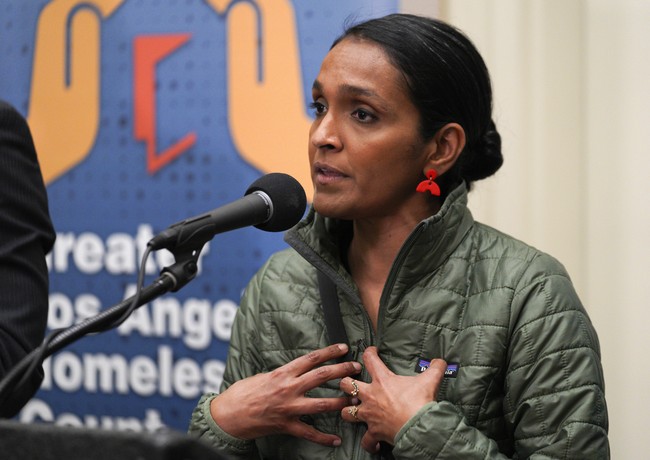
Los Angeles City Councilmember Nithya Raman has surged into second place in the Los Angeles mayoral primary, edging past former reality star Spencer Pratt and setting up a November runoff with incumbent Mayor Karen Bass; updated vote totals show Raman at 27.12% and Pratt at 26.69%, with a margin of 3,113 votes separating them.
Progressive Councilwoman Overtakes Spencer Pratt for Second Place, Heads to Run-off in LA Mayor Primary
The updated Los Angeles results put Nithya Raman, a progressive Democrat from the city’s 4th Council District, ahead of Spencer Pratt in the nonpartisan primary. Raman holds 27.12% of counted ballots while Pratt, who ran on a law-and-order message, sits at 26.69%, a difference of 3,113 votes in the tally announced Sunday.
Decision Desk HQ projected that Raman had clinched the second slot to advance to the November 3 general election, setting up a runoff against incumbent Mayor Karen Bass. Incumbent Bass led the field with 250,871 votes, or 34.68%, and was projected on election night to move forward to the runoff.
On election night the ordering looked different: Pratt was in second place and appearing to be the Republican alternative in a crowded field. The final swing that pushed Raman ahead came from batches of ballots counted after Election Day, a pattern that has repeatedly favored Democratic candidates in California.
https://x.com/DecisionDeskHQ/status/2063772730437075457
Local vote-counting rhythms matter here. Raman made a substantial gain on Friday after receiving roughly twice as many votes as Pratt in one ballot drop, and she closed a roughly 7,500-vote deficit by Sunday’s update. That sequence turned what looked like a secure second-place finish for Pratt into a narrow but decisive lead for Raman.
The post-election shift highlights two predictable realities of modern California contests: mail-in and late-counted ballots often benefit Democrats, and a surge late in the count can change outcomes that seemed settled on election night. For voters who favored Pratt’s law-and-order pitch, the late swing will feel especially frustrating given how tight the margin ended up being.
Raman’s campaign framed the update as proof of momentum and grassroots energy. “We are encouraged by the latest vote count and remain grateful to the thousands of Angelenos who have powered this campaign,” Raman said in a statement to NBC Los Angeles on Sunday.
Bass’s team treated the numbers as final enough to move into general election mode, referring to Raman as the mayor’s “general election opponent.” A campaign spokesperson said they looked forward to “winning a contest against an opponent who allows encampments near schools and fights against hiring more cops.”
That quote underscores the central debate voters face: a contrast between a progressive agenda focused on housing and social services and a tougher approach centered on public safety and policing. From a Republican perspective, the stakes are clear — the city needs policies that restore safety and order, and voters who prioritize that were hoping Pratt would hold his place through the counting process.
The Los Angeles race also shows how candidate backgrounds and media profiles influence perception. Pratt, known for his reality TV past, built a campaign around visible promises on crime and enforcement, trying to channel frustration about safety into votes. Raman, a councilmember with a progressive record, appealed to voters seeking systemic reforms on homelessness, housing and policing practices.
With November’s runoff shaping up as Bass versus Raman, conservatives and moderates who supported Pratt will have to decide whether to turn out for a Republican alternative in a city that trends heavily Democratic. The dynamics of turnout, messaging on crime, and debates over homeless encampments will likely determine how competitive the general election becomes.
California’s procedure of counting many ballots after Election Day has now influenced another major municipal contest, and the result is a runoff between two Democrats in a city where party registration heavily favors the left. That reality pressures Republicans to build broad coalitions or focus on local issues that cut across party lines if they hope to be competitive.
The narrow margin and late swing should remind voters and campaigns alike that every ballot matters and that how ballots are counted can decide modern races. For those who backed Spencer Pratt’s law-and-order message, this outcome will feel like a missed opportunity, and for those worried about the city’s direction, the runoff will be a crucial next chapter.



Add comment