
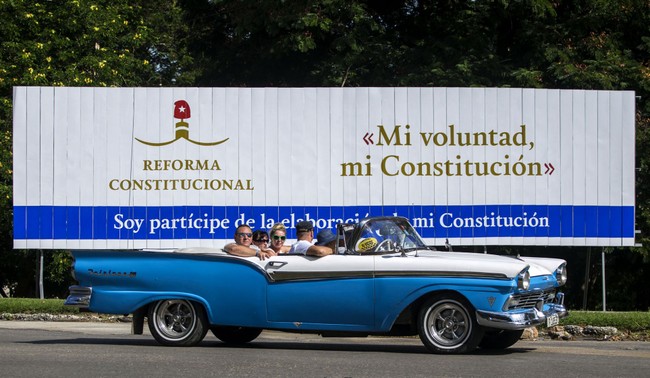
This piece outlines how Secretary of State Marco Rubio and the Trump administration are escalating pressure on Cuba through targeted sanctions, Treasury actions, and public statements that aim to disrupt a long-standing network of influence and espionage tied to Havana.
Marco Rubio has a personal stake in Cuba’s future, rooted in his family’s experience fleeing the island before the Castro takeover. That history informs a direct, uncompromising stance toward the Cuban regime and its overseas operations. Now serving as Secretary of State, Rubio is using diplomatic and economic tools to squeeze organizations he describes as extensions of the Cuban government’s influence. The goal is to choke off funding and networks that the administration says have been used to undermine American interests.
On Thursday, the administration announced sanctions targeting ICAP, the Cuban Institute of Friendship with the Peoples, calling it central to a decades-long effort to infiltrate and radicalize Americans. The action names leadership associated with those activities and others who allegedly sustain the regime’s repressive apparatus. The move is designed to warn banks, companies, and individuals they risk secondary sanctions if they keep providing support. The message is clear: associations with these actors will carry consequences under U.S. policy.
“The Cuban regime has spent decades using front groups to infiltrate, corrupt, and radicalize Americans. Today, I’m sanctioning the leadership of ICAP, which is one of the primary organizations involved in these efforts—including convicted Cuban spy Fernando González Llort—and nine entities that sustain and fund the regime’s repressive apparatus.”
https://x.com/SecRubio/status/2090503929884983576?ref_src=twsrc%5Etfw
“Anyone supporting, sponsoring, or providing services to these sanctioned actors is at risk of being sanctioned themselves. Foreign banks and other companies that provide services to, or hold funds for, these entities should take immediate action to cease their support.”
One of the named figures, Fernando González Llort, served 15 years in U.S. prisons after convictions on espionage-related charges and was later deported. That case has long been cited by Cuban exile communities as evidence of active espionage efforts directed against the United States. The administration is leaning on such precedents to justify a broader campaign aimed at organizations tied to Havana. This approach signals a tougher posture meant to isolate those groups and deter allies from doing business with them.
Complementing State’s actions, the Treasury Department announced penalties targeting state-owned mining, metal, and construction companies connected to Havana. Officials framed these measures as part of coordinated pressure to degrade the regime’s economic base. By hitting revenue streams, the policy aims to limit the Cuban government’s capacity to export repression and fund foreign influence operations. The combination of diplomatic naming and financial penalties is intended to raise the costs of doing business with Cuba’s state apparatus.
The administration has earlier imposed severe oil sanctions that have added economic strain on the island, and top officials have used public rhetoric that underscores a readiness to confront the regime. Those decisions are controversial and carry humanitarian implications, but supporters argue pressure is necessary to challenge a violent and authoritarian system. Republican policymakers pushing this line say the alternative—soft engagement that leaves authoritarian structures intact—has failed for decades.
On another front, the Justice Department has pursued legal action tied to past violence, including an indictment announced in May related to the 1996 killing of four Cuban American pilots. The case underscores ongoing efforts by some U.S. authorities to hold Cuban officials accountable for actions that harmed American citizens and exile communities. Republicans emphasize that law enforcement and sanctions together reinforce a policy of consequences, not appeasement, toward regimes that violate norms and terrorize dissidents.
Members of the Cuban exile community in Florida, including lawmakers who were forced from Cuba as children, have publicly supported the administration’s tougher stance. They describe the moves as overdue and necessary to defend national security and the values of freedom and democracy. That backing from Florida’s Cuban-American leaders helps bolster the political case in Congress and among voters who view the island as a long-running threat to liberty in the hemisphere.
In , a warned reaction read:
“The communist DSA now wants to takeover Florida!”
“I was actually born in Cuba & was forced from home because of this very same group of cynical thugs.”
“We must not let these socialists destroy our beautiful sunshine state!”
Cuba’s regime has persisted for 67 years despite economic collapse and mass emigration, and the administration says sustained pressure is the best route to weaken its control. Republican policymakers argue that isolating the regime economically and politically, while supporting those who fled its repression, is consistent with American values. The combination of sanctions, legal actions, and public diplomacy signals a long game: to shrink the regime’s reach and protect U.S. national security interests.
Debate will continue over the balance of pressure and humanitarian concerns, but the current trajectory is unambiguous. Officials are prioritizing disruption of financial and organizational networks tied to Havana, with the explicit aim of denying the regime the resources and reach it has used for decades. Maybe a 51st state isn’t such a bad idea…

Add comment