
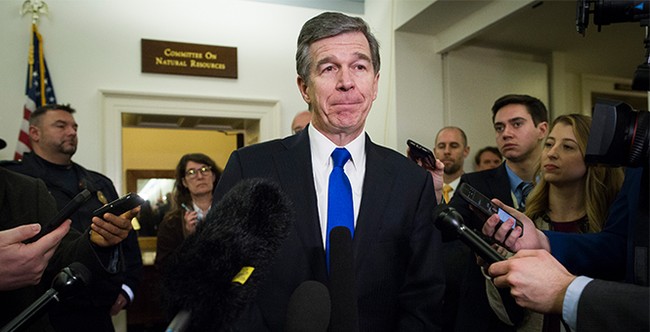
This article examines the fallout from a COVID-era prisoner release agreement in North Carolina, detailing how state records and a new searchable database show more inmates were freed than the settlement required, high rates of subsequent offending, and specific violent cases that critics say expose failures in oversight under former Gov. Roy Cooper.
In 2020 and 2021, North Carolina reached a settlement intended to reduce dangerous overcrowding in prisons during the pandemic, and the state agreed to release thousands of inmates over a set period. The settlement language required releasing at least 3,500 people over six months, but official records ultimately list 4,234 unique offender IDs released during that window. That discrepancy is now central to debates over who made release decisions and why.
The state Department of Public Safety framed the agreement as business as usual when it was announced, with Timothy Moose saying, “The department will move forward with the actions outlined over the next 180 days, most of which it is already carrying out daily.” Critics point to the larger number of releases and the agency’s own comments as evidence that the administration had more discretion than it later claimed.
A public database called CooperReleasedHim.com catalogs the offenders released under the settlement and records subsequent violations and convictions. According to that project, 2,412 of the 4,234 inmates later committed additional crimes or post-release violations, yielding a reoffense rate reported near 57 percent. The database lists a range of serious offenses among those returned to the system, including murder, rape, and sexual offenses against children.
Independent reviews of state records have flagged more than 600 released individuals who went on to commit serious felonies, homicides, sex offenses, and violent crimes, with at least 18 later charged with murder. Families of victims are vocal about the human cost, and their stories put names and faces to the numbers that have been circulating in political debates.
One case cited repeatedly involves Tyrell Brace, who was released in 2021 and later pleaded guilty to voluntary manslaughter in the shooting death of 23-year-old Elante’ Thompson. Thompson was killed while trying to intervene in a fight, and his mother, Debra Thompson, blamed the release decisions directly. She asked plainly, “Why would you release somebody like that?” and added, “They’re already showing they’re a gangster to society. You’re going to release a menace on the street?”
Another tragic example is Kyshaun Norrell, who had been convicted as a juvenile in a fatal shooting and was released early under the settlement, more than a year before his scheduled October 2021 release. In March 2023 he shot two more people near Raleigh, killing David Chavis, who was 34 at the time. David’s mother, Carrie Chavis, expressed the wrenching sense of loss and the feeling that the system failed to protect the public when she said, “He already killed someone before. They shouldn’t have even had the opportunity to let him out.” She added, “I’m still grieving for my son. The pain’s not ever going away.”
Lawmakers in the state legislature are preparing a deeper review of the settlement and the releases that followed. House leaders say a committee will examine documents and decisions, and at least one speaker described preliminary findings as “worse than we thought,” signaling the potential for hearings and proposals to tighten release protocols.
Supporters of the settlement note it was the result of litigation by civil rights groups who argued that overcrowding presented a health risk, and they say similar compassionate or pandemic-related releases happened in other jurisdictions. Cooper’s defenders and his campaign have pushed back against some aspects of the criticism, while also attacking the motives of the database’s creator and pointing out that the federal government authorized some releases during the same period.
A recent two-paragraph public statement repeated by critics says, “WRAL continues to inaccurately report that only 3,500 criminals were released under Roy Cooper’s settlement, despite the list of 4,234 unique offender IDs being public for months” and adds, “The fact that Cooper’s subordinates released 734 convicts more than required undercuts the narrative that the settlement was forced on Cooper.” That contention fuels the political argument that decisions were not merely imposed by courts but carried out by state officials.
Cooper’s campaign has not flatly denied the release totals or the recidivism numbers cited by the database project, and opponents say that silence deepens voters’ concerns. With a U.S. Senate race underway, the controversy over these releases has become a prominent issue for both campaigns and for families seeking answers about how the system allowed these tragedies to occur.
North Carolina political leaders and investigators will continue to sort through records and testimony to determine who authorized what and whether policy changes are needed to prevent future harms. The review may reshape how pandemic-era settlements and public safety considerations are balanced in the future.


Do ya think these 100% A-Holes would provide a Cake-Walk for you and I the hard working Law Abiding Tax-Payer Citizens if we got in trouble committing felonies?
In a Pigs-Eye; They would throw the book at any of us and make sure our assess were locked away for decades! These are not Public servants working for We the People, but they only serve an evil AGENDA! They should all be locked away for life as TRAITORS!!! They love their power and easy money too much to ever change and sold their souls!