
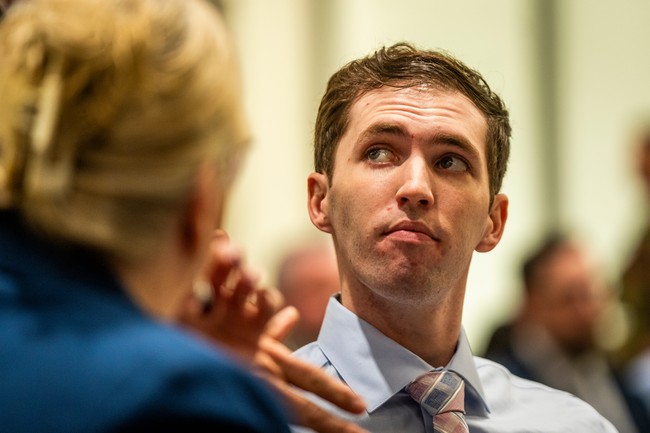
The judge in the Tyler Robinson case has ruled that cameras will be allowed in the courtroom, a decision that matters for transparency and public trust in a trial involving the alleged murder of conservative activist Charlie Kirk. This article covers the charges, prior evidence rulings, the defense’s objections to media coverage, the judge’s reasoning on cameras, and how courtroom rules have already been tightened to balance fairness with openness.
The criminal information filed by the Utah County prosecutor lays out serious charges against Tyler James Robinson, including aggravated murder and felony discharge of a firearm causing serious bodily injury. The state is alleging aggravating factors tied to political motivation and the presence of children, which raises the stakes and the public interest in the proceedings. Those facts have driven intense media coverage and sharpened debate over what the public should be allowed to see. Conservatives and the victim’s family have pushed for openness so Americans can witness justice being done.
Today, after reviewing the evidence that law enforcement has collected thus far, I am filing a criminal information charging Tyler James Robinson, age 22, with the following crimes:
Count I – Aggravated murder, a capital offense, for intentionally or knowingly causing the death of Charlie Kirk under circumstances that created a great risk of death to others.
Count II – Felony discharge of a firearm, causing serious bodily injury, a first-degree felony.
The state is further alleging aggravating factors on Counts I and II because the defendant is believed to have targeted Charlie Kirk based on Charlie Kirk’s political expression, and did so knowing that children were present and would witness the homicide
Evidence handling has already been a focal point. The court unsealed an ATF ballistics report that investigators say links Robinson to the weapon through DNA and other forensic ties. That decision underscored the judge’s willingness to allow key factual material into the public record, even while the defense pushes hard to limit what the public sees. Transparency matters here: when a high-profile conservative figure is killed, Americans rightly expect the facts to be available, not hidden behind administrative walls.
The defense repeatedly moved to restrict or exclude certain evidence and coverage, arguing those actions were necessary to secure a fair trial. Motions to disqualify prosecutors and to prevent video from being shown in pretrial hearings were denied, including a request to take prosecutors off the case. The judge has been deliberate: he denied the disqualification and set limits on what media may capture, but did not close the courtroom to cameras outright.
A Utah judge ruled Friday that news outlets will be allowed to film, photograph and livestream the high-profile murder case against Tyler Robinson, the man charged with killing conservative activist Charlie Kirk.
…
State District Judge Tony Graf issued the ruling Friday afternoon.
“Defendant’s motion is respectfully denied” he said. “Although electronic media coverage is not protected by the Constitution, neither does the Constitution ban electronic media simply because there is a danger that in some cases, prejudicial.”
Robinson’s lawyers warned that live broadcasts and media framing could taint jurors and feed online mobs that judge defendants before a jury ever does. Those concerns are not frivolous in an era of viral clips and commentary that can shape public opinion instantly. But the counterargument from prosecutors and the victim’s family is strong: sunlight is a check on government and process, and livestreams provide the public with an unfiltered view of courtroom conduct and evidence presentation. That perspective resonates with many conservatives who distrust media gatekeeping and prefer open institutions.
Robinson’s attorneys argued that Robinson cannot get a fair trial with cameras in the court. His attorneys said potential jurors could be biased by slanted stories and online comments that depict the defendant as evil or unremorseful based on how he looks and acts in court. They also argued that live broadcasts of court proceedings and the trial would fuel those stories and impact Robinson’s right to a fair trial.
The judge has not ignored fairness. After media pool members violated a courtroom order by focusing on the defendant’s shackles and getting close-ups, the judge repositioned cameras to the rear of the courtroom, behind Robinson, to limit prejudicial images. Those stepped-up controls show a practical attempt to strike a balance: cameras allowed, but rules enforced so coverage does not become a substitute for due process. That middle ground aims to protect both the defendant’s rights and the public’s right to know.
Court scheduling has also shifted as the judge manages pretrial logistics and fairness concerns, pushing the preliminary hearing back to allow for orderly proceedings. The trial will continue to draw national attention, and every ruling about evidence, procedure, and media access will be scrutinized. For conservatives watching, the critical issue remains that the justice system operates openly and fairly, without giving in to pressure to hide uncomfortable facts.
The case is ongoing and will evolve as courts weigh additional motions and evidence, with both sides advocating strongly for their versions of fairness. The decision to allow cameras subject to restrictions is a clear signal that the judge intends to let the public see the process while trying to limit anything that would unduly prejudice a jury.
This is a developing story, so stay tuned for updates on it in these pages.

Add comment