
This article challenges a radical left agenda seen in recent Minneapolis protests, outlining their demands, the implications for property and labor, and why those plans would fail here. It highlights explicit calls for seizure of wealth, a 20-hour workweek, and worker control of industry, preserves the quoted proclamations of activists, and responds from a conservative perspective about the risks to freedom and practical governance.
The core message from the demonstrators is blunt: they want sweeping economic change that would upend property rights and labor norms. Their demands, taken together, mean more redistribution, a hugely reduced workweek, and centralized control over production. Those are not small policy tweaks; they are a blueprint for remaking how this country operates.
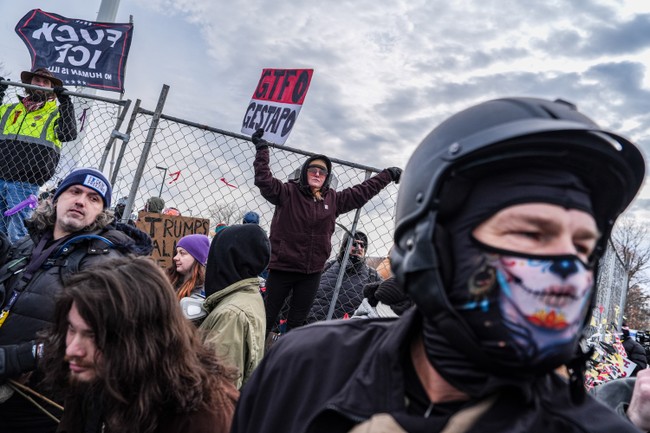
Communist and socialist activists are increasingly joining broader liberal protest movements, where they are promoting a 20-hour workweek, rent caps, seizure of private property and confiscating wealth from billionaires.
The proposals, outlined in interviews with Fox News Digital at a recent Minneapolis demonstration, would mark a dramatic shift away from private ownership and free-market principles toward a worker-controlled model if they were ever to come to fruition and would fundamentally change the United States as we know it.
Let’s be clear: calls for seizure of private property are not abstract academic ideas when voiced by activists organizing on the street. The language used in public shows intent to change who controls homes, factories, and capital. That raises immediate questions about legal process, due process, and the safety of individual rights that republicans and conservatives take seriously.
The demand for a 20-hour workweek, often framed as a humane reform, hides a practical problem: who pays for leisure and reduced hours without collapsing output? If the promised standard of living is to be maintained, either productivity per hour must surge dramatically or someone else must pick up the tab. Historically, sweeping labor reductions mandated by the state have led to shortages, black markets, and political coercion.
“We are building a party of professional class fighters, people who are seriously looking at the system of capitalism and coming to the conclusion that we need a revolution… on a socialist basis,” said Owen Phernetton, a member of the Revolutionary Communists of America. He was holding a copy of the group’s newspaper, The Communist, and was wearing a sweater that read “Communism Will Win.”
“This means handing political and economic power to the working class.”
The quoted proclamation reveals the real aim: not reform within the system, but a transfer of political and economic power to a new ruling class. Even if political rhetoric makes it sound noble, in practice the road to concentrated power has historically been paved with coercion. Conservatives argue that change should come through elections, the rule of law, and respect for individual liberty, not through seizure and imposed collectivism.
Phernetton said their vision includes placing factories, mines and businesses under collective control, limiting rent to a fraction of workers’ income and using confiscated wealth to fund government-backed healthcare, education and housing.
The proposal to place complex industries under collective control ignores the real expertise required to run modern manufacturing and extractive operations. Central planners rarely match decentralized incentives for innovation, maintenance, and efficient allocation of capital. When you combine that with rent limits and confiscatory funding schemes, markets signal less clearly and investment dries up.
There is also a national-security dimension many people brush past: urban-focused revolutionary movements often assume cities can be sustained without reliable supply chains and domestic resilience. The United States is large and logistically complicated; attempts to centrally control everything would face resistance from millions who value private property and from veterans and rural communities prepared to defend supply lines and freedoms.
Beyond practical failures, these proposals carry moral costs. Stripping property, forcing labor policies by fiat, and concentrating control in political hands subordinates individual rights to an ideological project. For republicans, preserving the constitutional order and economic freedom is the safer path to prosperity and stability for all citizens.
Those who favor a restrained government and market-driven solutions see these demands not as reasonable reforms but as a threat to liberty. Political change in a republic requires persuasion at the ballot box, not the imposition of revolutionary rule. Citizens should scrutinize grand promises that erase property protections and centralize power in the name of equality.
We should take activist declarations seriously when they describe a desire to seize and control. That means defending institutions, insisting on transparent processes, and championing policies that protect work, ownership, and the rule of law. The debate over the future of our economy matters because the stakes are the freedom and prosperity of ordinary Americans.


Add comment