
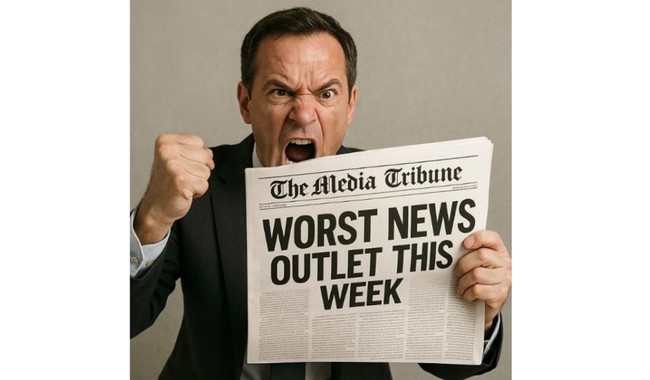
The press spent the week chasing headlines and Democratic talking points, zooming in on selective Jeffrey Epstein emails and other sensational angles while overlooking major stories; this article checks the biggest offenders in that media frenzy and names the outlet that earned the dubious top spot for sloppy, partisan coverage. “Worst News Outlet of the Week.”
The shutdown mess was still fresh, but coverage quickly tilted toward distractions set by the opposition, with outlets parroting claims that those emails proved a blockbuster case against the president. Reporters rushed to frame the narrative before facts were vetted, creating a feeding frenzy that rewarded sensational snippets over sober reporting. The result was a week of error-prone stories and partisan posturing masked as journalism.
The BBC drew attention for promising defiance in the face of legal scrutiny and then stumbling through basic accuracy checks. Coverage leaned on an internal review revealing routine corrections, a fact that barely slowed the outlet’s rush to judgment. That momentum produced misquotes and taken-down pieces that only amplified critics’ warnings about sloppy editorial control.
PBS tried to steer the conversation by elevating cultural figures and playing the victim card about funding threats. Prominent voices pushed the idea that cuts would cripple the network, while anchors and guests doubled down on the BBC controversy as if that beat required a rescue operation. At the same time, the channel highlighted anonymous claims about military officers seeking legal advice, a topic presented with thin sourcing and dramatic framing.
MSNBC continued to skew personal and editorial lines into on-air drama, with hosts and guests trading claims about access and bans that often contradicted one another. Interviews and segments migrated into personality-driven sparring, and rebranding efforts did little to hide the predictable partisan tilt. Viewers saw flurries of hot takes and quick reversals rather than steady analysis, a pattern that undermines trust.
CNN tried to position itself as the adult in the room while simultaneously defending disruptive tactics by some on the left, creating a strangely conflicted message. Hosts admitted ties to narratives about the shutdown, and others appeared to coach responses to conservative pushback rather than interrogate the evidence. Internal studies exposing repeated journalistic lapses were brushed off, and some anchors leaned into partisan frames over careful sourcing.
The week’s mess included outlets treating Jeffrey Epstein’s communications like an all-purpose scandal delivery system, elevating innuendo and partial quotes without necessary context. Selected emails were presented as definitive proof even when timelines and verifiable alibis suggested otherwise. Too often, the temptation to craft a headline eclipsed the need to assemble a coherent, fact-checked narrative.
Rolling Stone earns the top spot for leaning hardest into the most explosive assertions while skipping essential context and verification. The outlet spotlighted a line where Epstein allegedly said Trump “knew about the girls,” but it largely ignored evidence that complicates that claim, including reports that Trump alerted authorities about Epstein’s conduct. That omission turned an ambiguous email into a headline-ready accusation.
Reporting on timelines and relationships was another area where shortcuts created false impressions, with stories gluing together dates and locations that did not align under scrutiny. Assertions that Trump and Epstein were together at certain times collapsed under basic checks showing travel and presence mismatches. Even purported investigative pieces recycled unvetted claims about authors and associates without spelling out contradictions.
Beyond the Epstein-related frenzy, several outlets amplified culture stories and fringe obsessions that have little bearing on public policy but plenty of appeal for clicks. Coverage ranged from sensationalized true crime curiosities to viral social memes presented as cultural crises, diverting attention from political infighting and policy debates. That mix of distraction and dramatization marked the week’s broader media failure.
Editor’s Note: The mainstream media continues to deflect, gaslight, spin, and lie about President Trump, his administration, and conservatives.


Add comment