
This piece examines the surprise rise of democratic socialist challengers to established mayors, focuses on Rae Huang’s entry against Karen Bass in Los Angeles, compares recent wins in New York and Seattle, and considers the local political fallout and strategic implications for the city’s future.
Two recent mayoral upsets in big cities put Los Angeles on edge about the direction of its next election. New York and Seattle both elected candidates associated with democratic socialist movements, and those outcomes have conservatives and centrists asking whether the experiment will spread to the West Coast’s largest city. Los Angeles already contends with strained services and a tense debate about leadership, so a credible leftward surge would only amplify those tensions.
Mayor Karen Bass has faced criticism for handling emergency response and city services during her term, and opponents are pointing to slow rebuilding and budget troubles as evidence of ineffective governance. That criticism is the opening Rae Huang, a community organizer and member of the Democratic Socialists of America, is using to justify her challenge. Huang frames her run as the continuation of long-term social justice work, pitching sweeping policy promises as solutions to Los Angeles’s deep problems.
Huang announced her candidacy as a faith-rooted organizer with two decades of community work behind her, arguing that municipal power should be used to secure housing and curb the cost of living. She promises universal housing, free transportation, climate resiliency and improved affordability—policy goals that appeal to progressive activists but raise serious questions about funding and feasibility. For voters wary of big promises, the key issue will be whether those plans come with realistic budgets and measurable results.
Like other insurgent candidates on the left, Huang can alter the calculus of the race even if she doesn’t win outright. A serious primary challenge from the left threatens to siphon votes from Bass, potentially handing an advantage to more moderate or business-oriented challengers. That spoiler effect is now a familiar political story: when the left fractures, incumbents who rely on broad progressive coalitions can suddenly find themselves vulnerable.
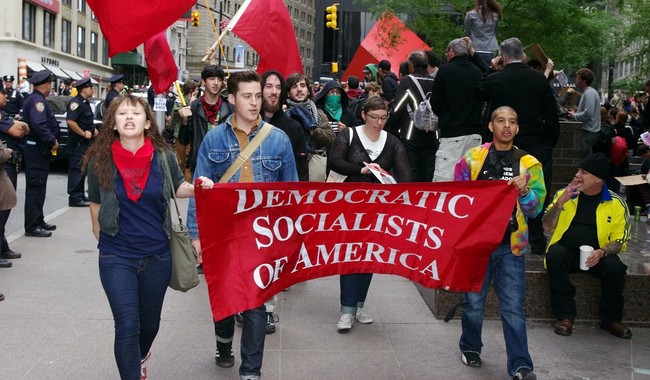
Rae Huang’s move also spotlights the growing organizational reach of the Democratic Socialists of America in city politics. DSA-affiliated candidates have secured seats on some city councils, and these local wins build infrastructure that can be repurposed for mayoral pushes. The immediate result is more competitive primaries, and the long-term effect could be a deeper ideological split within urban Democratic coalitions across California.
The Los Angeles political landscape already includes credible challengers beyond the progressive lane, and a crowded field could produce unpredictable outcomes. Former education superintendent Austin Beutner has criticized Bass on fiscal and service grounds, tapping into concerns that resonate with business leaders and fiscally minded voters. The possibility of another wealthy candidate entering the race complicates matters further, because a three-way contest can hand victory to whoever best consolidates a specific bloc.
Recent city elections show that outsider-style campaigns can topple established operators when voters are fed up, but they also reveal the risk of bold promises meeting bureaucratic realities. New leadership can reset priorities, but it can also inherit entrenched problems that resist quick fixes. Voters who care most about safety, sanitation, and reliable municipal services tend to prefer clear, implementable plans over sweeping ideological pledges.
Huang’s rhetoric places her squarely on the activist left, and that clarity has both advantages and liabilities. Activist energy can drive turnout and amplify issues that mainstream candidates ignore, but it can alienate moderate voters who prioritize competence over ideology. For Republicans and conservative-leaning observers, the key question is whether a heated progressive insurgency will make Los Angeles governance worse by emphasizing symbolism over performance.
Municipal elections are also testing grounds for broader national trends. City hall control shapes daily life in ways that national politicians cannot, and local policy experiments often ripple outward. If Los Angeles tilts further left, expect policy debates to intensify over housing subsidies, transit funding, and climate mandates—each a flashpoint for arguments about practical governance versus ideological ambition.
Whatever happens, the upcoming race will be a referendum on what voters want from an urban mayor: sweeping, transformative promises or steady, pragmatic management. With multiple challengers and a polarized electorate, Los Angeles stands to experience a bruising campaign season that could reshape local power for years. Strategic choices by candidates and voters in the months ahead will determine whether the city doubles down on progressive experimentation or swings back toward cautious, results-driven leadership.
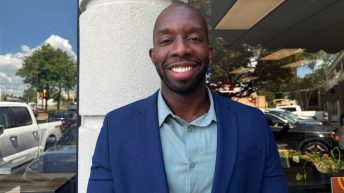
“I am excited and very humbled to announce that I am running for Mayor of Los Angeles, the second largest city in our nation,” Huang wrote on her Instagram account Saturday. “After over 20 years of leaning into my call to serve God through social justice work and organizing, this path has led me in these uncertain times to take the unusual path to continue my calling by running for Mayor to finally see through the changes the LA social justice movement and I have been building for years.”
The 43-year-old community organizer and Democratic Socialists of America (DSA) member wrote that her campaign will focus on universal housing, free transportation, climate resiliency and affordability, issues that resemble New York City Mayor-elect Zohran Mamdani‘s initial campaign.


Add comment