
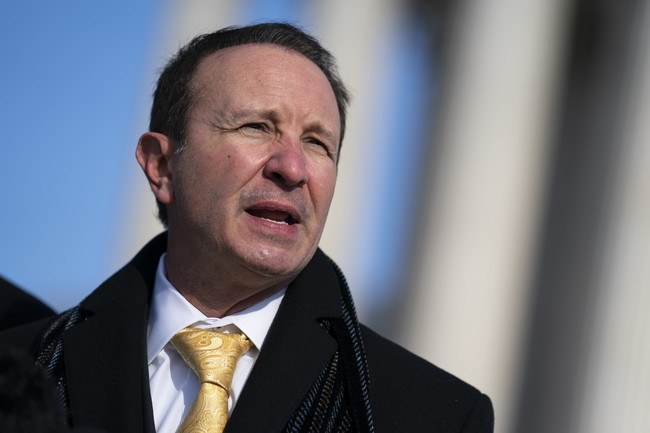
The Supreme Court’s ruling in Louisiana v. Callais threw the state’s congressional map into chaos, prompting Governor Jeff Landry, Attorney General Liz Murrill, and the legislature to suspend the May 16 congressional primaries while new maps are drawn and legal steps play out.
Louisiana officials moved fast after the high court found the state’s congressional map unconstitutional, calling it a gerrymander. That decision means ballots prepared under the old map cannot count for U.S. House contests, even as other races on the May 16 ballot remain intact. State leaders are coordinating an emergency response to avoid further legal exposure and to protect the integrity of contested races.
Secretary of State Nancy Landry made clear the change affects only U.S. House races and that early voting for other contests will proceed as scheduled. Overseas and absentee ballots had already been distributed, creating immediate logistical headaches for election administrators. Lawmakers and the governor are exploring the timeline and legal steps required to reschedule or re-scribe House elections without disenfranchising voters.
Louisiana Republicans delayed the May 16 primaries for US House Thursday, one day after the US Supreme Court’s decision invalidating the state’s congressional map and calling it an unconstitutional gerrymander.
Early voting was scheduled to begin Saturday and overseas ballots had already gone out. The primaries for other races will still move forward, according to a statement from Louisiana Secretary of State Nancy Landry. That includes a closely watched US Senate Republican primary, in which Sen. Bill Cassidy faces challenges from US Rep. Julia Letlow, endorsed by President Donald Trump, and State Treasurer John Fleming.
While the House races will remain on the May 16 ballot, no votes cast in those races will count, Nancy Landry said in the statement.
Democratic Rep. Cleo Fields, whose district is at the center of the Supreme Court’s redistricting decision, said earlier Thursday that Louisiana Gov. Jeff Landry had told him he anticipated issuing an executive order to suspend the House election and call a new one.
From a Republican standpoint, this is a predictable clash of judicial power and practical governance. The state must now balance compliance with the Court’s mandate against the reality that voters expect stability and clarity heading into the midterms. Lawmakers will be under pressure to redraw maps quickly while building a defensible plan that withstands fresh legal scrutiny. Voters, campaigns, and local officials all face uncertainty until new lines are finalized and a revised election plan is announced.
Governor Landry and Attorney General Murrill signaled they will take decisive action to pause the affected contests and to follow the legal process for calling a new election. That includes the governor issuing any necessary executive orders and the legislature taking steps to provide statutory cover. Republicans will argue the priority should be fair maps and on-time elections for other offices, not a rushed fix that invites more litigation.
Election administrators have practical tasks to address immediately: stop counting any votes cast for the House races, notify voters at polling sites, and coordinate with military and overseas voting channels to correct ballots already sent. Officials also must ensure that other May 16 contests, including the hotly contested Republican Senate primary, proceed without confusion. The split-ballot situation is messy, but it’s essential to prevent unconstitutional maps from determining representation.
The political consequences could be significant. Suspending House contests disrupts campaign calendars, fundraising plans, and voter outreach strategies. Incumbents and challengers alike face a new timeline and the prospect of running in districts that may look different. Republican leaders will be watching how the new map affects prospects for holding the House and protecting conservative policy gains heading into the 2026 midterms.
.@LAGovJeffLandry and I issue the following statement after yesterday’s Supreme Court ruling in Louisiana v. Callais:
Yesterday’s historic Supreme Court victory for Louisiana has an immediate consequence for the State. The Supreme Court previously stayed an injunction against the State’s enforcement of the current Congressional map. By the Court’s order, however, that stay automatically terminated with yesterday’s decision. Accordingly, the State is currently enjoined from carrying out congressional elections under the current map. We are working together with the Legislature and the Secretary of State’s office to develop a path forward.
Secretary Landry’s formal advisory reiterated that voters will see House races on ballots but any votes cast in those contests will not be counted. Her office said notices will be posted at early voting locations to alert the public, and that the suspension follows the legal certification of an emergency under state law. Clear public messaging is critical to avoid confusion and to preserve trust in the process while the legislature and executive craft a lawful schedule for new congressional elections.
Campaign teams will need to adapt quickly: pause paid outreach tied to now-suspended contests, reallocate resources to ongoing races, and prepare for fresh district lines that may shift the terrain. Republican organizers will emphasize protecting other scheduled contests and pushing for a transparent, rapid redistricting process that respects voters and the rule of law. This is a moment for disciplined, legal action rather than political theater.
Officials say this is a developing story and details will evolve as the state files paperwork, the governor issues any orders, and the legislature votes on remedies. In the meantime, voters should expect updates from state and local election officials about what will and will not count on May 16. The priority now is stabilizing the schedule for unaffected races while creating a defensible path forward for U.S. House elections under new maps.



Add comment