
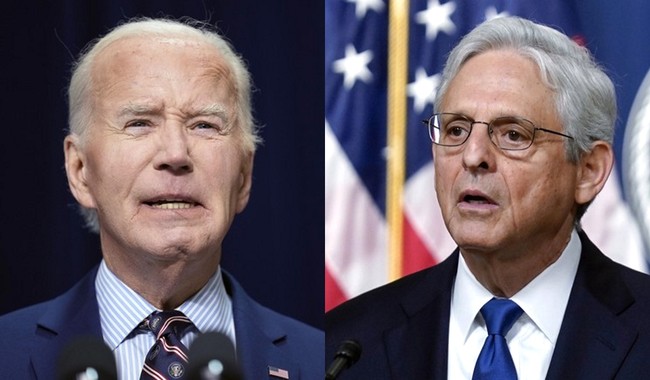
The Task Force to Eradicate Anti-Christian Bias, created by executive order in February 2025, produced a multi-agency report alleging systematic discrimination against Christians by the Biden Justice Department; the report compiles agency findings, footnotes, and exhibits and highlights disparities in enforcement, policy guidance, and internal communications that critics say favored certain constituencies and enforced gender ideology and vaccine positions across the federal government.
The report assembled by the task force spans roughly 200 pages of findings from seventeen federal agencies and additional contributors, supported by over 1,100 footnotes and hundreds of exhibits. Its central claim is straightforward: policy choices and enforcement priorities during the Biden administration produced a pattern that disadvantaged people of Christian faith across multiple policy areas. The task force frames these episodes as part of a broader push to advance agendas on gender identity, abortion, education, and public health in ways that, they say, trampled religious conscience.
The report highlights sentencing disparities as one example of uneven treatment, arguing that charging and sentence recommendations reveal bias against pro-life defendants compared with pro-abortion defendants. The task force points to DOJ requests and sentencing outcomes as evidence that prosecutors treated like actions differently depending on the ideology involved. Those disparities are presented as concrete indicators that enforcement was not neutral but tied to policy preferences.
The 200-page report collects the detailed findings of the seventeen federal agencies on the Task Force, as well as other agencies who also uncovered religious discrimination. The report examines how the Biden Administration pushed its radical policy agenda, even when its actions infringed on Christian beliefs, free exercise, and on matters of deep personal importance to nearly every American: life, family, marriage, self-identity, education, medical decisions, and more. To support these findings, the Report contains over 1100 footnotes and over 300 pages of exhibits.
Task force investigators also singled out Justice Department guidance and internal materials that, they contend, treated Christian claims differently from other religious claims. One passage asserts the Civil Rights Division published materials suggesting Christians could not be victims of religious discrimination, a characterization the task force uses to argue institutional preference. That accusation is coupled with examples of memos and public statements that allegedly marginalized traditional religious views on marriage and gender.
The report details how the department responded to the Supreme Court’s Bostock precedent, describing an aggressive push to adopt gender ideology across federal agencies and to rescind prior guidance respecting traditional views. Career employees at DOJ, the task force notes, sought the reversal of a previous memo that had counseled tolerance for traditional religious expressions about marriage and gender identity. Those internal debates are presented as evidence that the department prioritized certain employee constituencies and ideologies over religious exemptions.
- The Biden Justice Department immediately mandated the adoption of gender ideology throughout the federal government far beyond the Supreme Court’s ruling in Bostock v. Clayton County.
- The day after Biden was sworn into office, career employees at the Justice Department urged for the reversal of a Trump Justice Department memo on Bostock that directed the department to “respect its employees’ right to express traditional views” regarding marriage and gender identity.
- Career employees called the memo “an affront to the dignity of our transgender employees,” and called for the memo to be rescinded under Biden’s Executive Order on gender ideology.
- The Biden Justice Department also considered requests for religious exemptions related to gender ideology as harmful conduct to be regulated and consistently pushed its incorrect Bostock interpretation in amicus briefs, even though federal courts repeatedly rejected it.
- The Biden Justice Department advised White House and senior leadership in a phone call that federal employees’ religious objections to the Covid vaccines were “insincere” or “not religious.”
The task force report also includes excerpts alleging derogatory internal communications and prosecutorial notes aimed at religious figures and institutions. Those materials are used to argue that some prosecutors and staff displayed animus toward Christian practices and symbols. The result, according to the report, was a climate where religious objections were questioned or dismissed rather than accommodated.
At the report’s release, the acting attorney general and task force chair issued a direct statement about the findings, emphasizing that federal power should not punish religious belief. The statement calls for continued exposure of individuals and policies that targeted Christians and promises a renewed focus on religious liberty in enforcement and guidance. That message is framed as a corrective to the patterns outlined in the document.
Acting Attorney General and Chair of the Task Force to Eradicate Anti–Christian Bias, @DAGToddBlanche, on the report: “No American should live in fear that the federal government will punish them for their faith. As our report lays out, the Biden Administration’s actions devastated the lives of many Christian Americans. That devastation ended with President Trump. The Department of Justice will continue to expose bad actors who targeted Christians and work tirelessly to restore religious liberty for all Americans of faith.”
Beyond policy memos and sentencing data, the task force points to text chains and comments among DOJ staff that, it says, reveal personal hostility toward religious figures. The report includes such examples to show that bias was not only institutional but also interpersonal. Those items are presented as part of a larger mosaic supporting the report’s central conclusion.
For readers tracking religious liberty and federal policy, the task force report offers a single repository of allegations, documents, and exhibits that supporters expect to use as a basis for future oversight, policy changes, and litigation. Whether one accepts every conclusion, the report brings together numerous claims and primary-source items that will fuel debate about how federal agencies balance nondiscrimination with religious conscience.



Add comment