
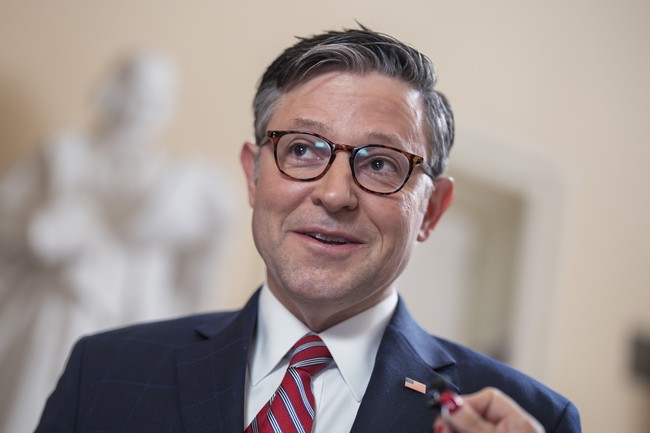
Speaker Mike Johnson signaled a coming effort to tackle runaway entitlement spending, arguing mandatory programs are driving the budget toward $40 trillion-plus in federal debt and promising a plan next year to “adjust and fix” Medicare, Medicaid, and Social Security while framing the move as necessary to protect programs and taxpayers from waste and fraud.
Mike Johnson used a recent radio appearance to push the conversation where it needs to be: on the unsustainable trajectory of federal spending. He pointed out that more than 74 percent of federal outlays are on autopilot through mandatory programs, and that leaves little room to respond to crises or to prioritize growth. From a conservative standpoint, this is not an abstract debate — it is about preserving solvency and protecting future retirees.
“And then, we’re going to lead up to what we have to do to address the largest spending item. The reason we’re in trouble is because over 74 percent of federal spending is on autopilot. Mandatory spending. That’s your entitlement programs like, Medicare, Medicaid, and then things like Social Security. They have to be adjusted and fixed. We have a plan to do that, uh, next year, and it’s critical because we’re at 40 trillion, plus.”
That quote landed in a political environment already primed for alarm from the left, which predictably framed any talk of reform as a threat to benefits. Democrats seized the soundbite to claim cuts were imminent, trying to paint the conversation as an attack on seniors and vulnerable Americans. That attack line is politically useful for them, but it dodge the central fiscal reality facing the country.
Republicans can and should insist that protecting entitlements means making them sustainable. The GOP message must be blunt: ensuring programs remain solvent for future beneficiaries requires targeted reforms, aggressive anti-fraud measures, and smarter oversight right now. This is not about ripping benefits away from those in need; it is about stopping the slow-motion bankruptcy that would harm everyone if left unchecked.
Johnson also pointed to recent wins in rooting out waste and fraud as a foundation for broader changes. Restoring accountability and clawing back misspent funds helps preserve programs for the citizens who truly depend on them. When Republicans show concrete results — audits, recoveries, and prosecutions — it strengthens the argument for structural fixes rather than playing into fearmongering narratives.
The Democrats’ reflex is to shout “cuts” and “takeaway” whenever reforms are mentioned, and that predictable tactic will likely intensify as midterms approach. With political stakes high, Republicans need to avoid vague talk and present specific, voter-friendly solutions that connect reform to affordability and common-sense stewardship. Otherwise, Democrats will continue to weaponize the messaging and muddy the facts.
Johnson pushed back publicly against the fearmongering and highlighted the oversight work already underway, pointing to investigations that found large losses in state-run programs. He emphasized that much of the spending labeled untouchable is plagued by fraud, waste, and abuse — problems that conservatives are both willing and able to address. The contrast is clear: Republicans advocate action; Democrats often prefer the optics of defending the status quo.
Once again, Democrats and the media are fearmongering.
Everyone knows beyond a shadow of a doubt that there is rampant waste, fraud, and abuse throughout government programs. Just today, the @GOPoversight released a report that Tim Walz’s failures in Minnesota cost the taxpayer potentially $9 billion in Medicaid-related funds and roughly $300 million in federal child nutrition funds.
https://x.com/kenmartin73/status/2064114000556597682
During this Congress, the House has already passed substantive legislation to clean up this waste, fraud, and abuse, and Democrats have voted against nearly every piece of legislation we’ve passed. We will continue to do so in this Congress and in future Congresses so that these important programs can be preserved for the American citizens that need them.
Democrats love to say that “everybody is against fraud,” and they are right — this is a 90/10 issue. Republicans are the ones with the courage to actually do anything about it.
Messaging will make or break the effort. If Republicans want to win the argument, they should lay out how reforms will protect beneficiaries and reduce costs for families, not merely swap vague phrases about “adjusting and fixing.” Practical examples — tightened eligibility rules, improved verification systems, and stepped-up fraud task forces — translate better for voters than abstract promises.
Politically, the timing is delicate. With national narratives shaped by the media and partisan operatives on both sides, the GOP has an opportunity to take a proactive stance that highlights stewardship and results. Voters who worry about inflation, taxes, and the economy respond to confidence paired with detail, so Republicans should match the big-picture pitch with a clear plan of action.
Putting reforms into motion will require shepherding proposals through committees and the House floor, and that demands discipline from the majority. Republicans must build coalitions around specific legislative fixes that address both fiscal realities and immediate fraud concerns. Done right, the effort can show voters that protecting entitlements means making them work for current and future Americans alike.


Add comment