
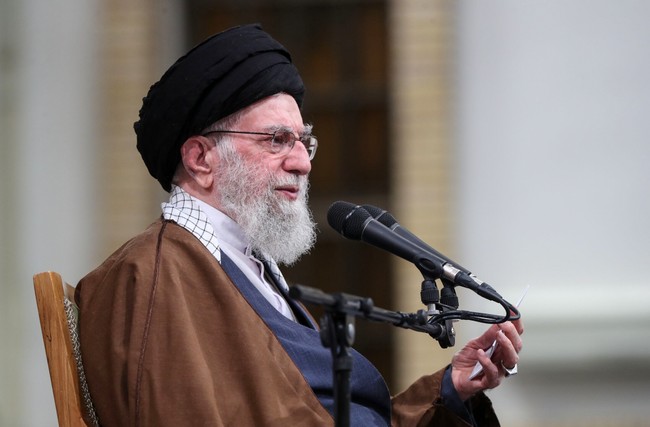
The protests in Iran have entered a new, volatile phase as reports suggest Tehran is turning to foreign militia forces to help suppress unrest, raising questions about the regime’s cohesion and how the United States might respond.
We’re now nearly two weeks into a broad wave of demonstrations across Iran that feels different in scale and intensity from past flare-ups. Protesters have even renamed streets in Tehran, a symbolic gesture that underscores the depth of public anger. The government’s usual tools haven’t stopped the spread, and the leadership in Tehran must be feeling the heat.
Recent reporting indicates the Islamic Republic may be importing outside fighters to bolster its security apparatus, an escalation that signals desperation. Sources say Hezbollah members, Iraqi Shiite militias, and Quds Force-linked personnel have crossed into Iran to support regime forces. If true, that would be a serious step: bringing non-Persian, foreign combatants into Persian-majority cities to confront fellow Iranians.
As anti-regime protests spread across Iran for a 12th straight day, the Islamic Republic has reportedly turned to foreign militias for support, with two independent sources confirming that roughly 850 Hezbollah, Iraqi militia and Quds Force-linked fighters crossed into Iran to bolster the regime’s security forces.
The reported movement marks a significant escalation in the regime’s response, signaling a willingness to rely on allied foreign militias with combat experience to help suppress domestic dissent.
“This is nothing new for the regime. It is the logical extension of a playbook the ruling clerics have used since 1979 to outsource repression to ideologically loyal militias and then integrate them into the state’s coercive infrastructure,” Iran expert Lisa Daftari told Fox News Digital.
Outsourcing repression has long been part of Tehran’s regional strategy, but using foreign proxies at home risks inflaming ethnic and linguistic tensions. Iran is largely Persian and Persian-speaking, while many of the potential proxy forces speak Arabic, Dari, or other languages. Bringing them onto Iran’s streets to fire on Iranians has the potential to fuel outrage and deepen the crisis rather than quell it.
Behnam Ben Taleblu, a senior fellow at the Foundation for Defense of Democracies, said the reported use of foreign proxy forces could reflect growing concerns within the regime about internal cohesion among Iran’s own security services.
“Since protests dating back to 2009, there were always allegations of Arabic being heard on the street,” Ben Taleblu told Fox News Digital. “As the contest between the state and the street continues to heat up, all eyes will be on Iran’s security forces to see if they defect or disobey orders to crack down. The problem is, so is the regime. And to that end, the Islamic Republic may have devised a failsafe for itself against popular anger. Foreign proxies. Whether Lebanese Hezbollah, Iraqi Shiite militias, or the Afghan Fatemiyoun, their function would be the same: to fire on Iranians when other Iranians won’t.”
Using outside fighters could be a sign the regime fears defections or refusal to follow orders among domestic security forces. If Iran’s own units are wavering, the clerical leadership might see foreign proxies as the reliable stopgap they need to maintain control. That calculation carries massive risks, though, including triggering broader resistance inside Iran or provoking regional blowback.
There’s also an unmistakable international angle. The U.S. has signaled it would not stand idly by if Tehran massacres its own people, and President Trump has warned of intervention if violence escalates. Moving large groups of foreign militias toward Iran would not go unnoticed by U.S. intelligence or military planners, and it could invite interdiction efforts or other responses designed to prevent a bloodbath.
Historically, Tehran has preferred operating through proxies to maintain plausible deniability and minimize direct costs, but the optics and realities change when those proxies are used against Iranian citizens. That shift would expose the regime to charges of betrayal and foreign dependence at a moment when it can least afford either. The longer protests continue and the more the regime leans on outside forces, the clearer the danger of a spiral into greater violence becomes.
At the same time, the presence of experienced combatants among proxy forces could make crackdowns deadlier and more systematic, potentially turning unrest into rounds of violent urban engagements. That prospect raises the stakes for neighboring states, global powers, and humanitarian actors who may face an influx of refugees or be pushed into military and diplomatic maneuvers to protect civilians.
We don’t yet know how widespread or permanent any foreign deployments might be, nor whether they will actually change the dynamics on Iran’s streets. What is clear is that the regime’s recourse to outside militias would mark an alarming evolution in its tactics and a measure of how precarious its hold on power may have become.


Add comment