
This article looks at Houston police union recruiting NYPD officers upset with New York’s new mayor, the political context fueling that move, and the likely consequences for staffing and public safety as officers consider leaving the city.
Houston’s police union has openly reached out to New York officers who say they are fed up with the incoming mayor’s rhetoric and agenda. For many rank-and-file cops, this is not just political posturing; it’s an invitation to keep doing a tough, practical job in a place that signals it values order and law enforcement. The exchange highlights a broader trend: when city leadership adopts a hostile tone toward police, retention becomes a political and operational problem.
New York’s mayoral transition has already triggered worry among public safety professionals about policy shifts and cultural signals from City Hall. Officers who feel attacked or undervalued start to look for work where they won’t be vilified for doing their jobs. When a large, high-profile department like the NYPD faces attrition, the effects ripple: response times, morale, and community safety all take a hit.
Politics matters in policing because it shapes budgets, discipline rules, and the general environment in which officers work every day. If leaders speak of defunding or repeatedly label officers with sweeping accusations, many will interpret that as permission for hostile treatment rather than constructive reform. That perception pushes experienced personnel toward departments that promise better support and clearer priorities.
Houston is marketing itself as an attractive alternative, pitching a more supportive culture and stable prospects for officers considering relocation. The pitch is simple: bring your training and experience and you’ll be valued for it. That kind of message has immediate appeal to officers who feel their careers and reputations are on the line in cities where political leadership is actively antagonistic.
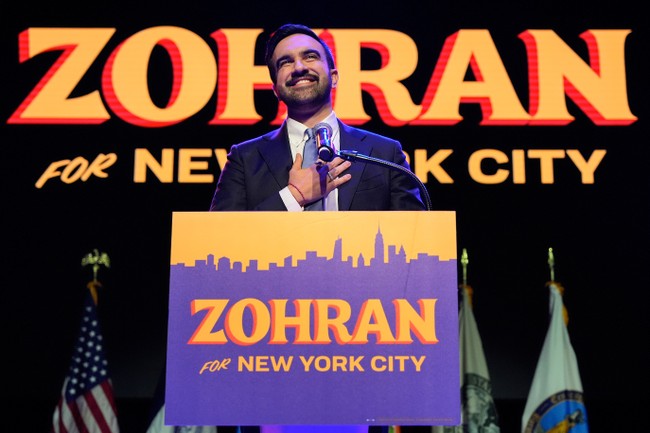
A police union in Houston is attempting to recruit New York City cops “disgusted” with New York City Mayor-elect Zohran Mamdani’s victory.
The Houston Police Officers’ Union posted a graphic on Facebook late Tuesday asking, “NYPD, ARE YOU DISGUSTED WITH THE ELECTION OF ZOHRAN MAMDANI?”
“JOIN US!” the graphic continues. “THE HOUSTON POLICE DEPARTMENT IS HIRING POLICE OFFICERS!”
Beyond the union’s message, there are hard realities: officers weigh family stability, pay, pension portability, and the local political climate when deciding whether to stay. The loss of veteran officers is expensive and slow to reverse; casualty means fewer mentors for recruits and greater strain on remaining staff. For citizens, that translates into visible declines in service and an erosion of the sense that public safety is being prioritized.
Mamdani, a democratic socialist, secured New York City’s top job on Tuesday after defeating political heavyweight and former New York Gov. Andrew Cuomo. The New York Assembly member had already bested Cuomo in the Democratic primary back in June, resulting in new nationwide attention toward him.
Mamdani in October apologized to the New York City Police Department (NYPD) for previous critiques directed toward the police force, in which he referred to them as “racist,” “wicked” and “corrupt.”
An apology after labeling a whole profession as corrupt and racist does not instantly repair trust, especially when hiring and staffing decisions begin to reflect an ideological tilt. If key city figures depart and organizers move into staffing roles, that signals real change in how priorities will be set. The consequence is predictable: more officers consider leaving, and the city risks a talent drain that could last years.
This is not merely about one election; it’s about how left-leaning hostility toward law enforcement affects the on-the-ground ability to keep neighborhoods safe. Historically, when elected officials pursue anti-police policies or rhetoric, recruitment and retention suffer. The practical outcome is fewer officers protecting more citizens, which is bad for crime prevention and community stability.
For those officers who decide to leave, Texas offers familiarity in size and patrol complexity while promising political backing and, in some cases, better quality-of-life tradeoffs. Departing with a line like “You may all go to hell, and I will go to Texas” captures the cultural punch behind the decision. That kind of sentiment is a political signal as much as a personal choice.
The interplay of ideology and public safety is on clear display here: policy choices at the top influence who is willing to stand on the street bottom. City leaders who want to preserve public safety will need to balance reform with respect for the professionals tasked with doing a dangerous job. Until they do, recruiting efforts from other jurisdictions will remain appealing to officers seeking a supportive workplace.


Add comment