
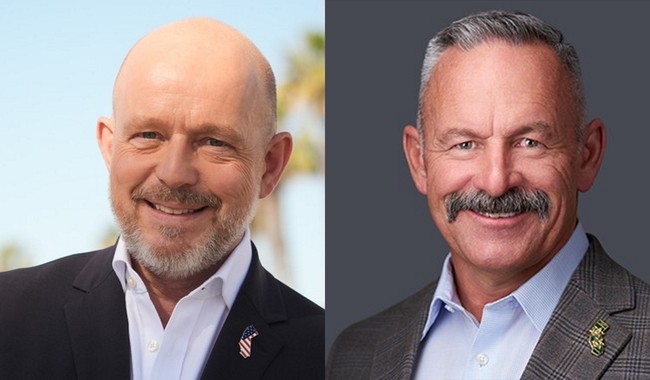
The California governor’s race shifted sharply after Representative Eric Swalwell resigned and left the field, creating an opening that two Republicans—Trump-endorsed Steve Hilton and Chad Bianco—appear ready to exploit. A recent Emerson College poll shows the pair leading a crowded field but together only hold about 31 percent of the overall vote, leaving the outcome uncertain as Democrats scramble to regroup. This article examines the numbers, the political dynamics at play, and why Republicans might have an unusual chance in a state that usually leans the other way.
Eric Swalwell’s abrupt exit has scrambled Democratic plans and handed Republicans a rare moment of optimism in California politics. The departure removes a high-profile Democrat from the list of contenders and leaves a knot of candidates who could either splinter the vote or, more likely, coalesce before the primary. Republicans see opportunity in the chaos, but they should be cautious about counting their chickens just yet.
The Emerson College poll that surfaced recently paints a picture of a divided field, with Hilton and Bianco leading but far from dominant. Together they account for roughly 31 percent of the overall vote, and among Republican voters they split support: 48 percent for Hilton and 40 percent for Bianco. :
Those split numbers mean the GOP’s advantage is fragile; a united Democratic front could quickly erase any gains. California Democrats have a track record of rallying when it matters, especially in statewide contests, and six weeks before the primary is plenty of time for major consolidation. Expect Democrats to move fast to neutralize the disruption and limit any long-term damage from Swalwell’s resignation.
Republicans, for their part, should focus on the pocketbook issues that poll highest with voters across the state. The Emerson findings highlight the economy at 41 percent and housing affordability at 20 percent as top concerns, followed by threats to democracy at 10 percent, crime at 6 percent, immigration at 6 percent, and healthcare at 6 percent. These are natural terrain for conservative appeals that stress accountability, fiscal discipline, and public safety.
“Hilton and Bianco continue to split the Republican vote, 48% supporting Hilton and 40% Bianco, while independents are more fragmented: 16% support Steyer, 15% Hilton, 14% Bianco, and 10% Porter.”
That fragmentation among independents shows where a focused Republican message could win converts if executed well. Independents are often the deciding bloc in California statewide races, and appealing to them on economic pain points and housing can chip away at Democratic margins. Republicans should also be realistic: the state’s baseline leans against them and will demand smart, disciplined campaigns to capitalize on any opening.
The economy is the top issue for California voters at 41%, followed by housing affordability at 20%, threats to democracy at 10%, crime at 6%, immigration at 6%, and healthcare at 6%.
Historical context matters here. Even in cycles that favored Republicans elsewhere, California has proven stubbornly blue, delivering lopsided results for Democratic presidential candidates in recent elections. That pattern suggests the Emerson poll could overstate a GOP ceiling and that statewide victory will require more than momentary Democratic disarray. It will also require disciplined conservative messaging on issues that actually move voters.
Strategically, the state GOP faces a choice: consolidate behind one candidate or let both Hilton and Bianco compete and hope Democrats split themselves into defeat. Normally unity behind a single strong nominee makes sense, but the current fragmentation among Democrats makes a two-pronged approach worth considering. Either way, the priority must be converting the poll’s issue advantages into durable voter support.
Campaigns on both sides will be watching turnout math closely; California’s top issue list indicates where persuasion could be most effective. Republicans should press on housing and the economy while keeping pressure on public safety and immigration to appeal to undecided voters. Time is short before the June primary, and the party that moves first to define the debate will have the edge.
The coming weeks will tell whether this is a fleeting Republican opening or the start of a real shake-up in a state that usually favors Democrats. If Democrats manage to unify, the GOP’s path narrows quickly, but if the opposition remains fractured the unusual scenario of a competitive Republican showing in a California governor’s race becomes plausible. Either way, the contest will reveal a lot about strategy, discipline, and the appeal of conservative messaging in deep-blue territory.



Add comment