
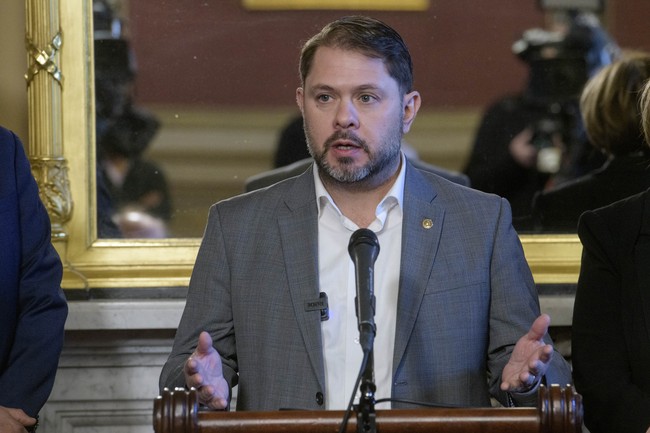
The story keeps circling back: allegations against Eric Swalwell have rattled Capitol Hill and now Sen. Ruben Gallego finds himself tied to the fallout. This piece lays out the timeline of their friendship, Gallego’s shifting responses, new allegations leveled in recent weeks, and lingering questions about transparency. Embedded content from the original reporting is left in place for context. Expect a direct look at how close political alliances can complicate accountability.
For years Ruben Gallego and Eric Swalwell projected the image of tight allies, roommates, and travel companions whose bond was visible in photos and campaign events. That outward camaraderie made it notable when Swalwell stepped away from the California governor’s race and resigned from Congress amid allegations of sexual misconduct. When high-profile partners fall from grace, attention naturally turns to those who stood beside them, and Gallego is no exception.
Initially Gallego tried to cast doubt on the allegations against Swalwell, suggesting he did not accept the accusations at face value. But as more accusers came forward and the story gained gravity, Gallego publicly shifted to acknowledging the claims and saying he believed the women involved. That change in tone has raised eyebrows because it contrasts with earlier portrayals of an intimate, longstanding friendship.
At times Gallego described Swalwell as living what he called a “double life” and suggested he had only heard about some “flirting” rather than outright misconduct. Those comments sit uneasily next to past moments where Swalwell referred to Gallego as his “best friend in the world.” The back-and-forth leaves observers wondering whether political convenience or genuine surprise best explains Gallego’s evolution of statements.
While focus stayed on Swalwell’s legal and political challenges, other allegations emerged that put Gallego himself under scrutiny. Representative Anna Paulina Luna publicly referred claims involving Gallego to Senate leadership, and those claims were reportedly passed to the Senate Ethics Committee. Any ethics review into a sitting senator is serious, and it forces the public to evaluate how colleagues handle accusations internally and in public.
Gallego has denied wrongdoing and, through a spokesman, dismissed certain allegations as “right-wing conspiracy theories being parroted by a fringe far-right member of Congress.” That defense echoes the initial layout of denials many politicians use when their allies are accused, but it does little to resolve the concrete questions about interactions, timelines, and behavior that critics are pressing for answers on.
Recent reporting suggests Gallego has not been fully forthcoming about how frequently he associated with Swalwell in recent years, prompting criticism that he is attempting to distance himself without fully accounting for the relationship. If a public official claims no knowledge of misconduct while evidence of close association exists, that raises legitimate concerns about candor and responsibility. Transparency matters when public trust is on the line.
On top of the connections to Swalwell, Luna has said four women have now alleged sexual misconduct by Gallego. She also indicated there may be a reporter with text receipts alleged to show explicit and inappropriate messages. Those are serious charges that, if substantiated, require a full, impartial review by appropriate authorities and the Ethics Committee.
Gallego reportedly met with the Ethics Committee shortly after Luna referenced her referral to leadership in a television interview. Meeting with investigators is a normal step, but it does not resolve public questions about past behavior or about why discrepancies exist in descriptions of how often Gallego and Swalwell socialized. The committee’s process will be the place where facts are examined beyond political rhetoric.
Observers from across the aisle are watching how Democrats handle internal discipline and accountability, and Republican voters in particular are focused on whether the party treats these matters consistently. Political allies circle the wagons or break ranks depending on pressure, and those choices reveal priorities. For constituents, the central concern is whether truth and justice shape outcomes rather than partisan shielding.
The narrative here is not only about two men once photographed smiling on foreign trips; it is about the broader problem of power, proximity, and how institutions respond when influential figures face allegations. When friendships overlap with political machinery, murky explanations and evasive timelines do damage to public confidence. People want clear answers and credible processes, not political spin.
As the Ethics Committee and any investigative bodies proceed, evidence and testimony will determine next steps. Until then, the questions about candor, association, and possible misconduct will keep this story in the headlines. Embedded material from contemporaneous reports remains included for readers seeking direct context from the unfolding reporting.



Add comment