
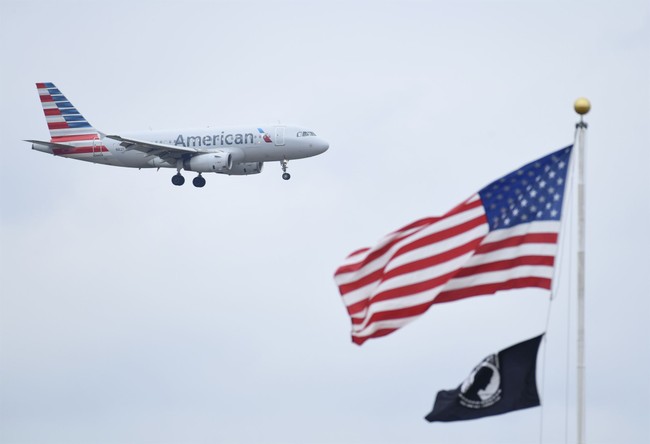
The flight carrying four members of Congress was forced to divert after a disruptive passenger erupted midair, creating a chain of delays and a police response; the episode highlights how a single outburst can disrupt travel plans, congressional duties, and safety protocols on a packed flight.
<pPassengers aboard the American Airlines flight from Phoenix to Washington, DC, experienced more than the usual in-flight annoyance when a passenger began shouting and causing a disturbance after takeoff. The situation escalated enough that the crew and law enforcement intervened, and the aircraft made an unscheduled landing in Kansas City so authorities could remove the individual. What might have been a short delay turned into an emergency diversion that affected many travelers beyond those on that one plane.
Among those on board were four members of Congress who needed to reach Washington to participate in a critical vote. The presence of lawmakers on the flight raised the stakes of the disruption, because Congressmen had to be on the House floor the next day to address a government shutdown issue. While the lawmakers were ultimately able to continue their trip, the incident forced a stop that cost time and created uncertainty about whether they would arrive in time to fulfill their responsibilities.
A fellow passenger captured law enforcement removing the woman from the aircraft and reported hearing her shout a charged political claim as she was escorted away. The exact words reported were: “We live in a fascist state.” That line was later repeated in a post from one of the lawmakers about the diversion. The moment was both dramatic and emblematic of how political anger can erupt in public spaces and derail normal routines.
A plane carrying four members of Congress to Washington, DC, to vote on ending the government shutdown was diverted due to a “disruptive passenger” who later declared to fellow flyers, “We live in a fascist state.”
Rep. Greg Stanton (D-Ariz.) posted on X on Tuesday that the American Airlines flight carrying him along with three Republicans from the Grand Canyon State — Reps. Eli Crane, Andy Biggs and Paul Gosar — was forced to make an “emergency stop in Kansas City” after an unruly passenger caused a disturbance following takeoff from Phoenix Sky Harbor International Airport.
The flight had been in the air for about 2 hours and 41 minutes when it was diverted to Kansas City International Airport, landing safely around 6:15 p.m., according to FlightAware.
The flight crew followed protocol by coordinating with authorities, and law enforcement met the plane on the ground to remove the disruptive passenger. After the individual was taken off, the airplane departed again and eventually reached Reagan National Airport later that evening. That sequence reflects standard airline procedures when passenger behavior jeopardizes safety or order on board.
FAA policy since the pandemic has taken a harder line on unruly passengers, pushing airlines and federal agencies to adopt a zero-tolerance approach in many cases. Penalties for serious in-flight disruption can be severe, including potential criminal charges, fines, and possible placement on federal watch lists that restrict future travel. These rules exist to protect passengers, crew, and the timely operation of air travel amid rising incidents of in-flight disturbances over recent years.
For the other passengers on that flight, the diversion meant missed connections, delays for appointments, and stress for families and business travelers alike. A single outburst does more than inconvenience a few people; it ripples through schedules, creates security responses, and can carry financial and legal consequences for the person responsible. That makes airline enforcement and passenger responsibility central to preventing similar disruptions.
Politically charged outbursts in public spaces have become more common, and they underscore a broader cultural problem: when individuals weaponize airports, planes, and other shared spaces for political theater, the fallout affects everyone. In this case, lawmakers were on their way to perform a civic duty, and other travelers were simply trying to get where they needed to go. The diversion highlighted how personal theatrics can interfere with democratic processes and public safety.
After the removal, the flight resumed and landed where it was supposed to later that night, but the interruption had already happened. Passengers and crew demonstrated patience under pressure, and law enforcement handled the removal without reported injury or escalation beyond the diversion itself. Still, the incident serves as a reminder that disruptive behavior on planes is not a victimless act and that consequences can be significant.
Air travel depends on mutual respect, clear rules, and consistent enforcement to remain safe and reliable. When one passenger decides to shout, harass, or otherwise break the peace, the result is more than inconvenience: it can trigger emergency responses, legal exposure, and delays that cascade across the system. That reality is why airline crews and federal authorities treat in-flight disorder seriously and why travelers should expect accountability when they cross the line.
The lawmakers on board were able to continue and fulfill their duties, but many others were left dealing with the consequences of a single person’s choices. The episode offers a practical lesson: public spaces require restraint, and political grievances belong in appropriate forums rather than on a plane where thousands of lives and schedules can be disrupted by one individual’s outburst.

Add comment