
The scene at Delaney Hall Detention Center in Newark has reignited familiar concerns about out-of-state agitators disrupting law enforcement and targeting federal facilities, and recent federal comments and arrests give a clearer picture of how those disruptions are organized and supplied.
The last two Mays have produced similar chaos at Delaney Hall, with clashes that turned violent and sparked federal investigations and arrests. Reports from law enforcement outline assaults on immigration officers and threats against families, and those incidents prompted state and federal officials to act.
One case involves a New Jersey resident, Brendan John Geier, 26, who was arrested after an incident where two agents were reportedly kicked and bitten during confrontations at the facility. Another individual, Nicholas Matthew Scelfo, 27, was accused of threatening to kill an ICE agent and family members and was identified using facial recognition; officials later say he admitted the threats during questioning.
New Jersey’s governor acknowledged that many of the disruptive actors were not local, saying, “We know that people from outside the state have been interfering in the protests and escalating them. Five of the six people arrested last night by state police were from outside New Jersey.” She also claimed national groups were aiding coordination, placing responsibility partially beyond local organizers.
Federal attention intensified as more arrests were made and as officials provided additional context on who was showing up to lead and provoke the demonstrations. That context shifted the narrative from isolated local protest to organized interference that imported tactics and personnel from other cities known for prolonged unrest.
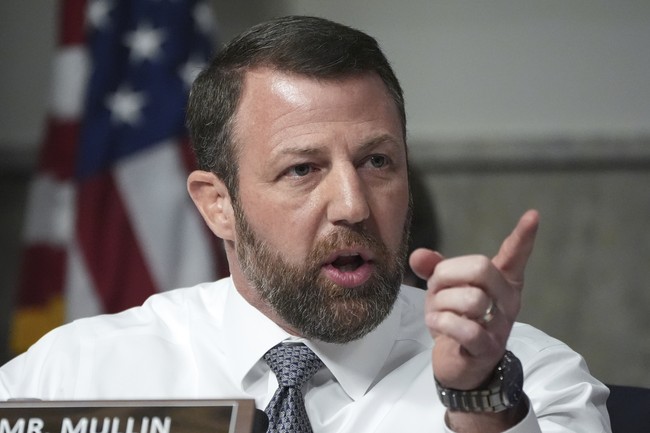
Department of Homeland Security Secretary Markwayne Mullin offered a telling detail when he pointed to Portland as a source for some of the agitators, saying, “We’ve arrested people that came in from Portland, not from New Jersey,” and then noting, “Came in from Portland to lead. We’ve seen that they’ve been well-supplied, we’ve seen Antifa flags being flown.” His observation connects the Newark incidents to a broader pattern of mobile, ideologically driven groups traveling to pressure federal institutions.
That description matches what many on the ground reported: individuals arriving with gear and banners, ready to escalate confrontations. Local law enforcement struggled initially to respond, but when the New Jersey State Police were deployed, disturbances reportedly calmed down quickly, illustrating how decisive enforcement can restore order.
The role that facial recognition and interagency cooperation played in recent arrests highlights a modern law enforcement toolkit being used to track down violent actors who cross state lines. At a time when certain cities have become repeat sources of organized disruption, sharing intelligence and resources across jurisdictions appears crucial to stopping itinerant provocateurs.
Observers from a conservative perspective see these incidents as confirmation that radical networks exploit sympathetic jurisdictions and weak local responses to export unrest. The pattern of travel, coordination, and targeted intimidation of federal officers and facilities suggests a strategy that goes beyond spontaneous protest and into the realm of planned provocation.
Claims that national extremist groups were coordinating some of the actions underline the need for a coordinated law enforcement response and for political leaders to acknowledge the national dimension of these threats. When officials treat violent disruption as merely local theater, it creates openings for those who wish to undermine federal operations and public safety.
Practical results followed stronger enforcement: once the state police engaged, the situation at Delaney Hall reportedly stabilized, pointing to the tangible effect of decisive policing. That outcome reinforces the view that restoring clear consequences for violent behavior deters further escalation and protects both officers and the public.
Meanwhile, the portrayal of Portland as a feeder for agitators feeds into a broader debate about sanctuary policies and how permissive local environments can attract and incubate violent actors. Conservative commentators argue that unless cities clamp down on the networks and logistics that enable cross-country agitation, the cycle will repeat.
News items on the arrests and admissions by suspects have put the spotlight on practices used to identify and detain those responsible, and they have raised questions about how to prevent similar disruptions in future. The federal government’s intervention and public remarks by officials like Secretary Mullin signal a willingness to treat these incidents as national security and public safety issues rather than mere protest disturbances.
https://x.com/KatieDaviscourt/status/2061541178026369066
Lawmakers and law enforcement advocates who favor a firmer approach will point to these developments as evidence that swift, coordinated action works and that blaming local law enforcement alone misses the larger problem. The recent arrests and statements from officials suggest a shift toward tougher responses when outside groups import tactics intended to intimidate federal personnel.
Watch:
Editor’s Note: ICE and CBP continue to put themselves in harm’s way in order to protect America’s sovereignty and to keep our streets safe.

Add comment